Definition: what do we call “high frequency” movement?
In watchmaking language, frequency expresses the number of oscillations of the balance wheel per second (expressed in Hertz, Hz). The contemporary standard for a mechanical watch is 4 Hz, or 28,800 vibrations per hour (A/h). We speak of “high frequency” as soon as we exceed this threshold, generally at 5 Hz (36,000 A/h) and beyond. Some experimental creations go up to 10 Hz (72,000 A/h) and even more for chronographs with separate organs.
Concretely, the higher the frequency, the faster the movement “beats”. The ticking becomes tighter, the second hand glides with almost hypnotic fluidity, and the watch theoretically becomes more stable in the face of the small hazards of everyday life. Not to be confused with the electronic world: a mechanical caliber at 5 Hz has nothing to do with an Accutron tuning fork (360 Hz) or a quartz (32,768 Hz). Here, everything comes down to the nobility of the spring, the balance wheel and the escapement.
A story of competition and engineers
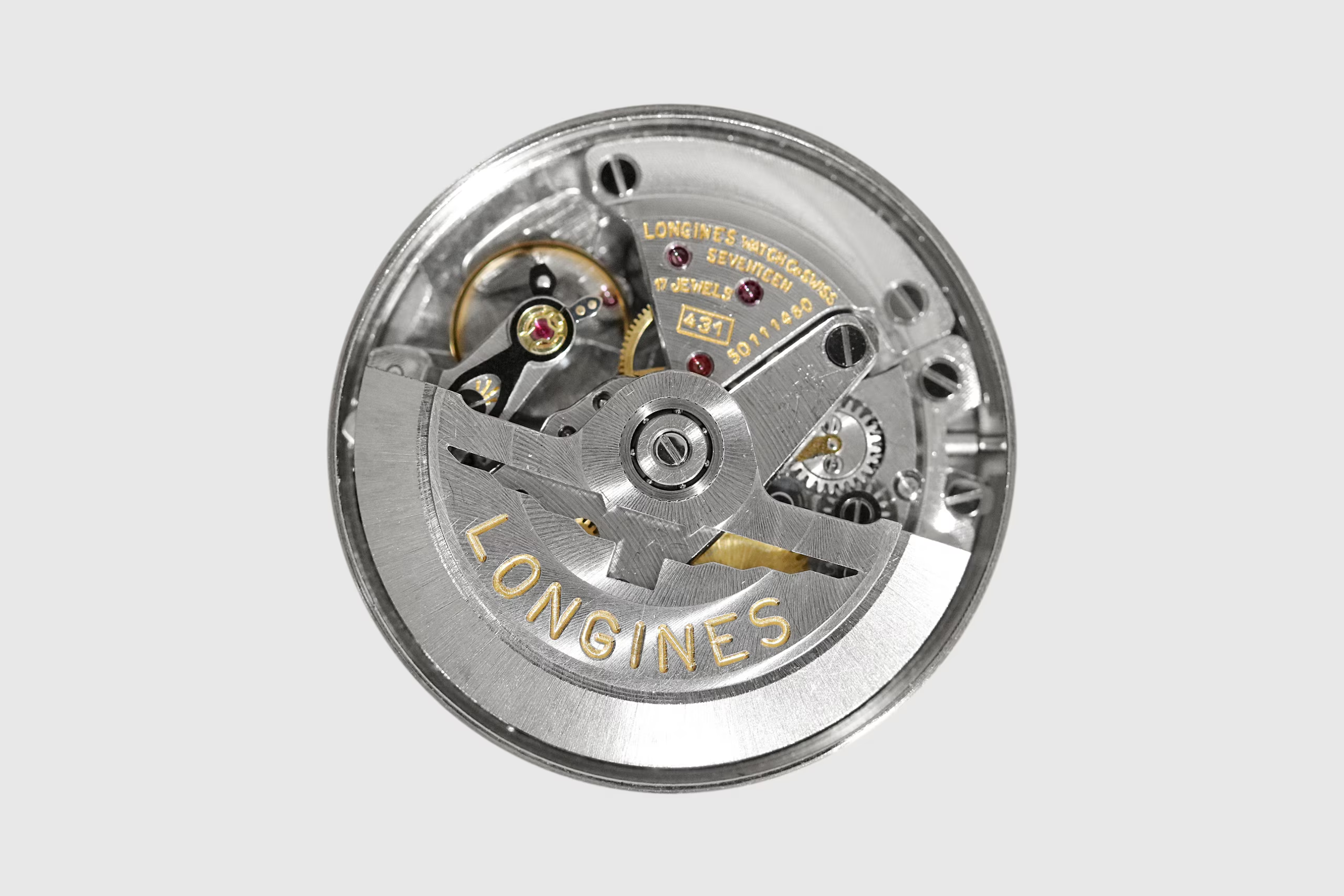
The 1960s saw the birth of a real race for high frequency. Girard-Perregaux led the way with its Gyromatic HF, followed by Longines and the Ultra-Chron (1967).

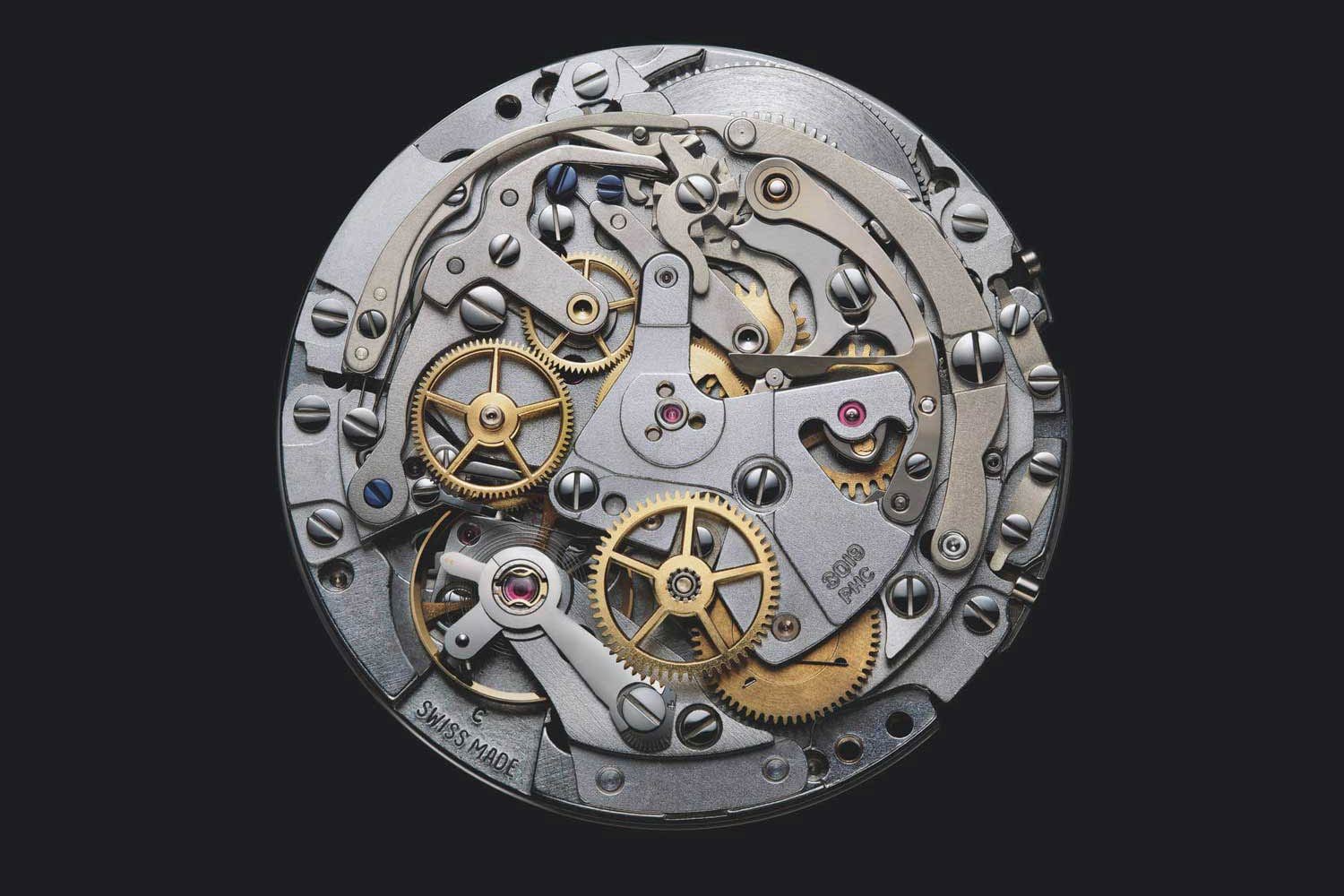
Then, in 1969, Zenith struck hard: El Primero, the first automatic chronograph integrated at 5 Hz, capable of displaying tenths of a second. On the other side of the globe, Seiko and its 45KS and 61GS “Hi-Beat” refine Japanese precision to 36,000 A/h.

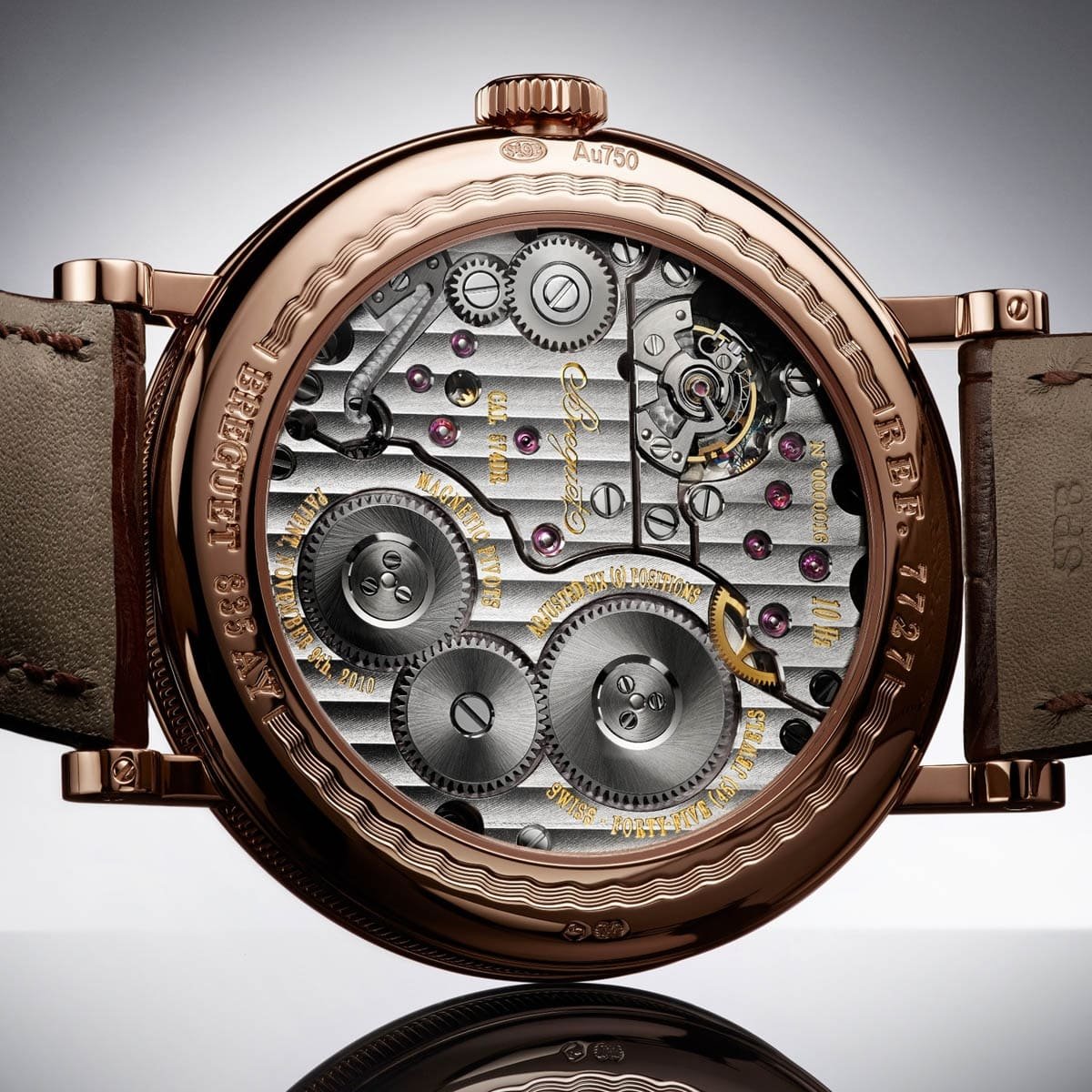
The quartz crisis will put a stop to this fervor, but high frequency is reborn in the 21st century, driven by materials science. Silicon reduces friction, new lubricants repels wear. Grand Seiko launches its 9S85 (then the 9SA5), Zenith modernizes its iconic El Primero, Breguet unveils the Classique Chronométrie 7727 at 10 Hz, and TAG Heuer reinvents the measurement of time with high-frequency chronographs separating the time organ from the chronography organ (Mikrograph at 50 Hz, then Mikrotimer).

Why high frequency is a game changer
The quest is simple: better “average” errors. A balance wheel that beats faster is less disturbed by a one-off shock or a slight variation in torque. Time measurement becomes more stable, especially on the wrist, far from the ideal conditions of an observatory chronometer.
- Increased potential precision: the multiplication of alternations smoothes micro-gaps.
- Stability in real use: better resistance to disturbances and position variations.
- Sports reading: at 5 Hz, a chronograph can display tenths of a second with mechanical legitimacy.
- Aesthetics in movement: smoother second hand, more subdued sound beat.
However, pay attention to the nuances. Accuracy doesn’t just depend on frequency. It is the meeting of mastered architecture, excellent isochrony, fine tuning and finishing of parts that work in harmony. High frequency is a powerful tool, not a magic wand.
Technical counterparts
Making a movement beat faster is not free. Mechanics presents the addition.
- Energy consumption: the balance wheel needs more impulses; the power reserve may suffer.
- Wear and lubrication: more friction, therefore increased demands on materials, oils and maintenance.
- Demanding adjustment: maintaining a comfortable amplitude and good isochrony at 5 Hz requires expert hands.
- Higher costs: specific components (silicon exhaust, special alloys), advanced development.
Modern solutions alleviate these limitations. The use of silicon (anchor, escape wheel, hairspring), magnetic pivots (at Breguet), or monolithic oscillators (developed by Zenith in its Defy line) reduces losses and stabilizes the rate. Grand Seiko, with the 9SA5, proves that a 5 Hz can combine high frequency and long reserve (80 hours) thanks to an optimized architecture and a double impulse escapement.
Iconic high-frequency watches and calibers
- Zenith El Primero (36,000 A/h): the historical reference for 5 Hz, from the vintage A386 to the contemporary Chronomasters displaying the tenth of a second.
- Longines Ultra‑Chron (36,000 A/h): pioneer of the sixties, recently relaunched with a contemporary approach to precision.
- Grand Seiko Hi‑Beat 9S85 and 9SA5 (36,000 A/h): the Japanese school of regularity, superlative finishes and daily precision.
- Breguet Classique Chronométrie 7727 (10 Hz): technical virtuosity, silicon escapement and magnetized pivots to tame 72,000 A/h.
- Girard‑Perregaux Gyromatic HF (36,000 A/h): an important page in the history of serial chronometers from the 1960s.
- TAG Heuer Mikrograph (50 Hz for the chrono): separation of organs, display at 1/100th, manifesto of sports engineering.
- Technical indication: mentions “36,000 vph”, “5 Hz”, “Hi-Beat” on the dial or the back.
- Chronograph to the tenth: a dedicated scale and a central second hand which moves from one index to the other in one second.
- Visual sensation: seconds smoother than 3 Hz, without achieving the continuity of a quartz.
- Sound: the ticking gets tighter; accustomed ears perceive it.
For which amateur?
High frequency appeals to those who like experienced, not just certified, precision. The collector will find a slice of history there – from the observatories of yesterday to the materials laboratories of today. Daily wear gains peace of mind, provided you accept a sometimes more rigorous service and a higher technical cost.
The elegance of an assumed beat
Choosing a high frequency movement means preferring the lively beat to the slow rumble, the determination of a metronome to the caresses of long time. It’s neither better nor worse: it’s a temperament. Between an El Primero that cuts the tenth like a samurai chef, and a Breguet 10 Hz that whispers science under a veneer of classicism, high frequency embodies watchmaking with character – where culture, engineering and style advance in unison.