A steel not quite like the others
In the watchmaking world, steel is everywhere. From accessible sports timepieces to the most coveted pieces of fine watchmaking, it constitutes the raw material for a majority of cases. However, not all steels are equal. And when we talk about 904L steel housingwe enter a very particular register, where metallurgy meets the obsession with detail.
Popularized by Rolex, this alloy arouses as much fascination as incomprehension. More resistant? Brighter? Simple marketing argument? As is often the case in watchmaking, the reality is more nuanced, and above all more interesting.
904L steel: an extraordinary composition
To understand what 904L steel is, you must first look at its composition. Unlike the standard 316L stainless steel used by the vast majority of brands, 904L belongs to the family of so-called “super austenitic” steels.
Its formula includes:
- high nickel content
- chromium in significant proportion
- molybdenum
- and above all copper, a rare element in watchmaking alloys
This combination gives it exceptional resistance to corrosion, particularly in the face of aggressive environments such as salt water or acids. Originally, the 904L had nothing to do with watchmaking. It is found in the chemical industry, in marine equipment, and even in certain medical installations.
In other words, a material designed to survive where most metals degrade.


Why Rolex chose the 904L (and not the others)
Rolex introduced 904L steel into its production from the 1980s, long before the subject became a marketing argument. At the time, it was a radical choice. The material is more expensive, more difficult to machine, and requires heavy industrial adaptations.
But the Geneva brand does not think in the short term. She is looking for a steel capable of offering:
- increased resistance over time
- impeccable aesthetic appearance
- superior polishing capacity
The 904L ticks all three of these boxes. And even beyond.
Today, Rolex speaks of “Oystersteel”, a house name to designate its 904L steel reworked according to its own standards. An elegant way to appropriate an industrial material and integrate it into its DNA.


Corrosion resistance difficult to match
One of the main advantages of the 904L steel casing is its resistance to corrosion. Where a 316L steel may eventually show signs of oxidation in extreme conditions, 904L retains its stability.
Concretely, this means that:
- the watch is more resistant to sea water
- it tolerates humid and tropical environments
- it tolerates accidental chemical exposures better
For a daily user, the difference is not always obvious. But on a piece designed to last for decades, it makes perfect sense.
This is also what forms the link with the DNA of Rolex sports watches, designed to accompany explorers, divers and professionals.
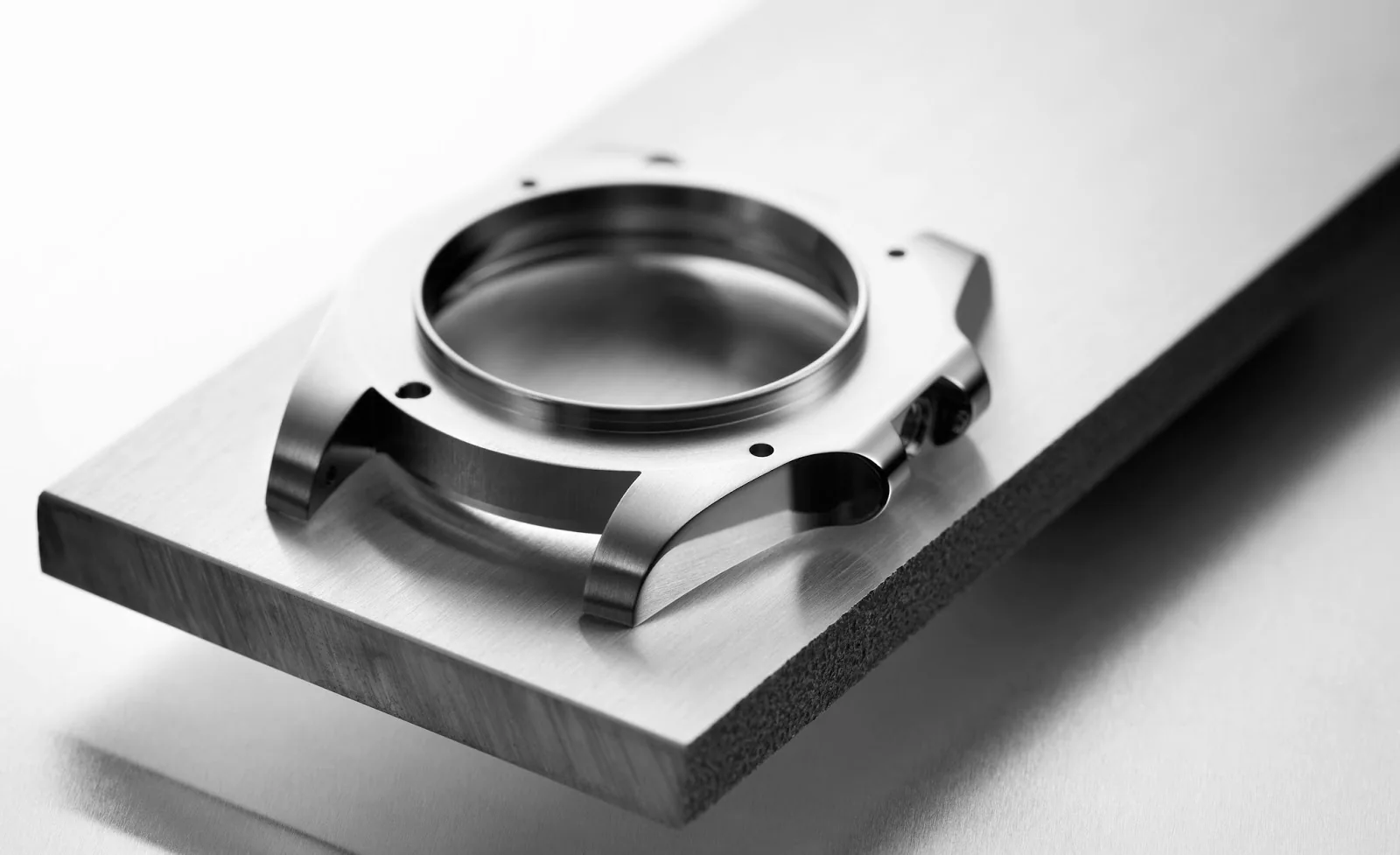
A particular, almost organic shine
Just compare two watches side by side to see: the 904L steel case has a different shine.
Less clinical than 316L. Denser, almost liquid. The mirror polish appears deeper, warmer, giving the watch a distinct visual presence.
This rendering is linked to the structure of the alloy itself. The 904L accepts more advanced polishing, but also more demanding. Defects are less tolerated, which requires particularly rigorous finishes.
This is where part of Rolex’s industrial know-how lies: mastering a difficult material to create an immediately recognizable aesthetic signature.
A more complicated steel to work with
All is not rosy, however. 904L is notoriously difficult to machine. Its hardness and composition result in:
- faster tool wear
- longer production times
- higher industrial costs
It is no coincidence that the vast majority of watch brands remain faithful to 316L. The latter offers an excellent compromise between performance, cost and ease of production.
Switching to 904L involves a real industrial transformation. Specific machines, adapted protocols, reinforced quality control. Suffice to say that this is not a trivial decision.


A difference perceptible on a daily basis?
This is the question that every amateur ends up asking themselves. Does the 904L steel case really change the experience on the wrist?
The answer depends on how you look at the object.
On a purely functional level, for classic use, the difference with good 316L steel remains subtle. Both are stainless, robust, suitable for everyday life.
On the other hand, over long periods of time, and in demanding conditions, the 904L takes the advantage. Less sensitive to micro-corrosion, it better maintains its integrity and shine.
And then there is the emotional aspect. The feeling of having a rarer, more demanding material on your wrist, almost oversized for actual use. Watchmaking also thrives on these excesses.
The 904L, technical argument or identity signature?
Reducing 904L steel to a simple marketing argument would be unfair. Its technical qualities are real, measurable, documented.
But in the watchmaking context, it goes far beyond this dimension. It becomes an identity marker.
At Rolex, the choice of the 904L is part of a global philosophy: total control of production, obsession with durability, refusal of easy compromise. It’s a piece of the puzzle, just like in-house movements or internal tests.
And perhaps that’s where its real interest lies. Not just in what he does, but in what he says.
Should you choose a watch made from 904L steel?
If we look for a clear-cut answer, it does not exist. The 904L is not essential to appreciate a great watch. Many exceptional pieces, from Omega, Grand Seiko or Audemars Piguet, use 316L with exemplary mastery.
On the other hand, it brings an additional dimension. A form of material requirement which will appeal to enthusiasts sensitive to invisible details.
Choosing a 904L steel case means favoring:
- superior long-term resistance
- a slightly different aesthetic
- a more radical approach to manufacturing
It’s not a revolution. It’s a nuance. But in watchmaking, it is often the nuances that make all the difference.
Because we have to conclude…
The 904L steel case embodies this watchmaking obsession with detail that few notice, but that some actively seek out. More complex, more expensive, more demanding, it does not transform a watch into a masterpiece on its own. But it contributes to this special feeling that certain models give off.
A watch, after all, is never more than an assembly of choices. And sometimes the most interesting thing is hidden in what we don’t immediately see.