Table of Contents
Let’s dive into the vast vocabulary of watchmaking, the expression “step case” will speak to those in the know, but will remain nebulous for the rest of the world. At first glance, nothing spectacular. On closer inspection, it is an aesthetic signature in its own right, an architectural detail that is often discreet, but deeply revealing of an era and a certain refinement.
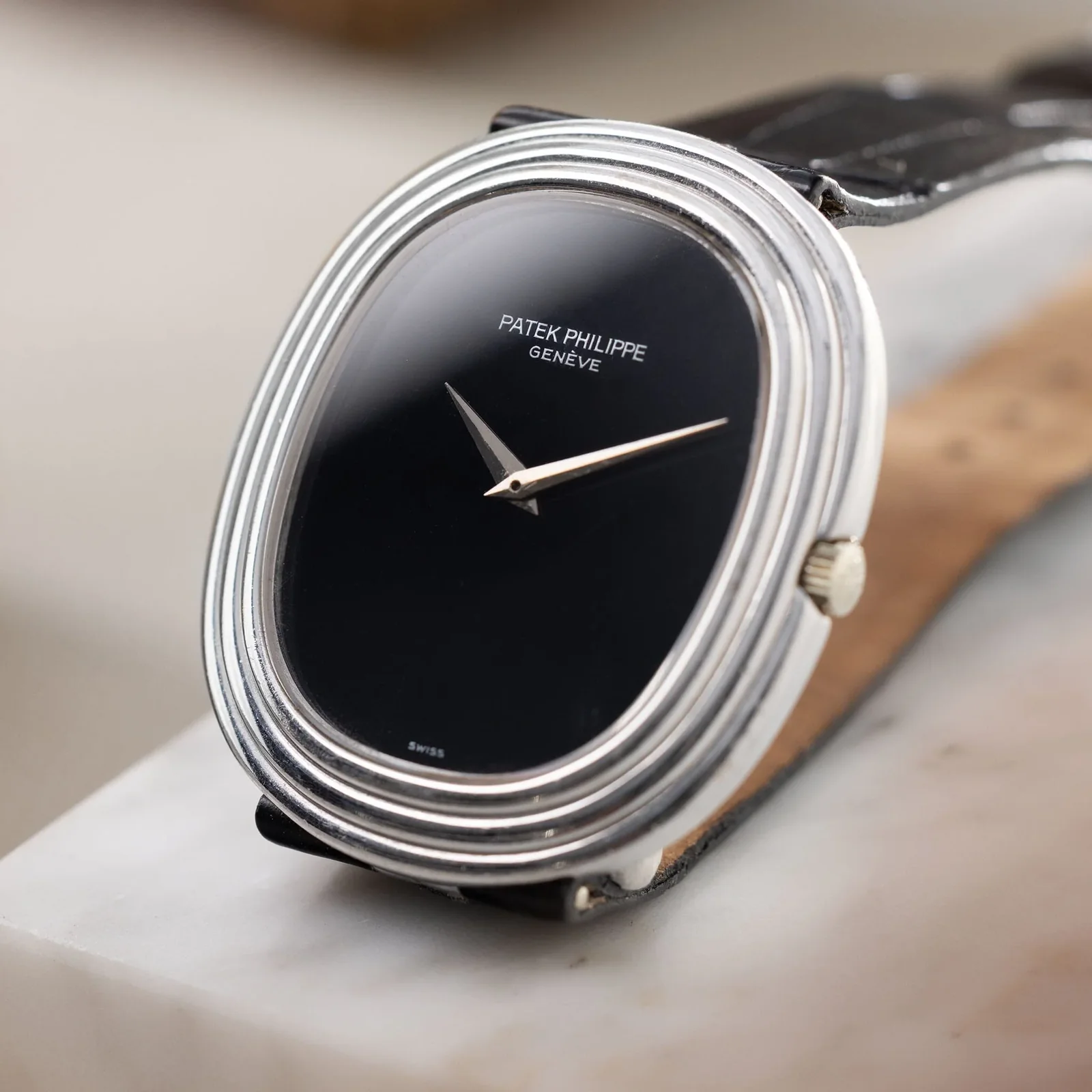
The word “step case” literally designates a case with “steps”, in other words a case built in successive levels. A stepped silhouette, where the case is not a simple smooth volume but a stack of layers, as if the metal had been sculpted in successive levels around the movement.
A relief construction, far from monolithic boxes
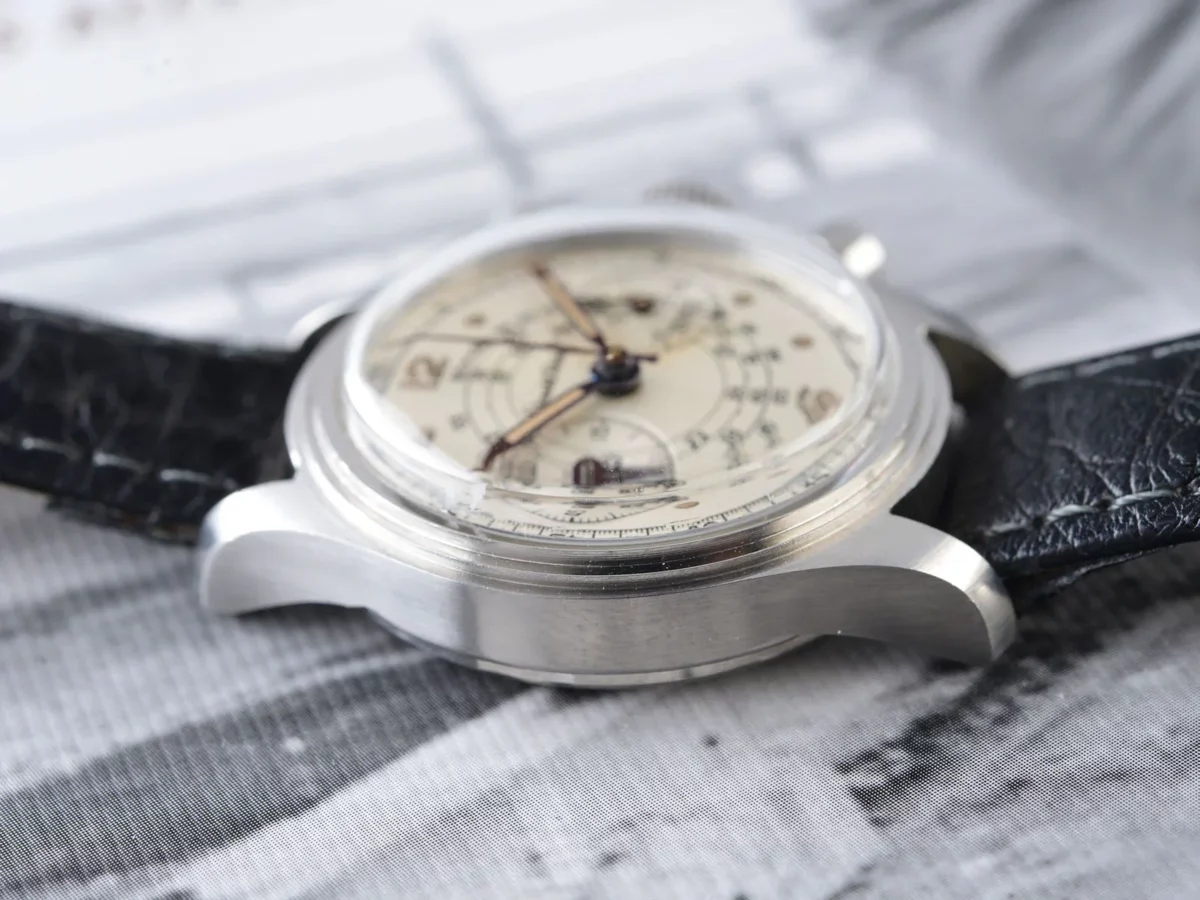
In its simplest form, a classic case consists of a uniform middle to which the bezel and the back are fixed. The step case deliberately complicates this reading. It introduces one or more horizontal recesses on the side of the case.
These “steps” can be straightforward or subtle. Sometimes very marked, almost geometric. Sometimes softened, melted into polished chamfers. But the principle remains the same, to create a visual break, a play of levels which catches the light and structures the watch.
This type of construction is particularly associated with watches from the 1930s to 1950s, a period when manufacturers experimented enormously with shapes, volumes and proportions. The Art Deco era is never far away.
A signature of vintage chronographs
If we have to look for a privileged field of expression of the step case, it is the vintage chronographs which immediately present themselves.
Houses like Patek Philippe, Vacheron Constantin, Universal Genève and Longines have widely used this type of case on their most elegant chronographs. At Patek Philippe, certain legendary references from the 1940s, notably chronographs with two counters, feature multi-level middles, giving the case an almost architectural presence.
This is no coincidence. The chronograph is an instrumental watch, of course, but in those years, it also had to be a city piece. The step case makes it possible to reconcile these two worlds, to bring relief and character without falling into the brutality of a purely utilitarian case.
Why this design? A question of light and perception
The step case is not simply an aesthetic whim. It responds to a very fine visual logic.
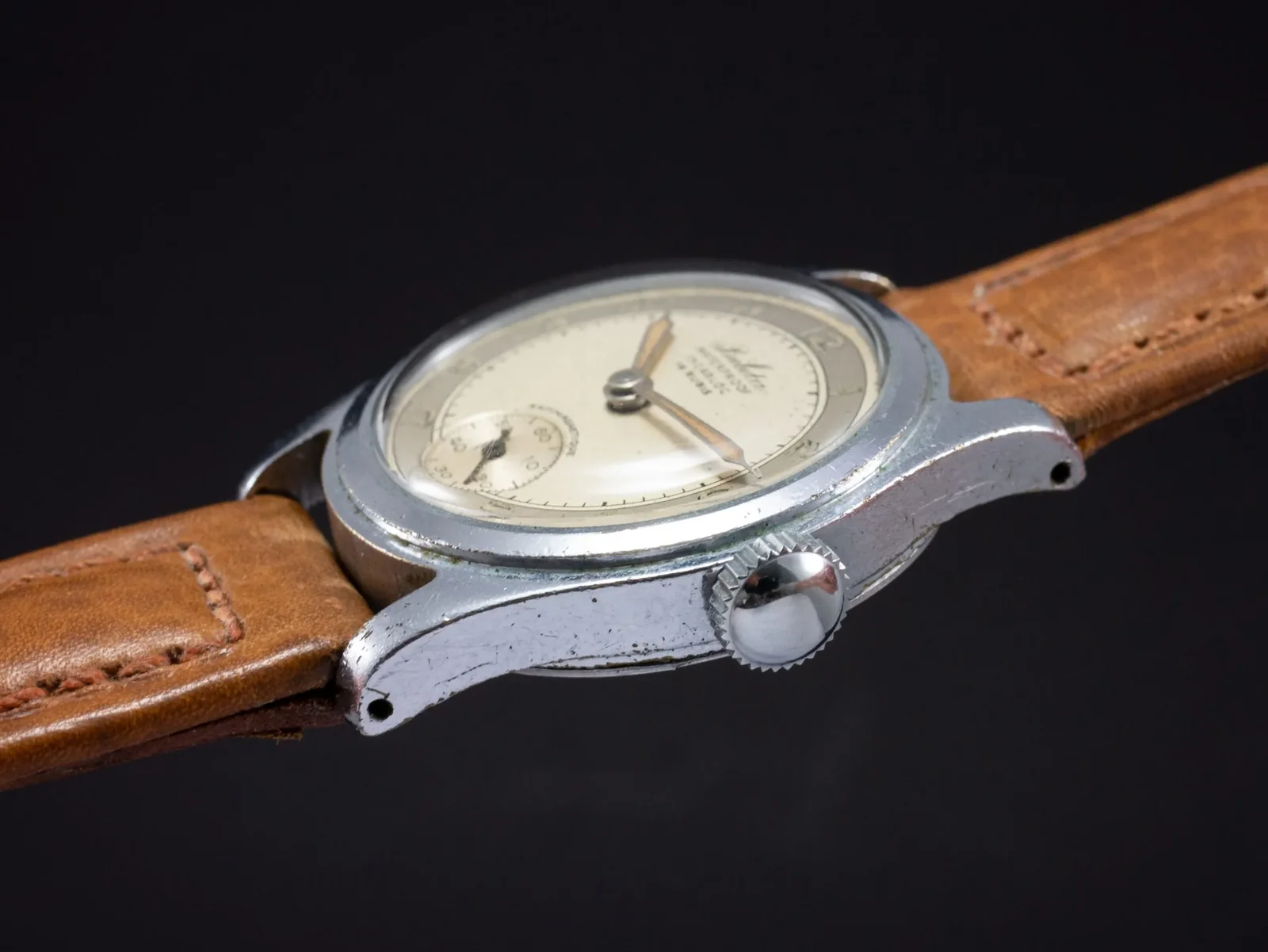
Each step creates an additional surface capable of capturing light differently. A polished edge will reflect, a brushed surface will diffuse, a chamfer will create a smooth transition. As a result, the case appears more alive, almost animated, even when it is stationary on the wrist.
This work on volumes also allows us to refine the perception of thickness. A thick watch can appear thinner thanks to a well-controlled set of bearings. It is an optical illusion perfectly assumed by the designers of the time.
Manufacturing complexity often underestimated
At first glance, adding “steps” to an enclosure might seem trivial. In practice, it’s quite the opposite.
Each additional level involves more complex machining operations, but also more demanding finishes. The angles must be sharp, the transitions perfectly controlled. The slightest defect becomes immediately visible because the light spares nothing.
In vintage productions, these cases were often made in several stages, sometimes even in several assembled parts. Today, CNC technologies allow more precise creations, but the logic remains the same, more relief means more attention.
Contemporary examples that perpetuate the style
The step case has not disappeared. It even regularly returns to the forefront, driven by the neo-vintage wave and the growing interest in the aesthetic codes of the 20th century.
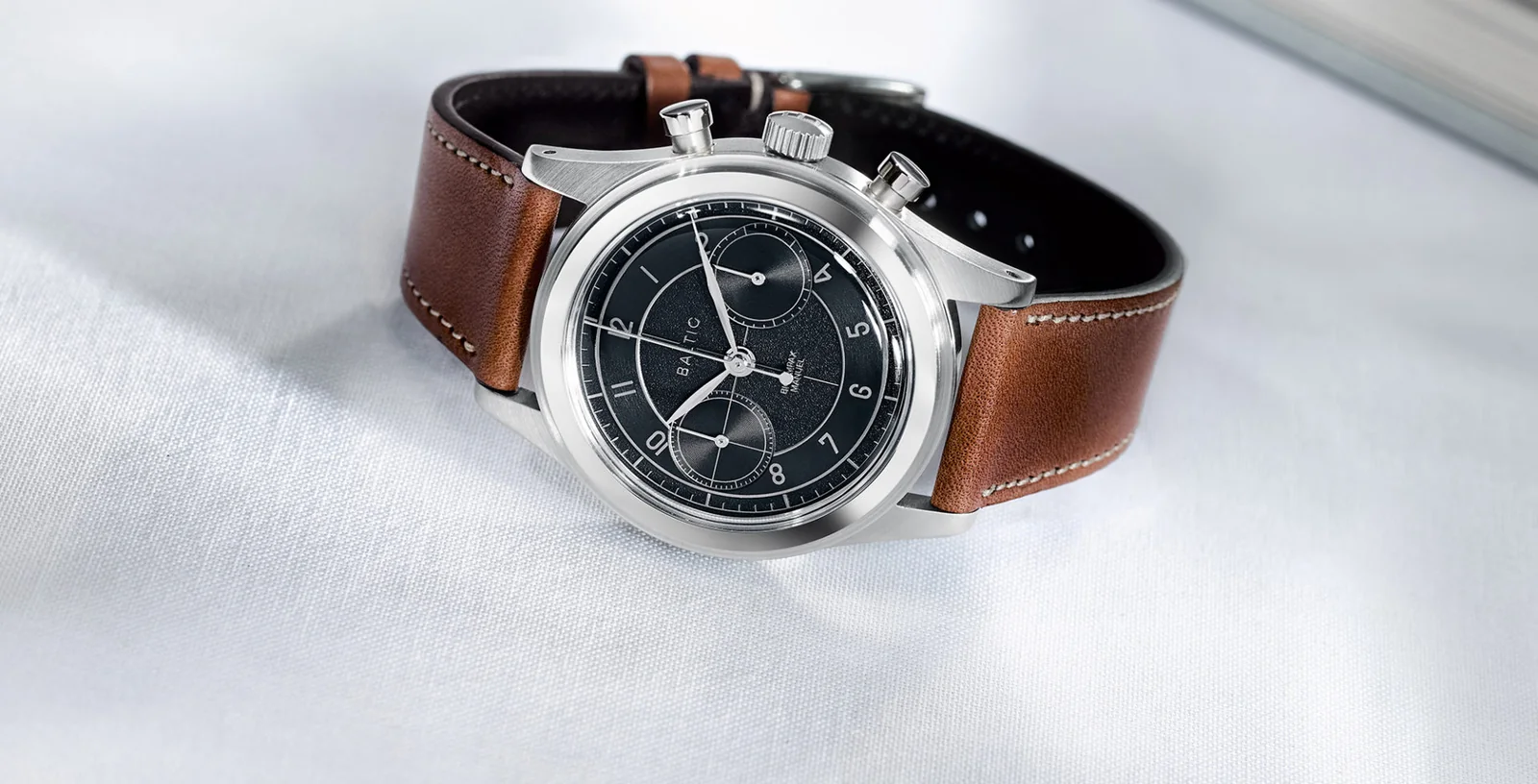
Longines, for example, has reintroduced this language in certain pieces from its Heritage collection, with subtly layered middles that directly evoke its archives. Patek Philippe continues to explore this terrain on certain contemporary references, even if the approach is often softer and integrated.
Independent brands are also taking advantage of it, sometimes with a more modern reading, by accentuating contrasts in finishes or playing on exaggerated proportions. The step case then becomes less of a historical nod than a real exercise in style.
Not every case detachment necessarily deserves this name. The true step case is distinguished by legible and intentional layering.
Here are some concrete clues:
- presence of several distinct horizontal levels on the middle
- clear or subtly chamfered breaks between these levels
- set of finishes alternating polished and brushed to accentuate the contrasts
- overall impression of a “built” case, and not simply machined from a uniform block
It’s a question of balance. Too many levels, and the case gets confusing. Not enough, and the effect disappears.
A detail that changes everything
The step case belongs to those refinements that we don’t always notice immediately, but which profoundly transform the perception of a watch. He doesn’t shout. He suggests.
It also conveys a certain idea of watchmaking, one where the design of the case is not a simple envelope, but a field of expression in its own right. A watch is not just about its caliber or its dial. It is also played out in its volumes, its edges, its way of catching the light.
And in this area, step case remains one of the most elegant languages ever invented. Discreet, but impossible to forget once you’ve seen it.