Table of Contents
In the cozy language of watchmaking, certain words seem simple, almost innocent. “Lacquered dial” is one of them. Two syllables, a vaguely brilliant image, and yet a much more demanding reality, almost artisanal in the purest sense. Because a lacquered dial is not just a shiny surface. It is a construction, a patience, and sometimes even a philosophy. So, what is a lacquered dial? The answer has as much to do with technique as with perspective.
The lacquered dial, or the art of depth
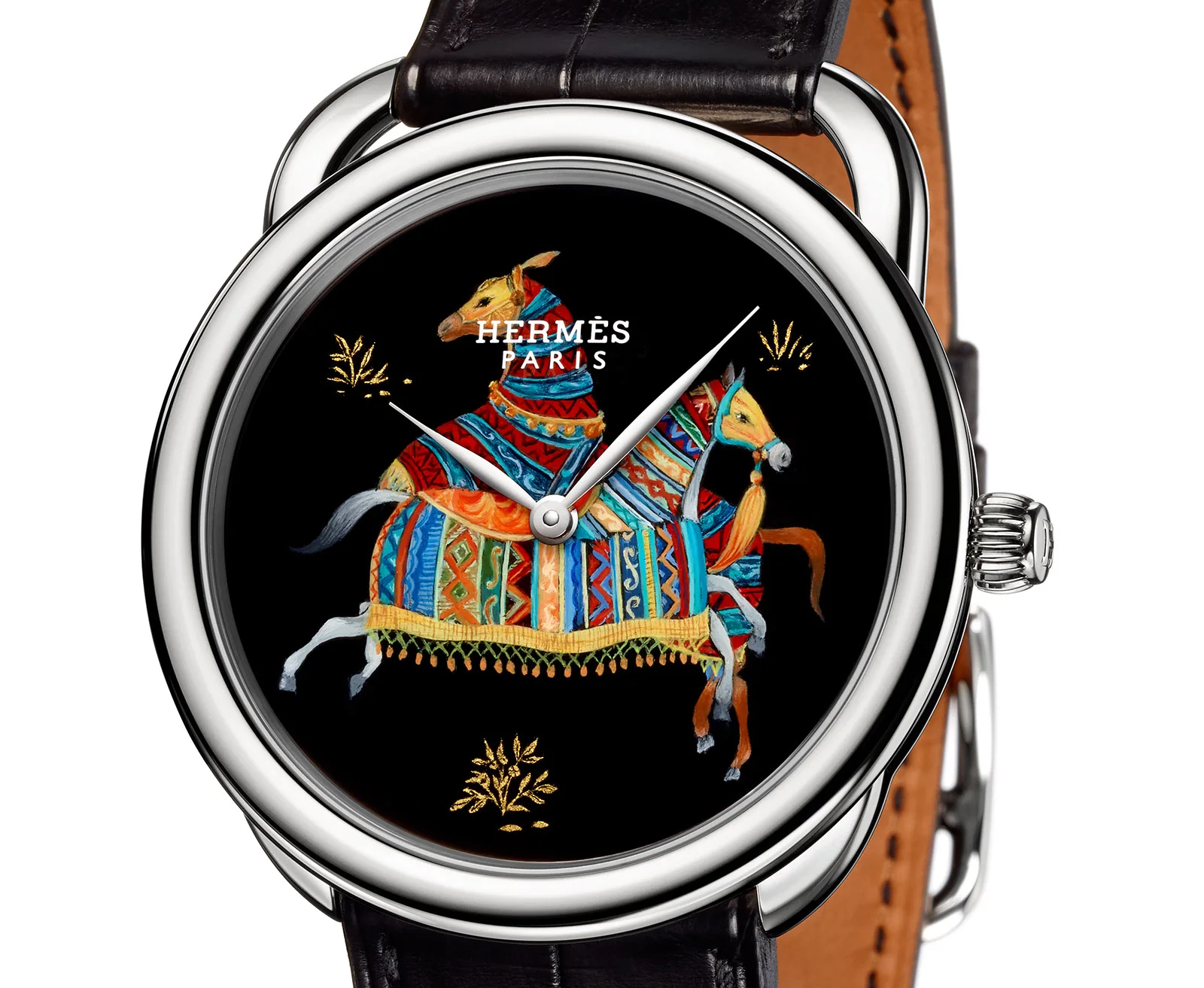
A lacquered dial is a dial covered with several layers of lacquer, a liquid resin that hardens as it dries to form a perfectly smooth, uniform and often shiny surface. But reducing the thing to “a shiny painting” would be a big mistake.
The lacquer acts like a lens. It captures the light, diffuses it, and above all creates this impression of almost liquid depth which immediately distinguishes a well-executed dial from a simple painted dial.
To the naked eye, the result is disturbing. Some dials appear to absorb light. Others, on the contrary, reflect it with mirror intensity. Lacquered black, in particular, is a formidable playground: the slightest defect becomes visible, the slightest dust betrays the craftsman.
The manufacture of a lacquered dial is based on a succession of precise, repetitive and, let’s say it, slightly obsessive steps.
First, the base dial, often made of brass, is carefully prepared. It is polished, cleaned, sometimes treated to guarantee perfect adhesion. Next comes the application of the lacquer, usually in several thin coats, much thinner than you might imagine.
Between each layer: the dial is dried then polished and sometimes even lightly sanded. And we start again.
This cycle can be repeated around ten times, depending on the desired result. The objective is simple in appearance, to achieve a perfectly homogeneous surface, without bubbles, without inclusions, without traces. In practice, it’s a test of nerves.
Finally, the dial is polished one last time to obtain this famous mirror finish or, conversely, a more satin finish depending on the aesthetic intentions.
Lacquer, enamel, varnish: don’t confuse them all
Watchmaking loves precise words. And here, confusion is common.
Lacquer vs. enamel
An enamel dial, grand feu in particular, is made from silica powder melted at very high temperature. The result is extremely durable, almost unalterable, but requires even more radical know-how.
Lacquer is an organic or synthetic material applied cold. It offers comparable visual depth, sometimes even more intense, but it remains more sensitive to scratches and UV rays in the long term.
In other words: enamel is mineral and eternal, lacquer is alive and delicate.
Lacquer vs. varnish
The varnish is often simpler, applied in one or two coats. It protects and adds a little shine, but it doesn’t create that characteristic depth.
A lacquered dial clearly plays in another category. More work, more material, more visual relief.
Why do collectors like lacquered dials?
The answer is in one word: presence. A lacquered dial catches the eye, even from a distance. It has something almost cinematic about it. The black becomes abysmal. The white becomes bright. And colors, when used, gain density.
But there is also an emotional dimension. Unlike a sunburst or brushed dial, which plays with texture, the lacquered dial is a pure surface. It simplifies. It radicalizes design.
Among certain Japanese houses, in particular, this choice is almost an aesthetic signature. We immediately think of Grand Seiko and its black lacquered dials, of formidable sobriety, or of Kurono Tokyo, which plays with deep colors and subtle reflections.
On the European side, the trend also exists, often on dressy pieces where sobriety becomes a luxury in itself.
Emblematic examples
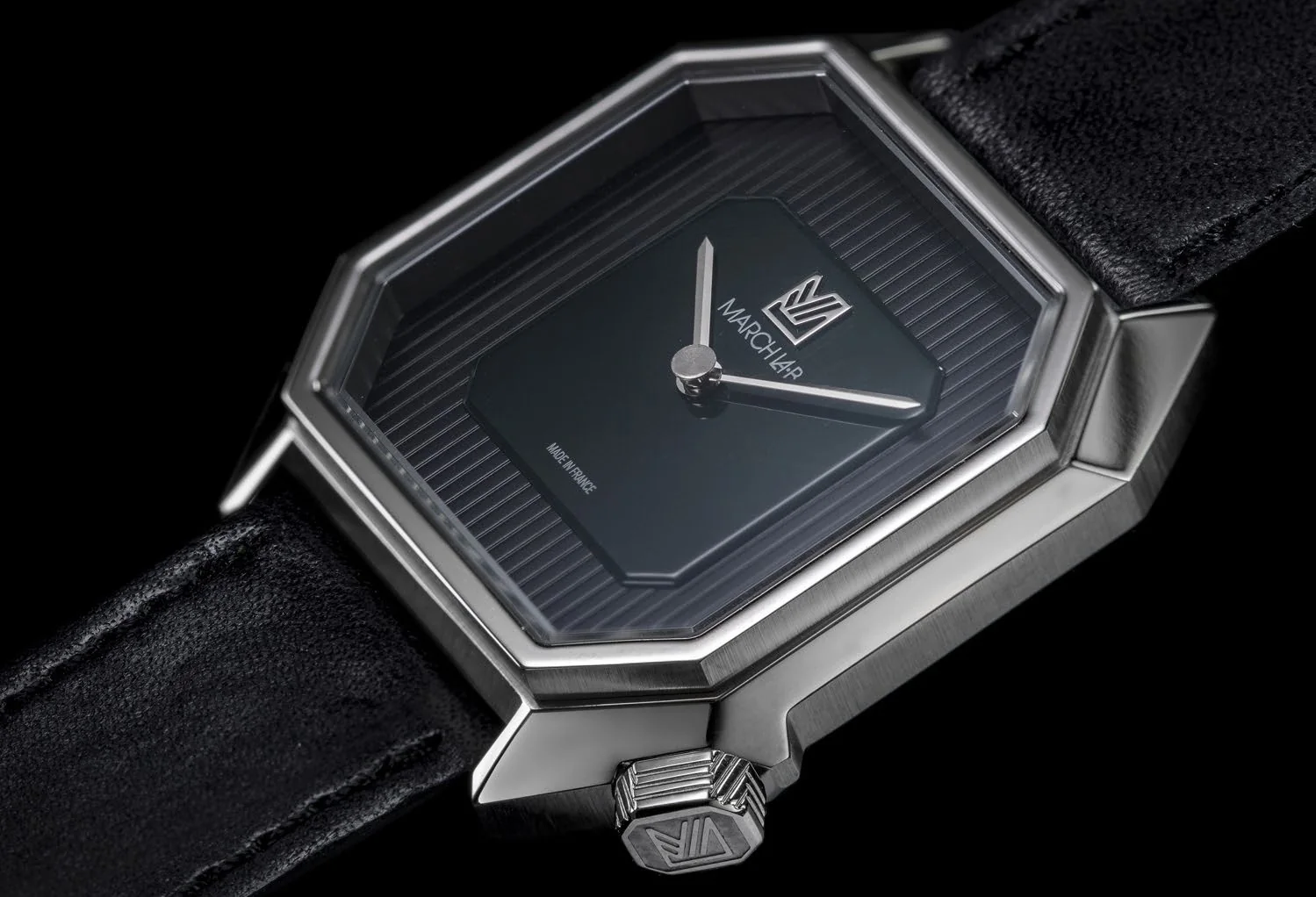
The lacquered dial is not the prerogative of just one house. It crosses styles, from minimalist watches to more daring creations.
At Grand Seiko, certain quartz or mechanical references offer black lacquered dials of almost clinical purity. The rendering is so clear that it almost becomes abstract, like a perfectly polished off screen.
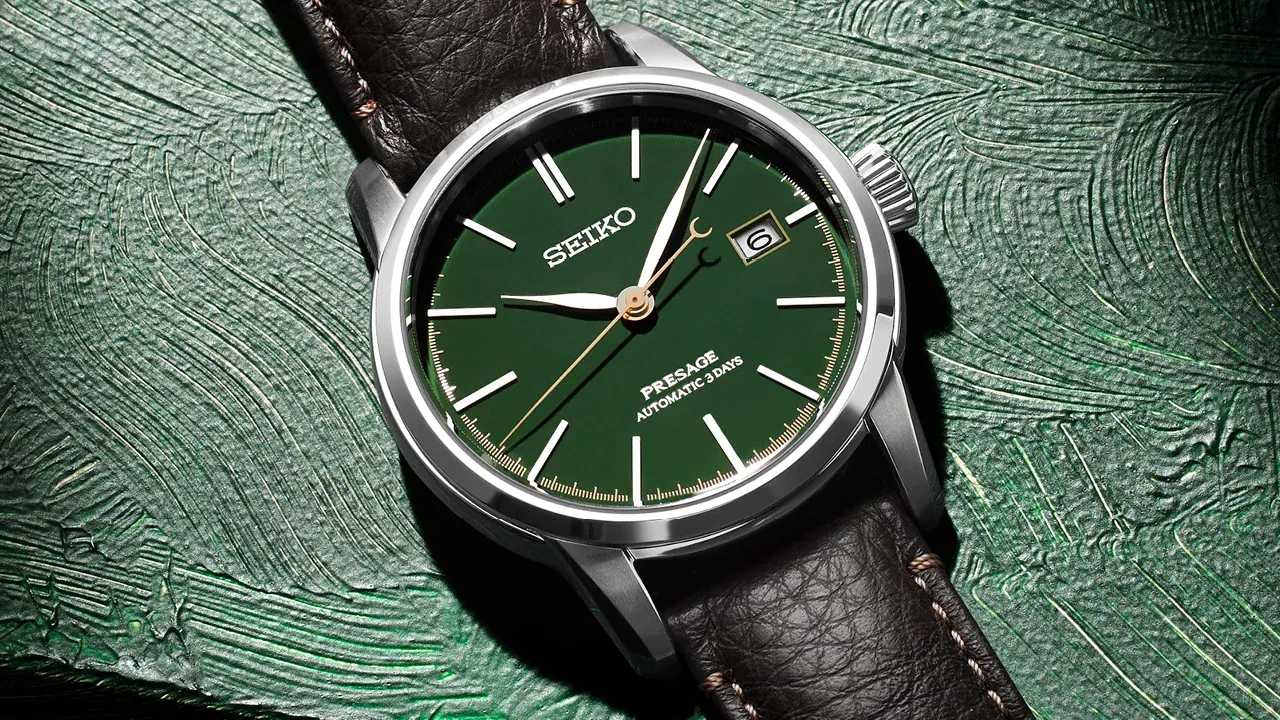
Kurono Tokyo, under the leadership of Hajime Asaoka, uses lacquer to bring deep colors to life, often associated with refined applied hour markers. The result is warm, almost organic.
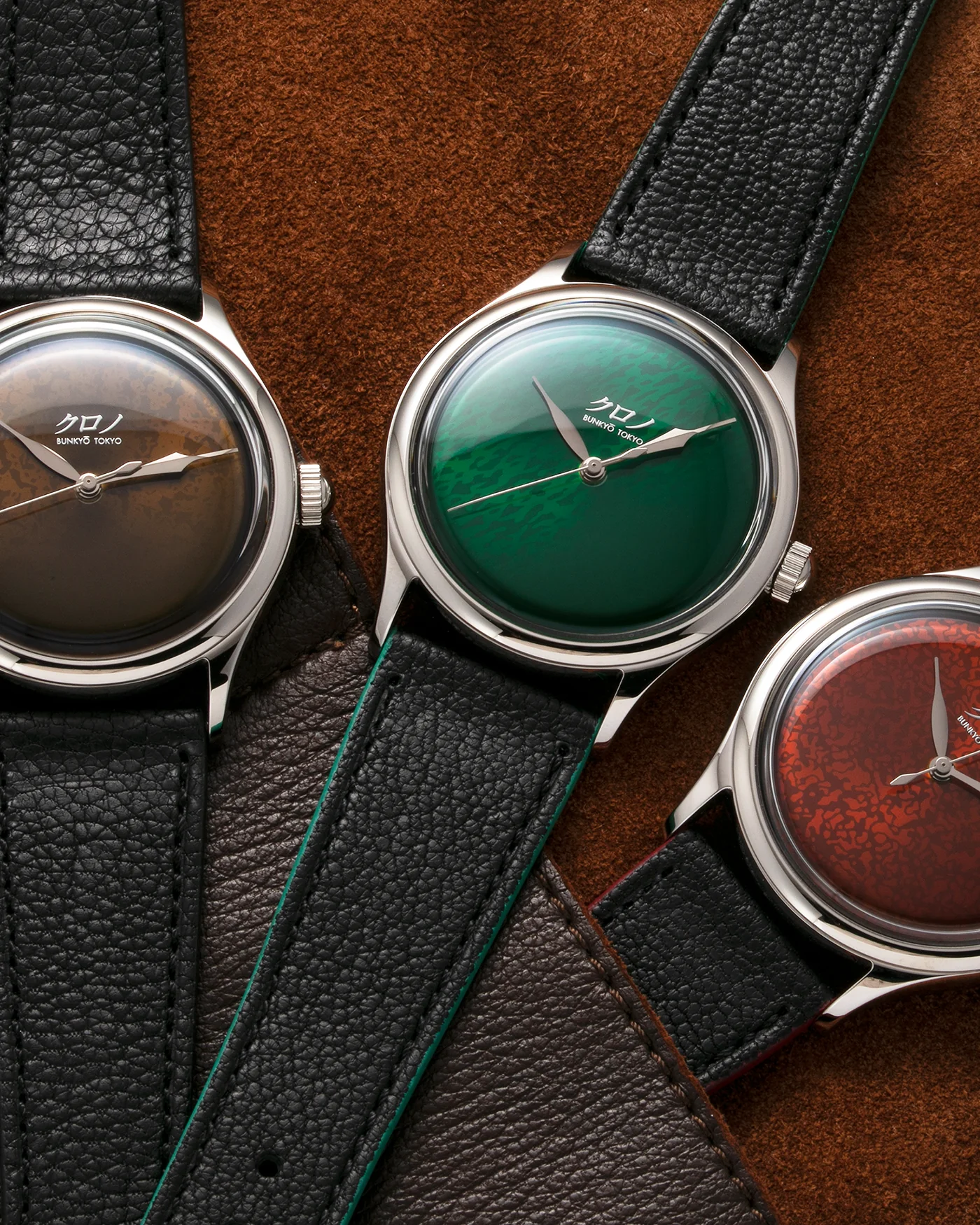
More confidential, but just as interesting, the work of certain independent houses shows an experimental use of lacquer, sometimes combined with artisanal techniques, textures, or unusual pigments.
The limits of the lacquered dial
Nothing is perfect, and certainly not hairspray.
His sensitivity is real. A shock, a scratch, or prolonged exposure to UV rays can alter its appearance. Unlike enamel, it is not forgiving everything.
Another point, production is demanding. The rejection rate can be high, especially in workshops aiming for an impeccable finish. This has a direct impact on costs.
Finally, from an aesthetic point of view, the lacquered dial does not suit all styles. On a sports watch, for example, it can seem too fragile, too “perfect” almost, where a textured or matte surface appears more cohesive.
It’s all in the details. And in the light.
A good lacquered dial should be:
- Uniform, without variation in color.
- Perfectly smooth, without micro-bubbles.
- Deep, almost three-dimensional.
Tilt the watch. Watch how the light glides across the surface. If the reflection is clear, continuous, almost liquid, you are looking at a well-executed dial.
Conversely, any irregularity, however slight, betrays a more industrial or less rigorous execution.
Discreet but demanding luxury
The lacquered dial doesn’t scream. He does not seek to impress with mechanical complexity or spectacular complications. But it imposes something else, a form of visual silence, almost meditative.
In a watchmaking world saturated with textures, skeletons and demonstrative effects, he offers an alternative. A smooth surface. A calm depth. And, behind the scenes, hours of work that we don’t see.
Ultimately, understanding what a lacquered dial is means accepting that in watchmaking, simplicity is often the result of extreme sophistication. And that sometimes all it takes is a perfectly executed black to remind us why we still look at the time other than on a screen.