Are you considering purchasing your first mechanical watch ? Great idea. But before you get started, it’s helpful to understand what really sets this type of timepiece apart from a regular quartz watch. Because if mechanical watches have seduced for centuries with their know-how and their unique character, they also involve some specificities that it is better to know before buying. Swiss Made Watch Magazine takes stock.
Mechanical with manual or automatic winding?
First important clarification: a mechanical watch can have two very distinct types of movements:
- THE mechanical movement with manual winding requires regular winding by hand, by operating the crown.
- THE mechanical movement with automatic winding is wound thanks to the natural movements of the wrist, via an oscillating mass. In both cases, the characteristics we are going to discuss apply in the same way.
Lower precision than the quartz watch
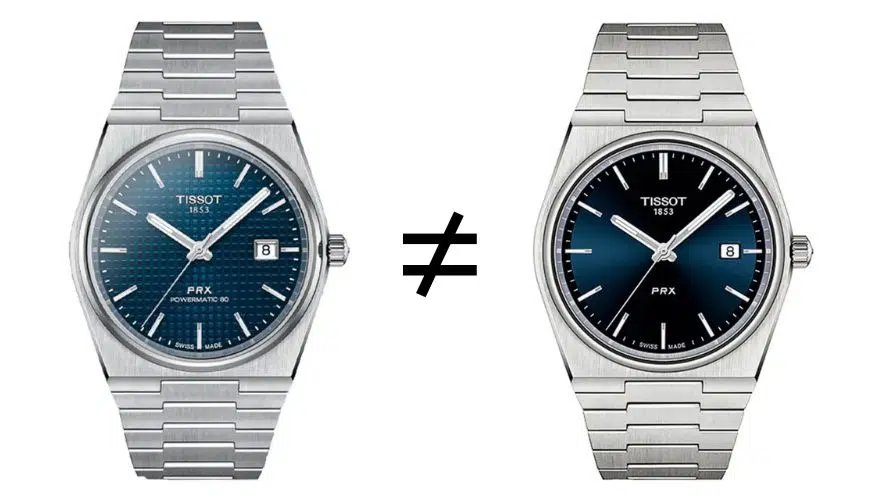

This is one of the points that newbies often discover with surprise: a mechanical watch is less precise than a quartz watch. Where a quartz movement can display an accuracy of a few seconds per month, a quality mechanical movement generally displays a drift of a few seconds per day.
This is not a defect, it is an inherent characteristic of mechanical operation. A movement is a set of cogs, springs and balances subject to variations in temperature, position and wear. Absolute precision is simply not his register! If you need exact time to the second, a quartz watch will always be more reliable.
A more fragile watch
Who says mechanics, says assembly precision and relative fragility. A mechanical watch contains hundreds of miniaturized components, some of which are extremely fine. Violent shocks, strong magnetic fields or prolonged exposure to humidity can damage the movement much more easily than with a quartz watch.
This does not mean that mechanical watches break at the slightest shock: many models are certified shock and water resistant. But they should be treated with a little more consideration than a battery-powered sports watch, and plan for a regular service by a watchmaker, generally every five to eight years.
It stops if you don’t wear it

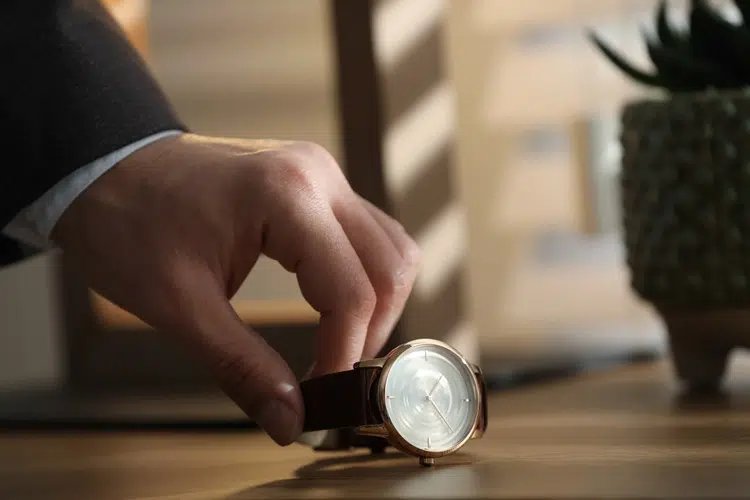

This is one of the most common questions new mechanical watch owners ask: why has my watch stopped? The answer is simple. Whether manual or automatic winding, a mechanical watch has a limited power reserve, generally between 38 and 80 hours depending on the calibers. If you don’t wear it for a few days, it will stop on its own. This is completely normal and does not mean that it is defective.
All you have to do is wind it manually from the crown and update the time. For automatic models worn less regularly, a watch winder (also called a “watch winder” watch winder“) can be very useful.
An incomparable daily pleasure

Mechanical watches are so fascinating because they offer an experience that a quartz watch simply cannot replicate.. The second hand of a mechanical watch does not jump from second to second like that of a quartz: it slides continuously, with a hypnotic fluidity which immediately announces the presence of a living movement under the dial.
Wear a men’s mechanical watch or a women’s mechanical watchit also means carrying with you the result of hundreds of hours of watchmaking work, an object designed and assembled with a precision and an artisanal requirement that few everyday objects can claim. It is this feeling, difficult to explain but immediately perceptible at the first glance at your wrist, which often transforms the purchase of a first mechanical watch into a true lasting passion.
You are now equipped to make your choice with full knowledge of the facts!