Table of Contents
The silent evidence of the bare dial
You see it at the bend of a sleeve: an almost blank disc of color, crossed by only two needles. No numbers. No index. Nothing to distract the eye. This absence, far from being a lack, is a promise. That of a watchmaking gesture reduced to the essential, where the dial becomes space, breath, respiration. In a world saturated with notifications, watches without indexes speak quietly and carry far. They appeal to minimalists, but also to all those for whom design is a culture and purity a luxury.
Fewer clues, more intention
Minimalism is not an effect of asceticism, it is an intention. On a dial without indexes, every decision counts: length of the hands, proportions of the case, curvature of the glass, texture of the surface. The void is not a decoration, it is a material. He sculpts the perception of time like an architect plays with light. The gaze is no longer guided by a grid of hours and minutes; it lands, slides, returns. Reading the time becomes a sensation rather than a measurement. The design here does not adorn: it clarifies.
Cultural roots: from Bauhaus to Moser
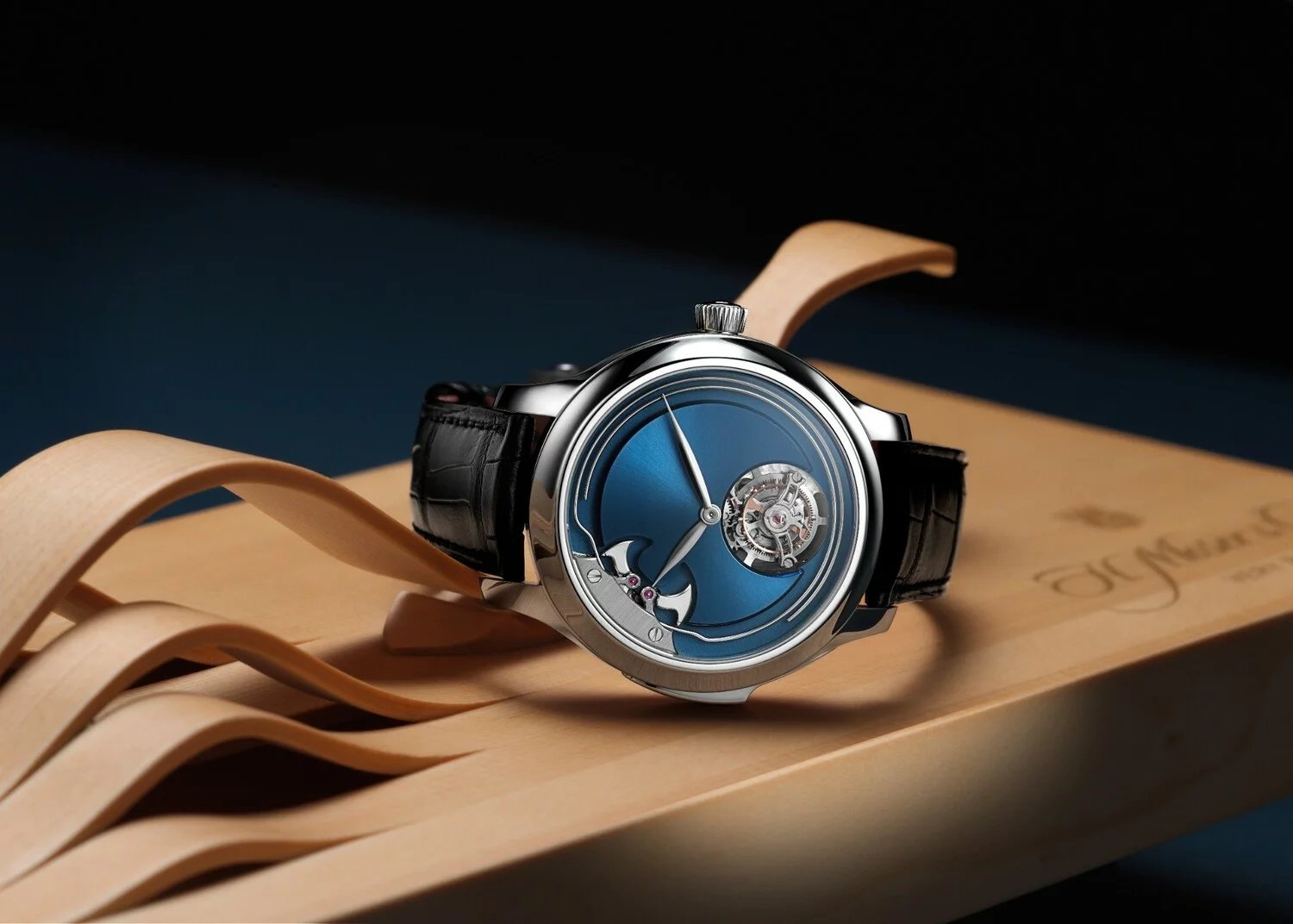
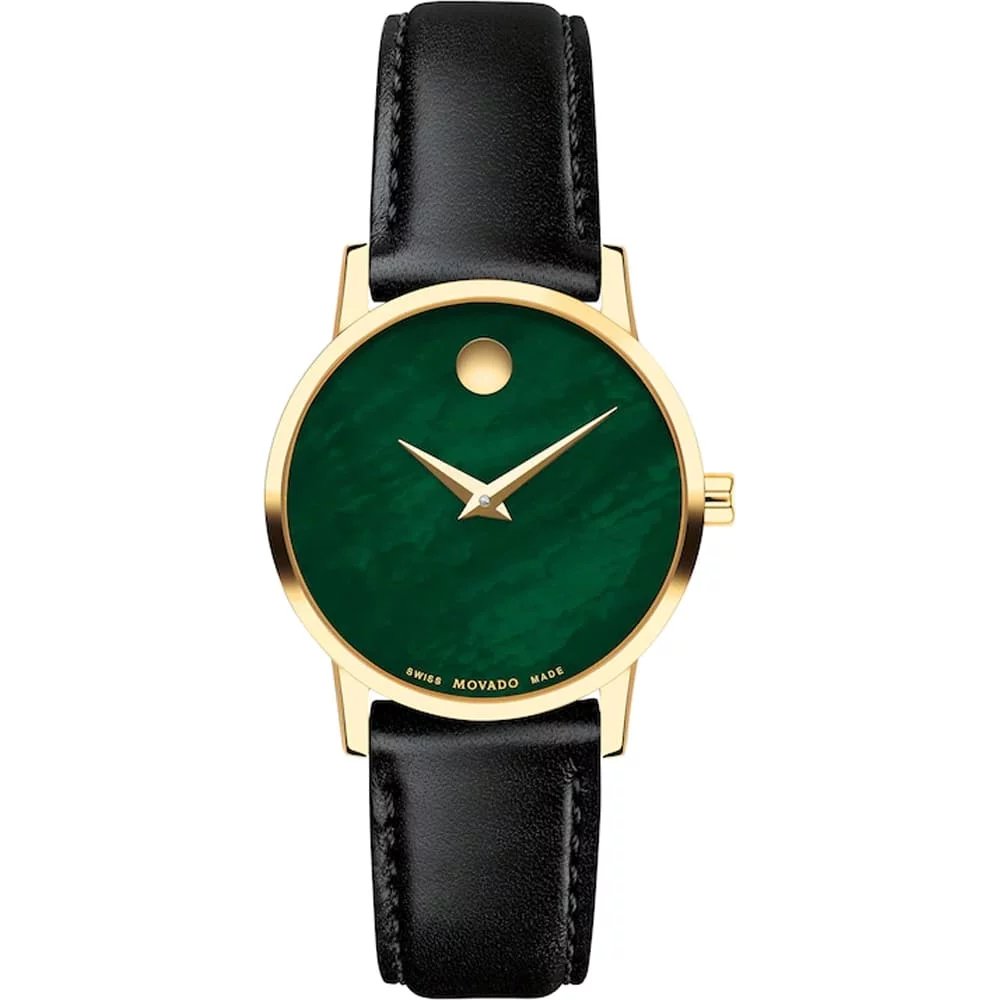
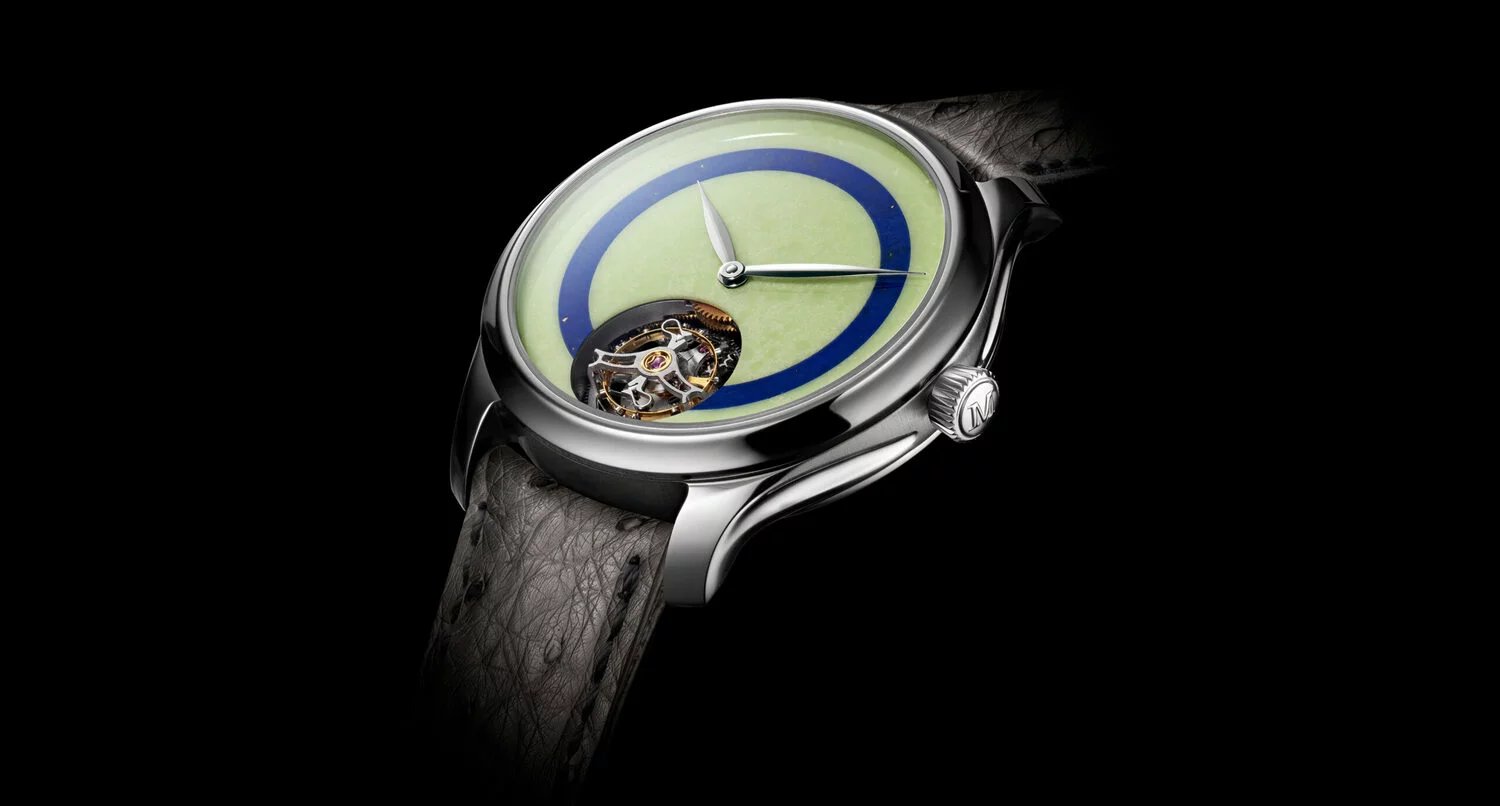
To follow the trail of watches without indexes is to encounter the masters of modernism. The Bauhaus spirit (pure form serving function), the ten principles of Dieter Rams (good design is the minimum possible design), the quest for Japanese sobriety which prefers material to effect. In watchmaking, one piece stands as a manifesto: the Movado Museum (1947), its point at noon signed Nathan George Horwitt, entered at MoMA for its symbolic power of the sun at its zenith. Closer to us, H. Moser & Cie has pushed the purity to the point of total silence with its Endeavor Concept: no indexes, no logo, smoked dials which capture the light like velvet. We also think of the ultra-thin lines of Rado True Thinline, of certain Scandinavian and Japanese experiences where the dial becomes monochrome, almost meditative. Everywhere, the same idea: remove to reveal.
When readability becomes impression
Classic objection: without an index, how can you tell the time? What if precision to the second was no longer the main mission of a contemporary watch? The smartphone rules surgical timing. On the wrist, watchmaking relishes its expressive freedom. With a bare dial, the indication becomes intuitive: the angle of the hands is enough to locate the moment — and it is often more than enough. This “gestalt” reading is based on some intelligent design choices.
- Hands at the right length: minute as close as possible to the flange, hour brought towards the center for clear proportions.
- Sharp contrast: mirror-polished hands on matte dial, or vice versa; sober but readable colors (black, ivory lacquer, smoky gradients).
- Slight curvature of the glass or discreet highlight: visual guide without marking, like a cast shadow.
- Textured finishes: sun brushing, lacquered varnish, velvety grain which captures the light and depicts the time without numbers.
The grammar of radical design
Minimalism requires mastery. On a dial without indexes, there is no decoration to compensate for a wobbly balance. Everything comes down to proportions: a case that is too large transforms the void into a desert; too small, it stifles the idea. Thinness matters — the “ultra-thin” profile reinforces the feeling of quiet elegance. The horns should draw a flowing line; the crown, being present but never intrusive. The back, often visible through a sapphire crystal caseback, allows us to tell the counter-story: discretion in front, mechanics behind. This is the favorite double game of aesthetes.
- Ideal diameter: often between 36 and 40 mm so that the space remains inhabited.
- Contained thickness: thin profile for look and glide under the sleeve.
- Movement: a careful caliber (even simple) highlights the honesty of the concept.
- Light domed sapphire crystal: brings softness and subtle reflections.
- Dial colors: deep monochrome (black, anthracite, ivory) or nuanced smoked to play with the light.
Style: the ally of the minimalist wardrobe
A watch without indexes is worn like a nice white shirt: it doesn’t attract attention, it deserves it. She talks about taste as much as restraint. With a suit, it advantageously replaces the classic “dress watch”, adding a frank modernity. On raw denim, it creates a chic, almost architectural contrast. The secret? Let the material express itself.
- Straps: smooth chocolate calfskin, matte alligator, raw nubuck, or Milanese steel for a measured shine.
- Palette: monochrome or similar tones (charcoal, navy, sand) to extend the minimalism.
- Textiles: favor textures (flannel, twill, fine knit) which match the refined dial.
- Jewelry: a single companion (signet ring, fine bangle) is enough; the rest is superfluous.
Some icons and avenues to explore
To grasp the spirit of this trend, two benchmarks are essential: the Movado Museum, a museum icon and manifesto of the dial reduced to the idea, and the H. Moser & Cie Endeavor Concept, probably the purest expression of contemporary watchmaking minimalism. Certain versions of the Rado True Thinline also push sobriety further, with ultra-thin ceramic poetry. Around them revolves a galaxy of Scandinavian and Japanese projects where we follow the right line, often in limited series. The advice here is less to collect names than to seek balance: the one which, on your wrist, makes you forget the watch and recalls the sensation of time.
And tomorrow?
In the era of screens saturated with icons, the watch without index plays counter-programming. It offers a luxury of silence and duration: an aesthetic that depends neither on fashions nor on updates. It appeals to minimalists because it rejects unnecessary ornament, but also to design lovers because it reveals the watchmaker’s hand, naked, without artifice. In this purity, the dial becomes a playground for light, and time, an art of living. It’s no less horological. It’s watchmaking, minus the noise.