Table of Contents
The Oyster obsession: when the watch must first survive
At Rolex, everything began with a promise sealed in 1926: the Oyster, a waterproof, hermetic watch, made to face everyday life like the sea. Hans Wilsdorf never sold mechanisms in a window; he sold the idea that a timepiece should work, again and again, whatever the conditions. The solid, screwed, grooved bottom – which can only be opened with a proprietary tool – has become the seal of this promise. A case that reads like a shell. For almost a century, the transparent background seemed irrelevant: a porthole is an invitation to look, not a guarantee of survival.
Solidity, tightness, consistency
- Structural rigidity : a screwed metal back reinforces the integrity of the Oyster. On a Submariner or a GMT-Master, every tenth of a millimeter counts to resist pressure, twists and shocks.
- Controlled waterproofing : steel (or gold) against gasket, it is a proven interface. Adding a sapphire on the back side introduces one more variable to seal and test.
- Resistance to hazards : magnets, thermal variations, impacts… The solid bottom acts as a simple and reliable shield.
- Standardized maintenance : a uniform background, a uniform procedure. The foundation of a global maintenance network calibrated for reliability, not window dressing.
An aesthetic language
Rolex has built its legend on discreet luxury. Where others exhibit their movements like mechanical ballets, the crown prefers ergonomics, readability, industrial coherence. Show the movement? It would almost betray a credo: performance rather than spectacle.
An assumed culture of secrecy
In the Rolex imagination, the inside of the watch belongs to the adjuster, not the owner. Accuracy is observed over time, not with the naked eye. This discretion maintains a rare asset: mystery. Like a GT without a glass hood: the power is enough, no need to show it.
A forgotten precedent: the transparent demonstration back of 1931
If the history of Rolex seems for a long time to have been written without any mechanical transparency, one historical exception deserves to be remembered: in 1931, the brand is said to have produced a Rolex Oyster Perpetual prototype with transparent back. This model, not marketed, was used to show customers how the brand new system works. Rotor Perpetualrevolutionary automatic winding mechanism for the time.
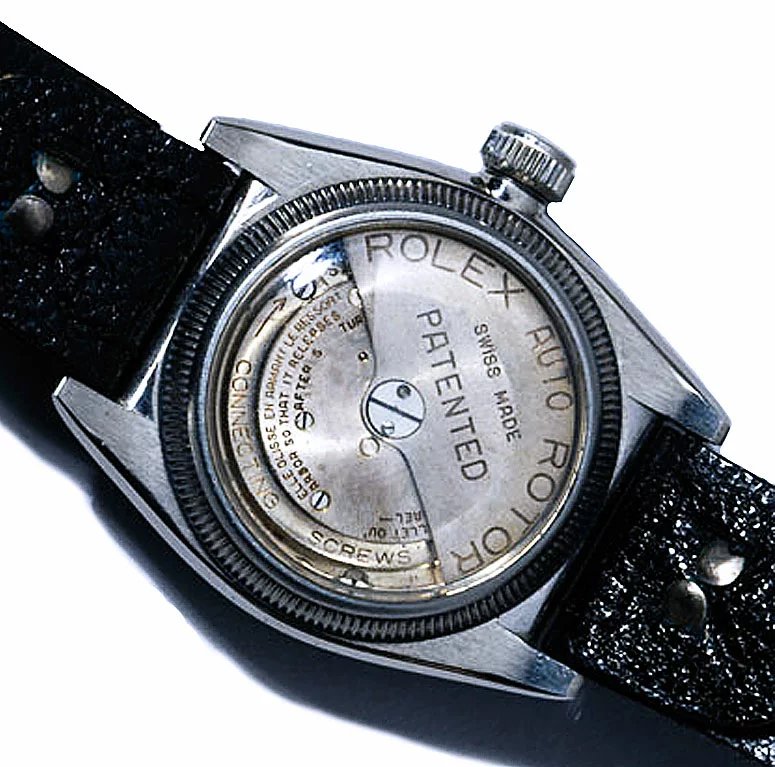
The transparent back, probably made of Plexiglas, made it possible to observe the oscillating weight marked “Rolex Auto Rotor”, rotating freely in both directions. This system exploited wrist movements to wind the watch continuously, without manual winding.
It was therefore not a watch sold to the public, but a educational tool — a one-off technical showcase. This pioneering gesture demonstrates that, from its beginnings, Rolex has been able to combine technical innovation and demonstration, while preserving its image of serial robustness.
Exceptions that redraw the framework
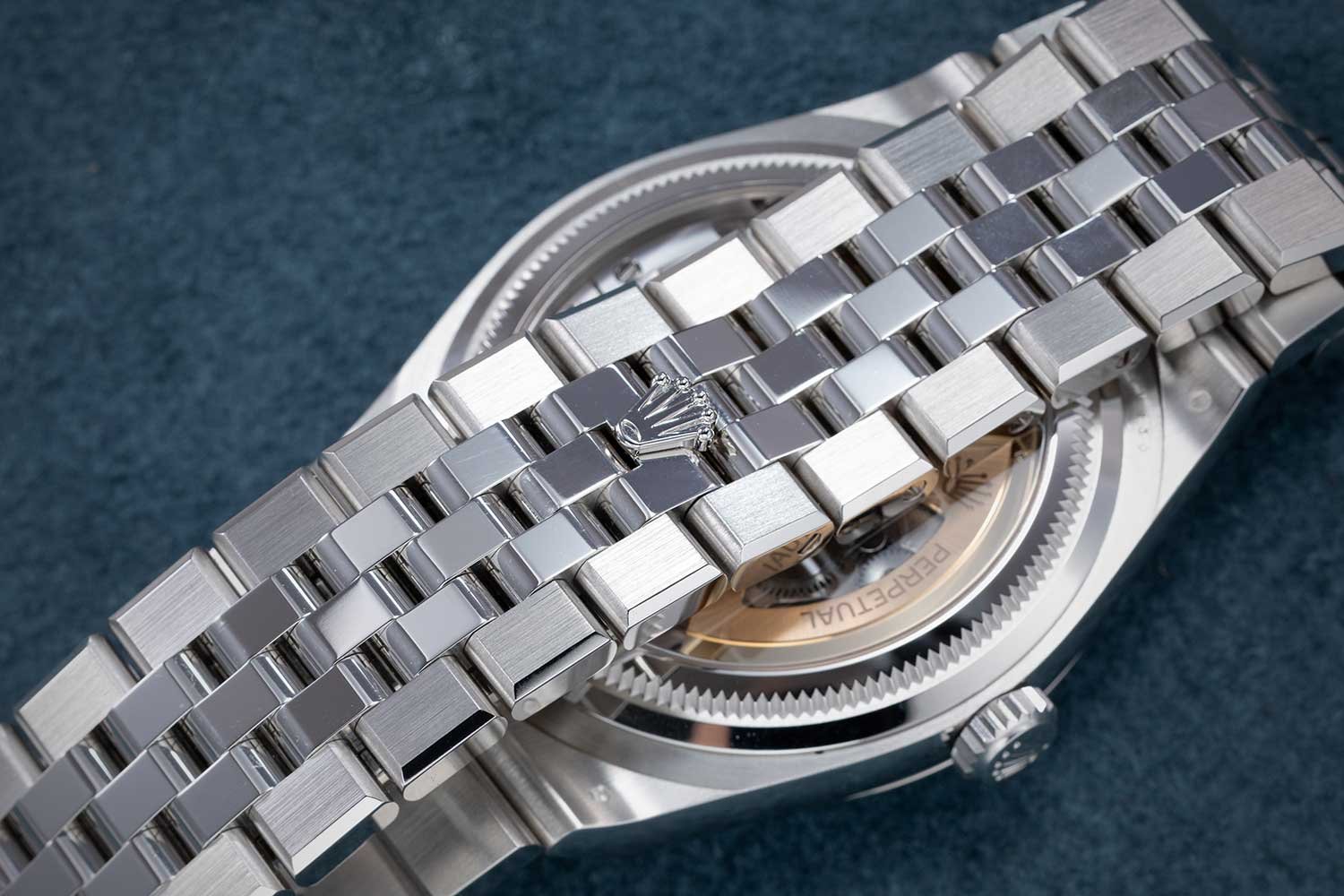
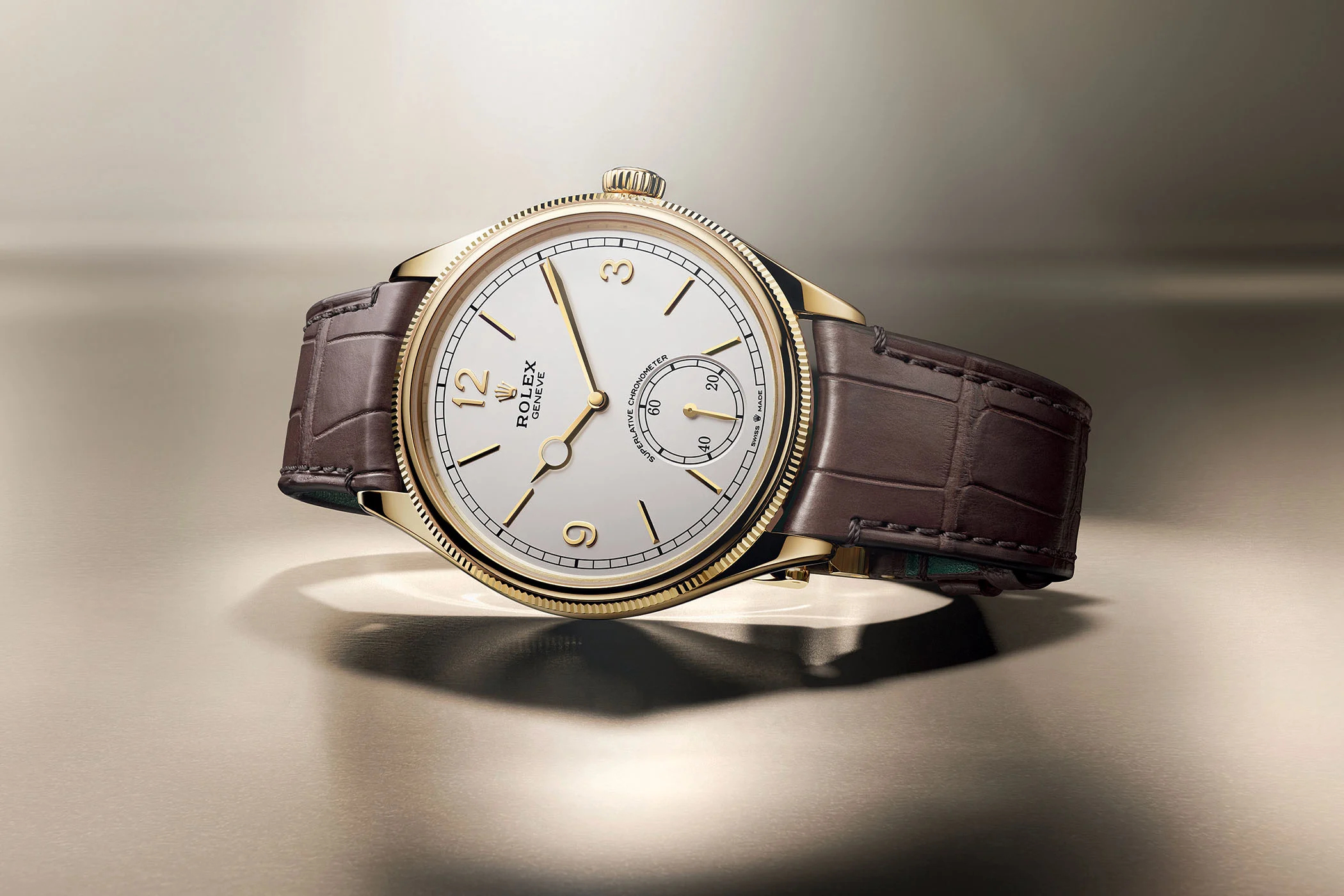
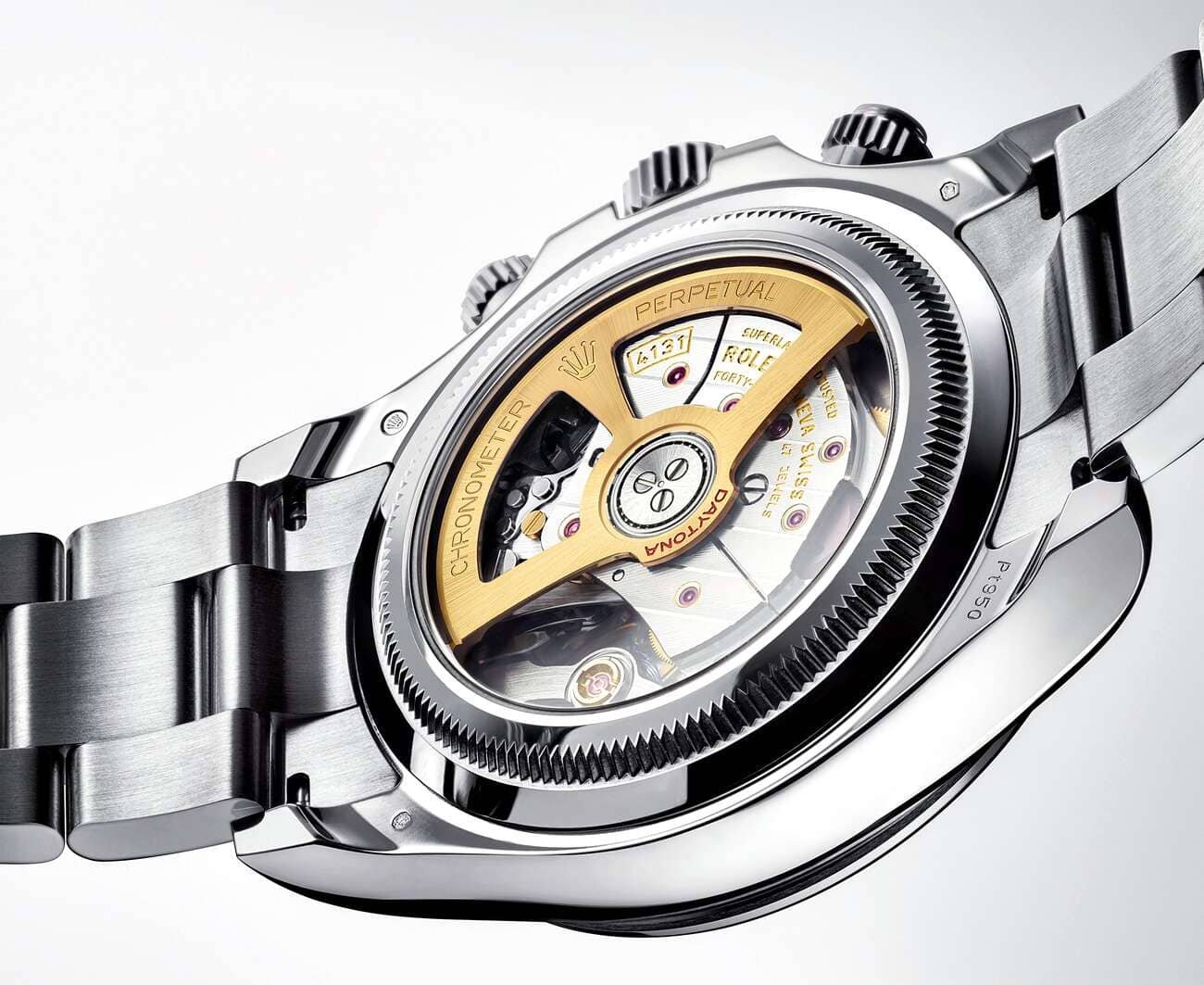
Everything changes in 2023. The Rolex 1908, a dress watch, has a sapphire crystal case back revealing its subtly decorated caliber 7140. Then comes the big surprise: for the 60th anniversary of the Daytona, the reference 126506 in platinum receives a transparent back revealing the caliber 4131 and its gold oscillating weight. A first on a production sports model.
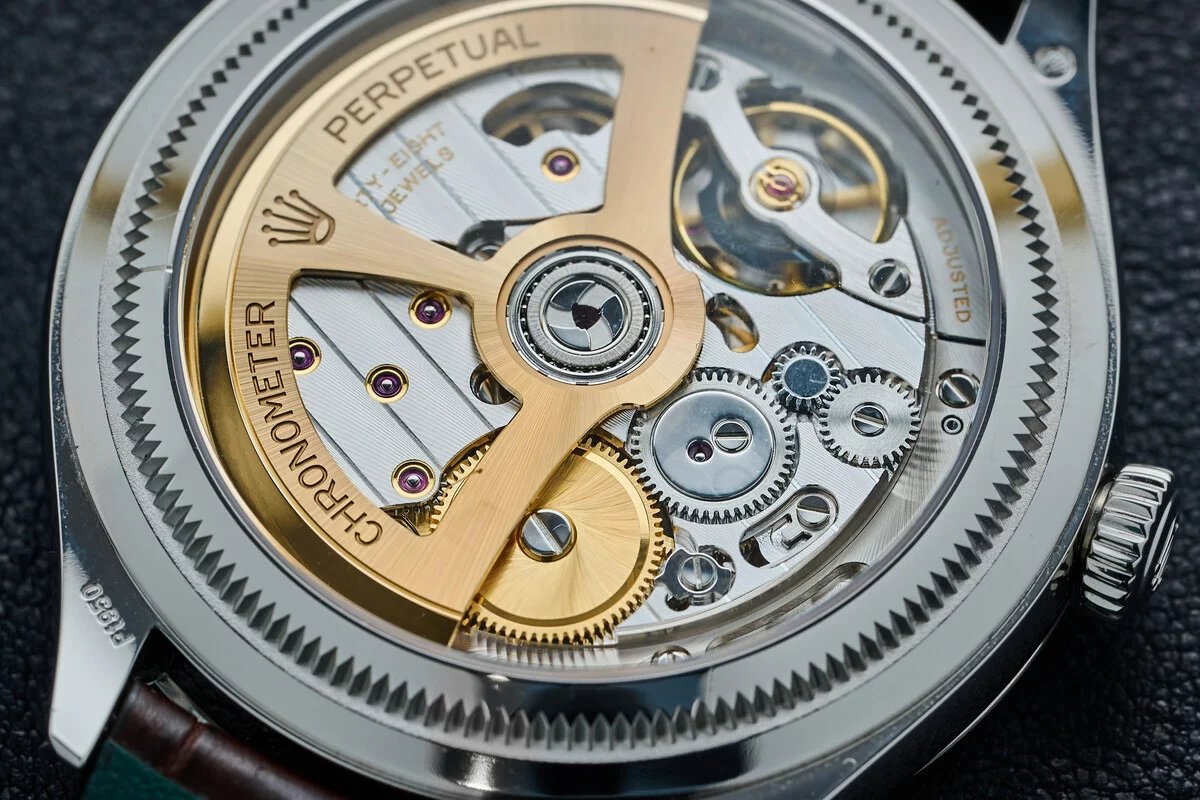
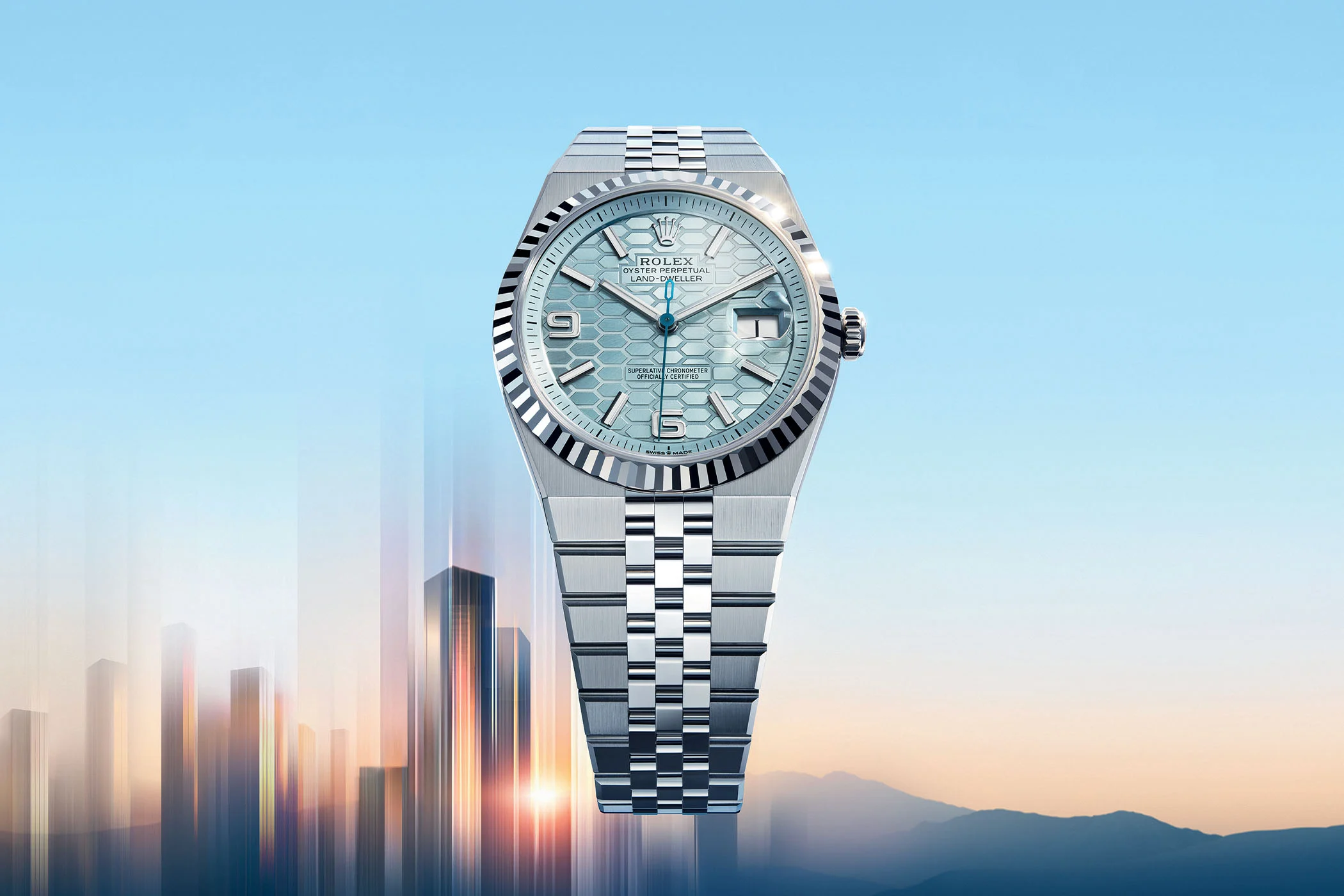
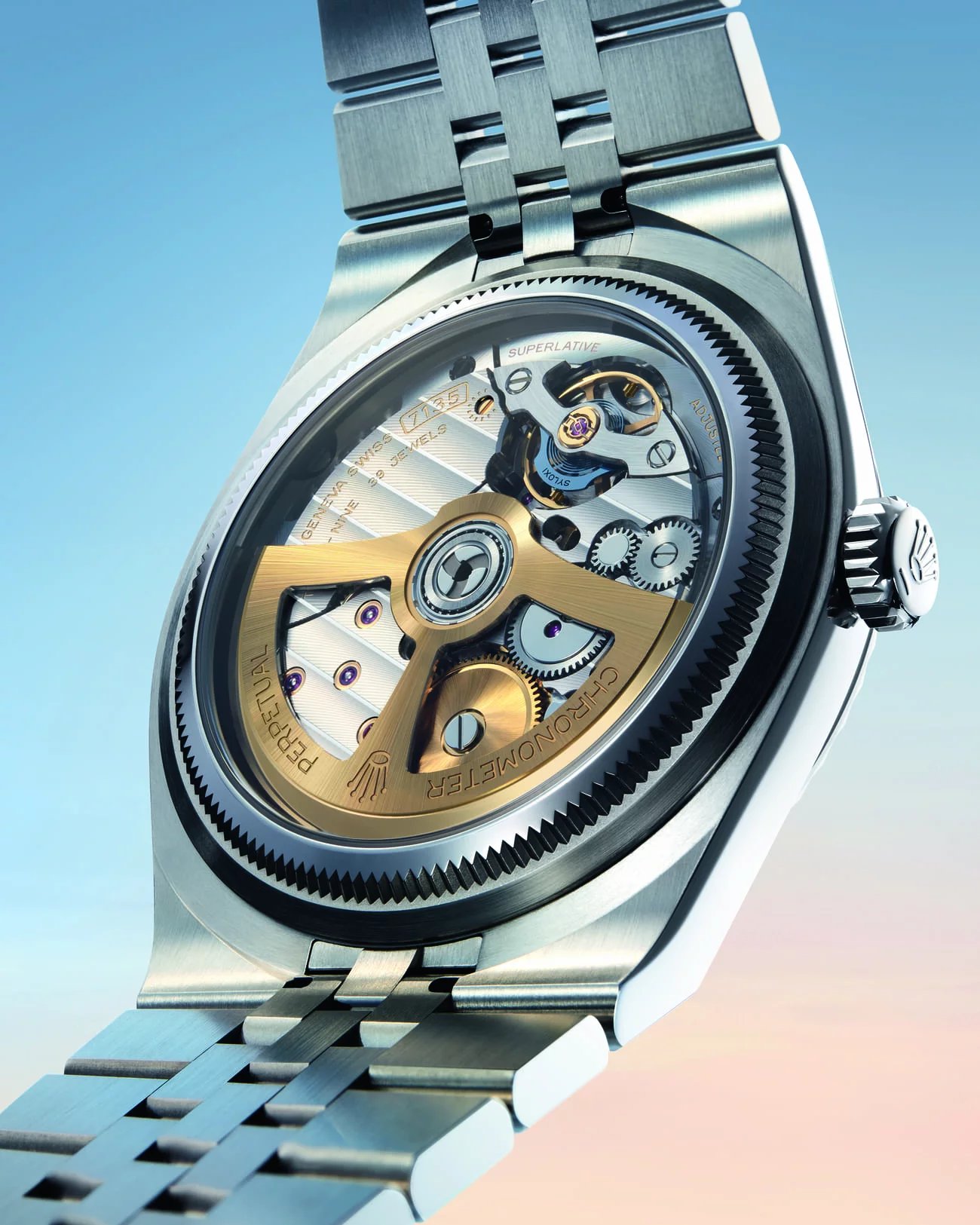
In 2025, Rolex confirms this opening with the Land-Dweller: modern Oyster watch in Rolesor, integrated bracelet, caliber 7135 visible under a sapphire caseback. The exception becomes a selective strategy.
Three models, a common logic
- 1908 : dress watch, where aesthetics take precedence.
- Daytona Platinum : prestige watch, transparent back like watch box.
- Land Dweller : sport-chic, modern caliber, assumed openness.
Why Rolex is changing now
This change is neither a denial nor a publicity stunt. It responds to profound developments:
- Public expectation : amateurs want to see the movements, understand, admire.
- Technical evolution : modern calibers are aesthetic and deserve to be seen.
- Fine segmentations : Rolex is increasingly distinguishing its watch families. The solid back remains for the pros, the sapphire for the dressy or exceptional models.
- Industrial competence : Rolex has now mastered the constraints of waterproofing with a vité back.
In brief: Rolex, chosen transparency
- A protected heritage : the majority of Oysters remain closed, sealed, solid.
- Significant openings : 1908, Daytona platinum, Land-Dweller 2025.
- A clear strategy : transparency becomes a choice, not an obligation.
- A nuanced future : the rule remains, the exception asserts itself, consistency dominates.
FAQs
Which Rolex models have a transparent back?
Currently, the Rolex 1908, Daytona Platinum 126506 (since 2023) and Land-Dweller (2025) have a transparent sapphire case back.
Why did Rolex refuse transparent backs?
For reasons of robustness, waterproofing, sober aesthetics and industrial consistency. Above all, the watch had to be a reliable tool.
Will Rolex make transparent casebacks more widespread?
Unlikely. The brand seems to reserve this option for dressy or exceptional watches. The Oyster shell remains the majority.
Does a sapphire case back make a Rolex watch less waterproof?
No, so well designed. Recent models with a transparent bottom maintain water resistance up to 100 m.
Do you own a rare Rolex or want to know more about a specific model?
Leave a comment below or share this article with a lover of beautiful mechanics!