Table of Contents
The little drama of the morning: a frozen watch, time suspended
There is this gesture, intimate and almost ceremonial: grabbing your watch from the bedside table, feeling the cold metal or the weathered leather, then realizing that the seconds hand is still. Everything stops suddenly, as if the object decided to shut up. We shake the wrist slightly, we frown, we adjust the crown. And we ask ourselves, a little annoyed: why does it stop when I’m not wearing it? This phenomenon is particularly intriguing when it involves automatic movement, a silent dance that depends on your gestures. Yes, this article is aimed at watchmaking novices, but what enthusiast wouldn’t like to relive that moment when you discover the difference between a quartz movement and a mechanical movement?
The answer lies in a mixture of simple physics, watchmaking architecture and the philosophy of time. A mechanical watch is not a gadget: it is an organism. It lives off the energy we give it, and when we stop feeding it, it naturally ends up dying out. To extend its life and preserve its precision, it is essential to know how to maintain a mechanical watch on a daily basis.
The real reason: energy is finite, so is the power reserve
In a mechanical watch, everything starts with a reserve of energy stored in a spring: the mainspring, housed in a drum called a barrel. When you wind the watch (by hand) or when you wear it (if it is automatic), you tighten this spring. It then gradually relaxes to turn the gear, power the escapement and make the balance wheel beat. This precision and complexity are part of the timeless charm of mechanical watchmaking, which continues to seduce fans of automatic watches.
But this energy is not infinite. It corresponds to what we call the power reserve : the time during which the watch can operate without additional energy input.
How long can a watch last without a wrist?
- Mechanical watch with manual winding: often 40 to 50 hours, sometimes more.
- Modern automatic watch: frequently 38 to 72 hours.
- Long power reserve movements: 5 days, 8 days, or even more depending on the architecture.
If you leave a watch for two days without wearing it and it “only” has 40 hours of reserve, it will stop. It’s normal. This is neither a breakdown nor a whim: just the logic of a mechanism.
Automatic vs. manual: two ways to fuel movement
The hand-wound watch: the elegance of the ritual
With a manual watch, the situation is clear: if you do not wind the crown, the watch stops. Many fans love this ritual — a few turns every morning, like adjusting your tie. It is a direct link with the object and with a centuries-old watchmaking tradition. This looks like this in video:
The automatic watch: the illusion of autonomy
The automatic watch is wound using a rotor : an oscillating mass which rotates according to the movements of the wrist. The key word is there: movements. If the watch remains placed, the rotor will not turn. And if you have spent the day in front of a computer, short gestures and immobile wrist, the energy supply may be insufficient.
In other words, an automatic is not a “watch that never stops”. It’s a watch that winds itself if your life gives it rhythm.
Why do some stop faster than others?
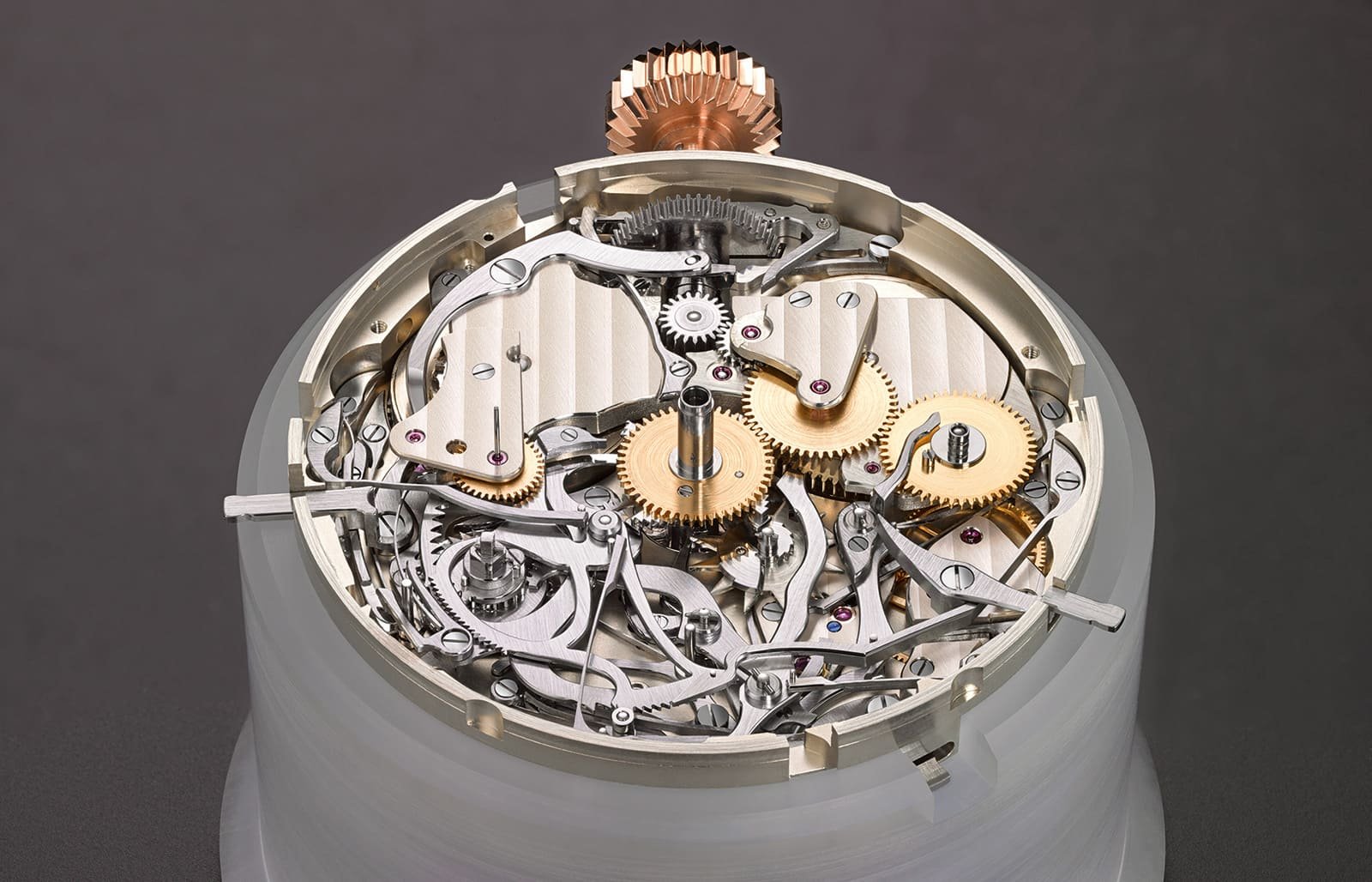
Two watches placed side by side do not necessarily have the same endurance. Several factors play a role.
1) A shorter power reserve
This is the most common case. Compact calibers, older movements, or certain models designed for finesse sometimes favor silhouette over longevity. A smaller barrel often means less energy stored.
2) A watch not completely wound
We sometimes install an automatic in the evening and tell ourselves that it has “made its day”. But if we put it on after lunch, or if the day was sedentary, it may never have reached full capacity. Result: it stops during the night or the next morning.
3) More demanding complications
Certain functions consume more: central seconds, large date, chronograph, additional displays, or even certain calendar systems. For the same design, the more things there are to train, the more the energy is distributed, and the felt reserve can decrease.
4) Lubricants, age, service
A mechanical watch is a set of controlled frictions. Over time, oils can degrade, thicken or migrate. The movement loses performance: the watch may then last less time, or even stop more quickly. It is a classic sign that a service (revision) is perhaps to be considered.
What about quartz watches, then?
If your watch is quartz and stops when you’re not wearing it, the logic changes. In principle, a quartz works without depending on your wrist: it is powered by a battery (or an accumulator, for solar). If it stops:
- Low battery (very common).
- Power saving mode on certain models: the hand may stop but the watch “continues” internally.
- False contact after shock or humidity.
In this case, stopping is not an expected behavior “by design” like on a mechanism: it is a signal to be interpreted.
The watch winder: chic solution or a bad idea?
The winder, this half-furniture, half-machine object, is often presented as the modern answer: it keeps the automatic watch moving when it is not on the wrist. This is practical, especially for watches with perpetual calendars or complex calendars, which are difficult to adjust after stopping.
But there is a cultural and mechanical downside. From an amateur’s point of view, leaving a watch running continuously may seem contrary to the very idea of a “living” watch going to sleep. From a technical point of view, a quality watch winder, adjusted correctly (correct direction of rotation, appropriate number of turns per day), is not a problem in itself. A poorly adjusted winder, on the other hand, can cause the watch to rotate unnecessarily and wear out certain parts more quickly in the long term.
A few simple habits are enough.
- Give it a real charge: If the watch has stopped, wind it (and/or wear it) before leaving. Many automatics accept manual winding.
- Alternate intelligently: if you change watches every day, choose models with a 60–72 hour reserve… or accept the idea of resetting them, which is part of the charm.
- Check the status of the movement: a reserve that drops significantly may indicate a need for revision.
- Avoid unnecessary shocks: an automatic watch does not like impacts, even if it is robust.
What watchmaking says about us: a watch stops because it is not worn
There is, in this technical question, an almost literary truth: a mechanical watch stops when it is not worn because it was designed to accompany a life. Pocket watches wound up out of necessity, automatic watches invented a form of symbiosis: your movement creates its own. When you leave it on a shelf, it turns off without a problem.
And perhaps this is what distinguishes mechanical watchmaking from the rest: it does not promise eternity. It promises continuity, as long as you are there. Setting your watch back to time isn’t a chore. It’s a return to the present, a brief exchange with an object that measures time… asking, discreetly, that we give it a little.