Table of Contents
A tiny detail, a huge signature
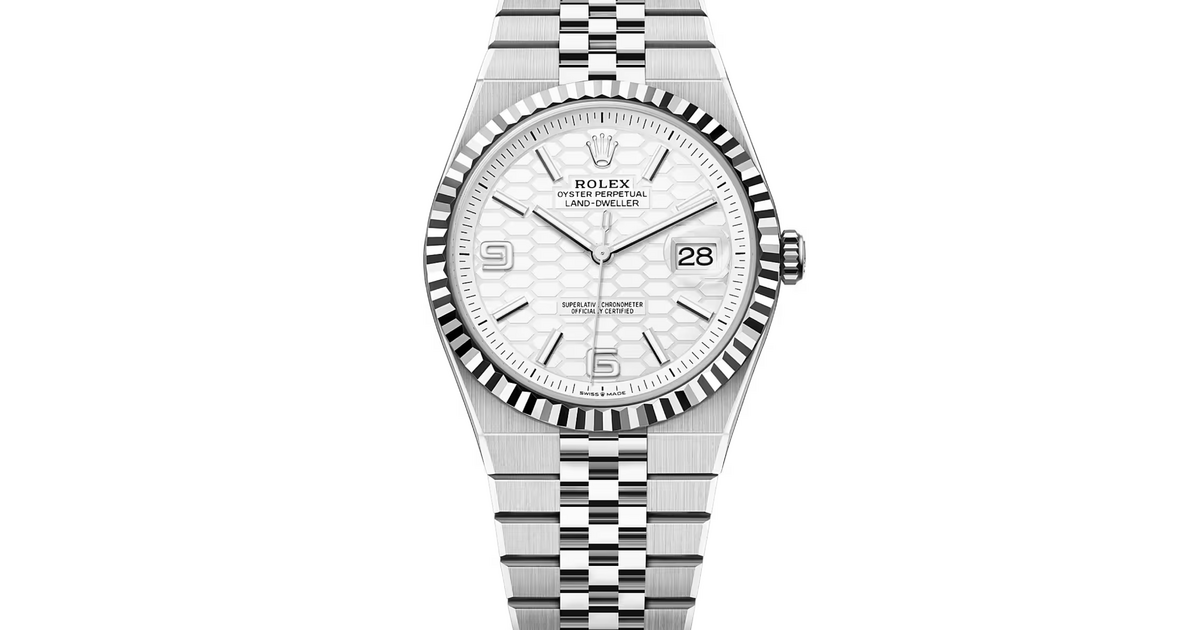
In the watchmaking world, certain complications are very “visible”: chronographs with multiple counters, perpetual calendars, tourbillons that rotate like mechanical jewels. But there are also more discreet complications, those that you first notice out of the corner of your eye, before fully appreciating them. The small seconds is a good example: an aesthetic and technical choice that says a lot about the watch. Furthermore, the central seconds is more visible in some watches, offering a different perspective on the time display.
If you have ever seen a dial where the seconds does not appear via a central hand, but in a small sub-counter, often placed at 6 o’clock (sometimes at 9, 3, or even off-center), then you have come across a small seconds watch. On the surface, it’s just another way of displaying time. In reality, it is a direct link with the history of watchmaking, a heritage of pocket watches and the noblest manual movements.
What is a small seconds watch?
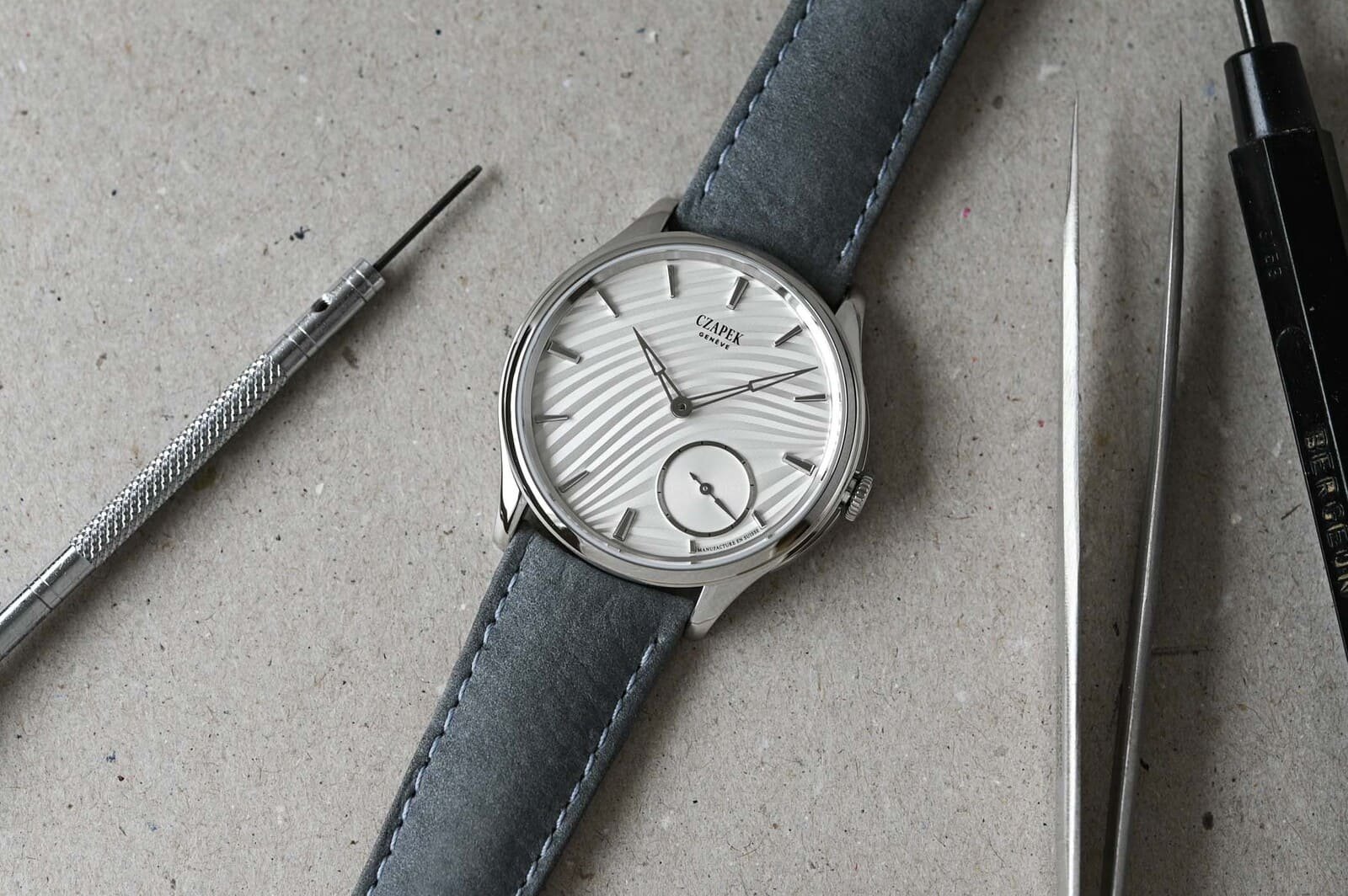
A small seconds watch is a watch whose seconds are displayed on a dedicated counter (a sub-dial), and not via a central hand. The hours and minutes generally remain displayed in the center. The small seconds can be:
- Axial : placed on the main axis of the watch, but with a different hand (rarer).
- Deported : in a separate subdial, the most common configuration.
- Off-center : non-traditional position, for a contemporary design effect.
Visually, it is a dial that breathes differently: the composition becomes slightly more complex, the center gains in sobriety, and the eye is naturally guided towards a secondary point. This may seem trivial, but this is precisely what gives it its charm: an elegance that does not impose itself, it insinuates itself.
Why is the second hand not in the center?
The reason is first mechanical and dates back to the architecture of historical calibers. In many classic movements, particularly those from pocket watches, the wheel driving the seconds is naturally located in a location that facilitates the hand coming out… out of the center. Converting this movement into a wristwatch (or resuming its spirit) often leads to placing the second in a separate register.
Conversely, the central second became widely popular with industrialization and the evolution of gear trains, then with the advent of tool watches in the 20th century: more immediate reading, better readability in action, and a feeling of increased precision.
The small seconds retains the scent of the workshop: a choice of construction, not just a graphic fantasy.
A history rooted in pocket watches
To understand the small seconds, you have to imagine a 19th century pocket watch, in a gentleman’s waistcoat. On these pieces, the seconds subdial at 6 o’clock is almost a standard. It responded to a logic of balance: main hands in the center, secondary information at the bottom, all framed by indexes often painted or enameled.
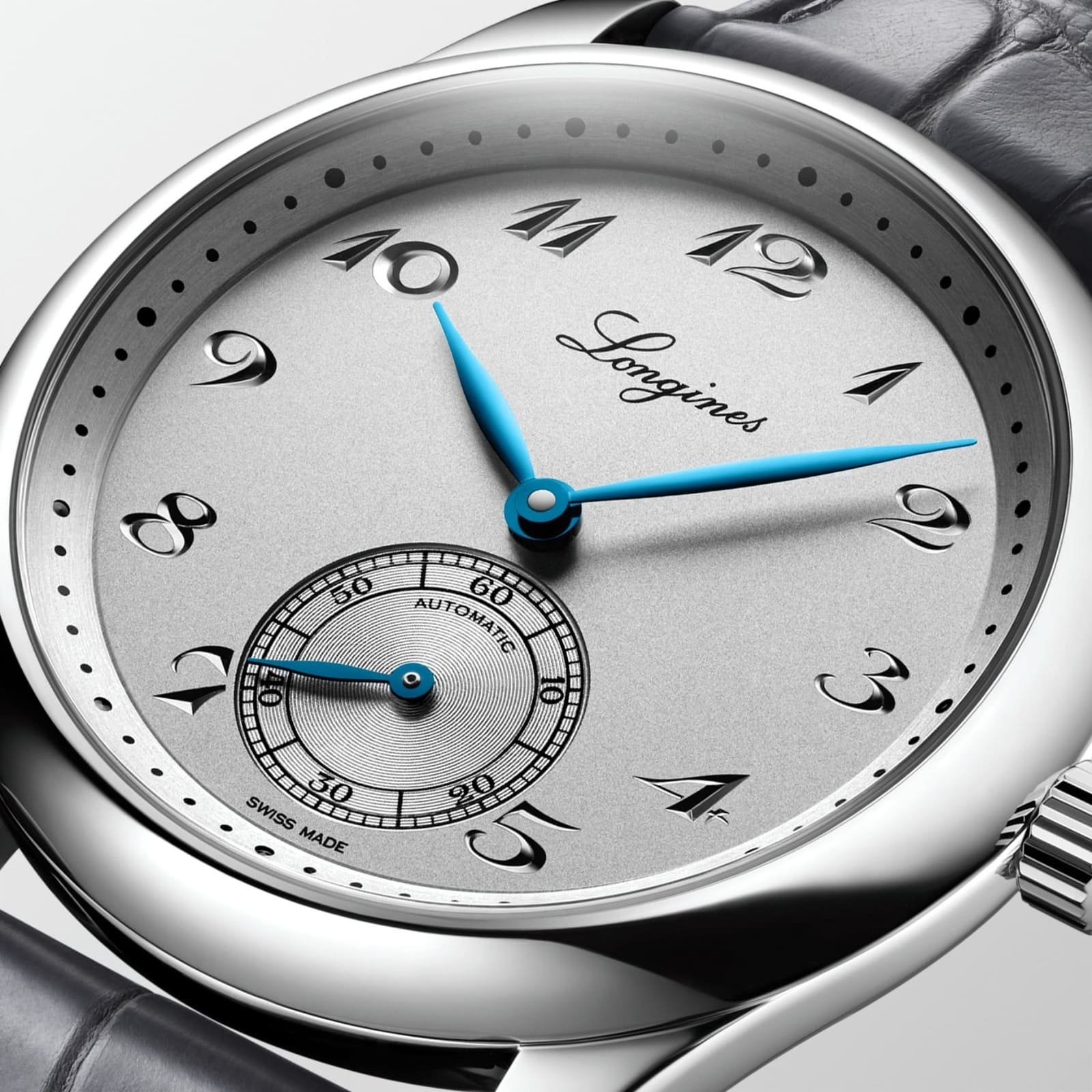
When wristwatches took over at the beginning of the 20th century, watchmaking naturally retained these codes. The first wrist watches used miniaturized or adapted pocket calibers, and therefore… small seconds. They become the visual language of classicism.
Later, in the 1930s to 1950s, the small seconds also made their mark on refined city watches, very often manually wound. Even today, it remains associated with a certain idea of the dress watch : calmer, more composed, almost literary.
Small seconds vs central seconds: what it really changes
Readability and perception of time
A central seconds hand is more visible: it sweeps across the dial, structures the space and gives a dynamic sensation. On a small second, the movement is more discreet. Some see it as a less immediate reading, others as poetry of detail : the time is there, but it does not seek to attract attention.
Dial Balance
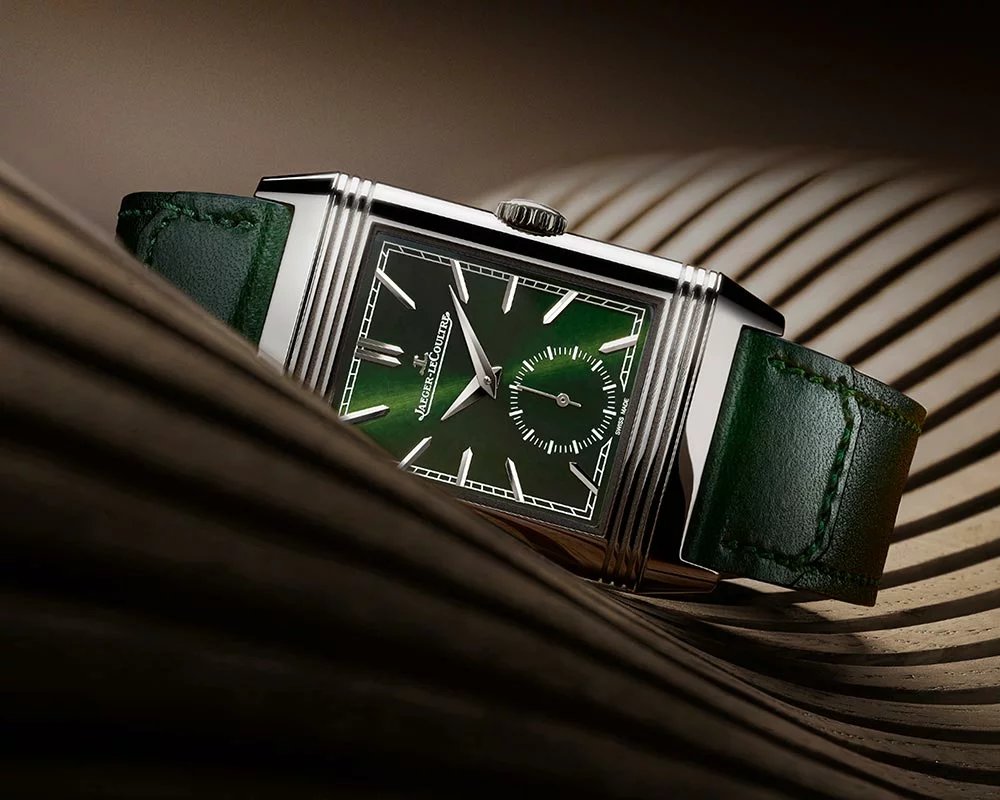
The small seconds adds a graphic anchor point. On a minimalist dial, it can become the unique visual “event”, like an architect’s wink. On a more classic dial, it reinforces a natural symmetry, especially when placed at 6 o’clock.
Architecture of movement
Depending on the caliber, the small seconds may be the result of traditional construction. In some cases, brands use a movement intended for a central seconds and add a module or modification to move the display. Purists often appreciate movements designed from the outset for a small seconds, as this sometimes results in more elegant integration (and a better proportioned dial).
The major variants: when the small seconds becomes a style terrain
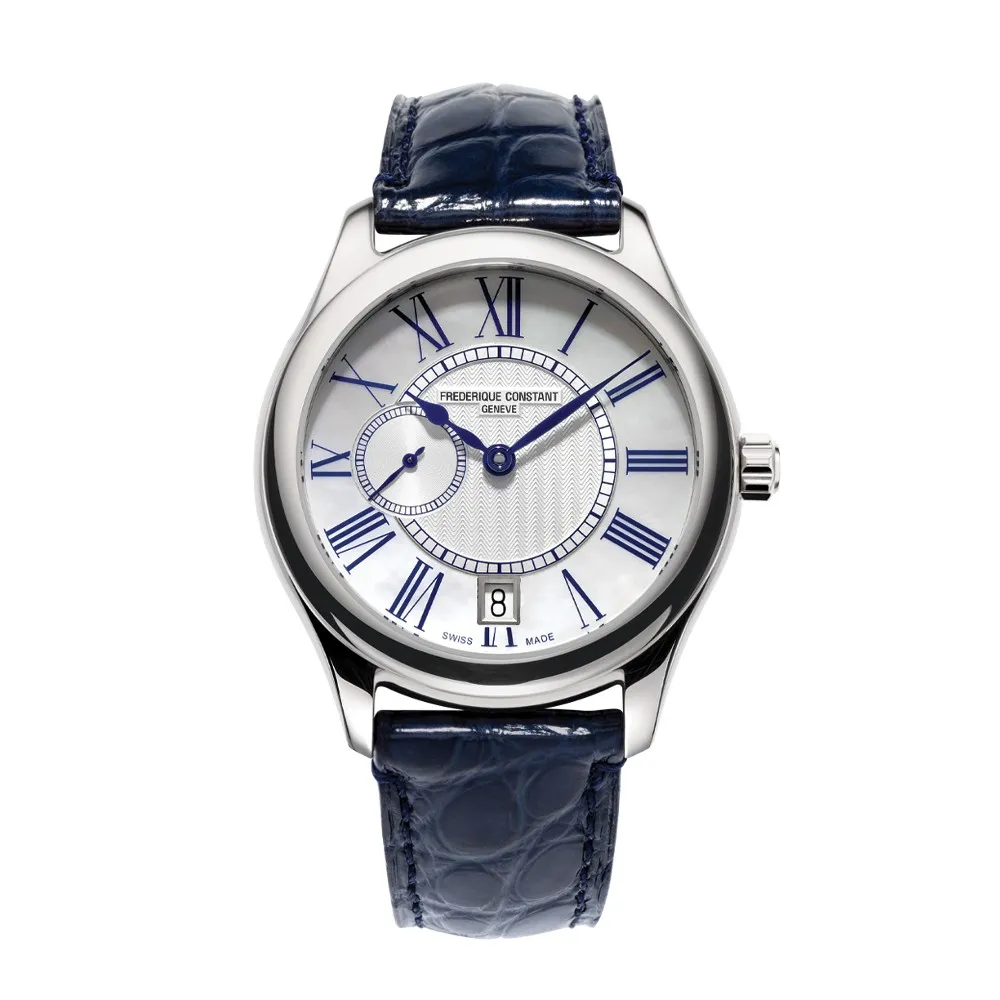
Small seconds at 6 o’clock
This is the most classic version, the most “pocket watch transposed to the wrist”. It immediately evokes traditional watchmaking, Roman or Arabic numerals, sectoral dials, leaf or stick hands. On a dress watch, it’s an almost timeless choice.
Small seconds at 9 o’clock (or 3 o’clock)
It is often found on military-inspired watches or on certain historic calibers designed differently. At 9 o’clock, it gives a more instrumental, more “tool” feeling, especially when the dial uses technical typography.
The off-center small seconds
More contemporary, it plays on asymmetry and negative space. Some houses make it a design signature: the display becomes a composition, almost a painting. This is where the small seconds leaves the simple terrain of tradition to enter that of watch graphics.
Why collectors love the small seconds
First there is a question of taste : the small seconds is often perceived as more formal, more “serious” in the good sense of the term. It evokes hand-wound watches, fine calibers, proximity to the mechanism. The act of winding your watch every morning fits perfectly with this type of display: an elegant, almost meditative routine.
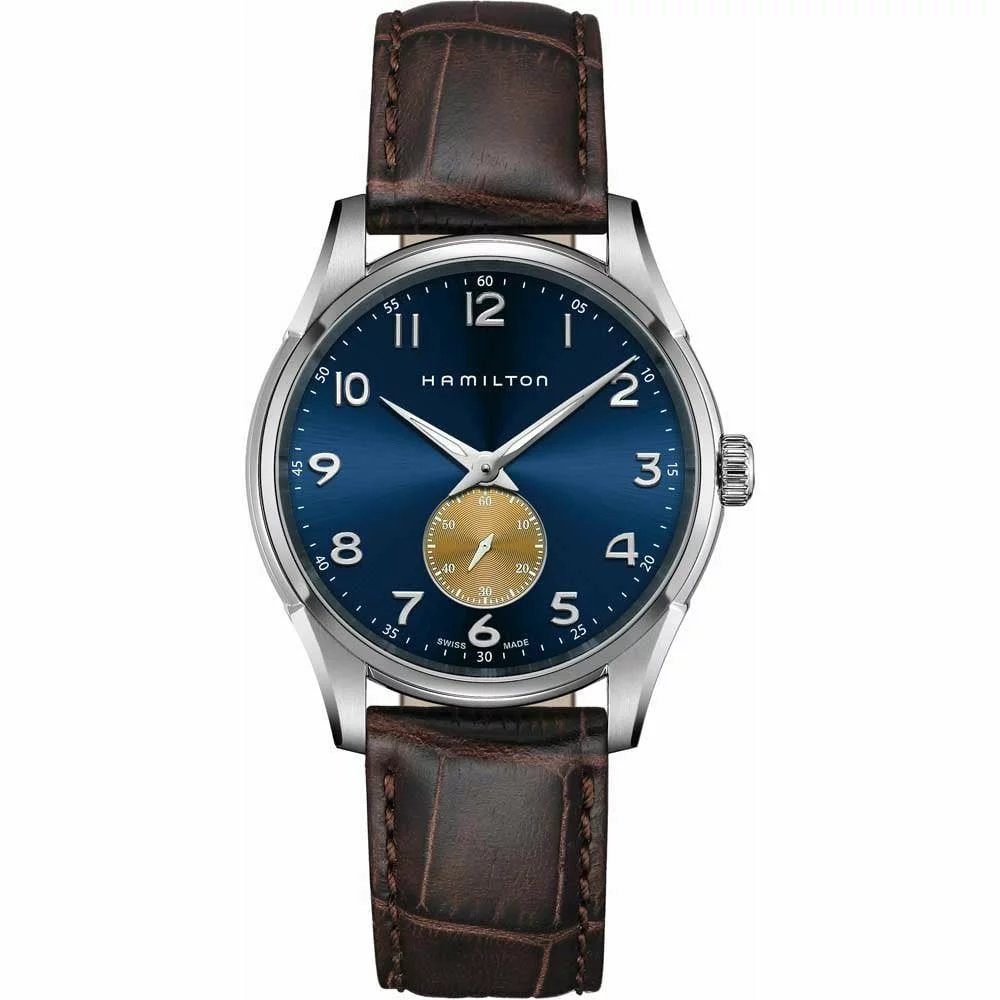
There is also a cultural dimension: wearing a small seconds is wearing a code. A nod to history, to pocket watches, to the workshops of yesteryear. It’s not a spectacular complication, but it is a sign of watchmaking culture.
Who is a small seconds watch for?
To those who love watches for what they say, not just what they do. The small second seduces:
- lovers of dress watches and classic proportions;
- enthusiasts of manual movements and traditional watchmaking;
- those looking for a distinctive detail, without ostentation;
- collectors attracted by a “vintage” or neo-classical aesthetic.
It also works very well as a first serious watch: it has that extra soul which is often missing from dials that are too “flat” or too standardized.
Beyond the simple presence of the sub-dial, certain clues betray careful execution:
- Proportions : a well-sized sub-meter, neither too small (gadget effect), nor too large (it unbalances).
- Finishes : azure circle, snaillage, texture contrast (matte vs sunburst).
- Lineups : good integration with the indexes and the typography of the dial.
- Depth : slight hollow in the sub-dial, which gives relief and captures the light.
In the best case, the small seconds resembles punctuation: it does not steal the show, it signs the sentence.
The final word: the elegance of those who know
The small seconds watch is not an aesthetic whim. It is a mechanical heritage, a cultural code, and a different way of inhabiting time. Where the central seconds affirms the movement, the small seconds suggests it. It reminds us that watchmaking is not only a quest for performance, but an art of measurement, detail and composition.
And perhaps that, deep down, is its power: the small seconds doesn’t just count. It sets a rhythm. A discreet rhythm, but terribly chic.