A different way to tell time
In the collective imagination, a “classic” watch tells the time with hands: one for the hours, the other for the minutes, sometimes a second hand. It’s elegant, intuitive, almost universal. And then there is another grammar of time, more graphic, more surprising: the jumping hour watch. Here, the time does not progress by sliding, it changes suddenly, like a billboard that updates by the second. One moment you read “10”, the next “11”. Between the two, nothing. This jump is fascinating, as is the mechanism of the jumping seconds, which intrigues with its unique rhythm.
Long considered an amateur curiosity, the jumping hour regularly returns to the forefront, driven by a taste for poetic complications, retro-futuristic design and a certain discreet luxury: that of mechanisms that we choose for the pleasure of understanding, rather than for pure efficiency. This timeless charm is also what makes the mechanical watch so fascinating, an object that continues to seduce with its beating heart on the wrist.
What is a jumping hour watch?
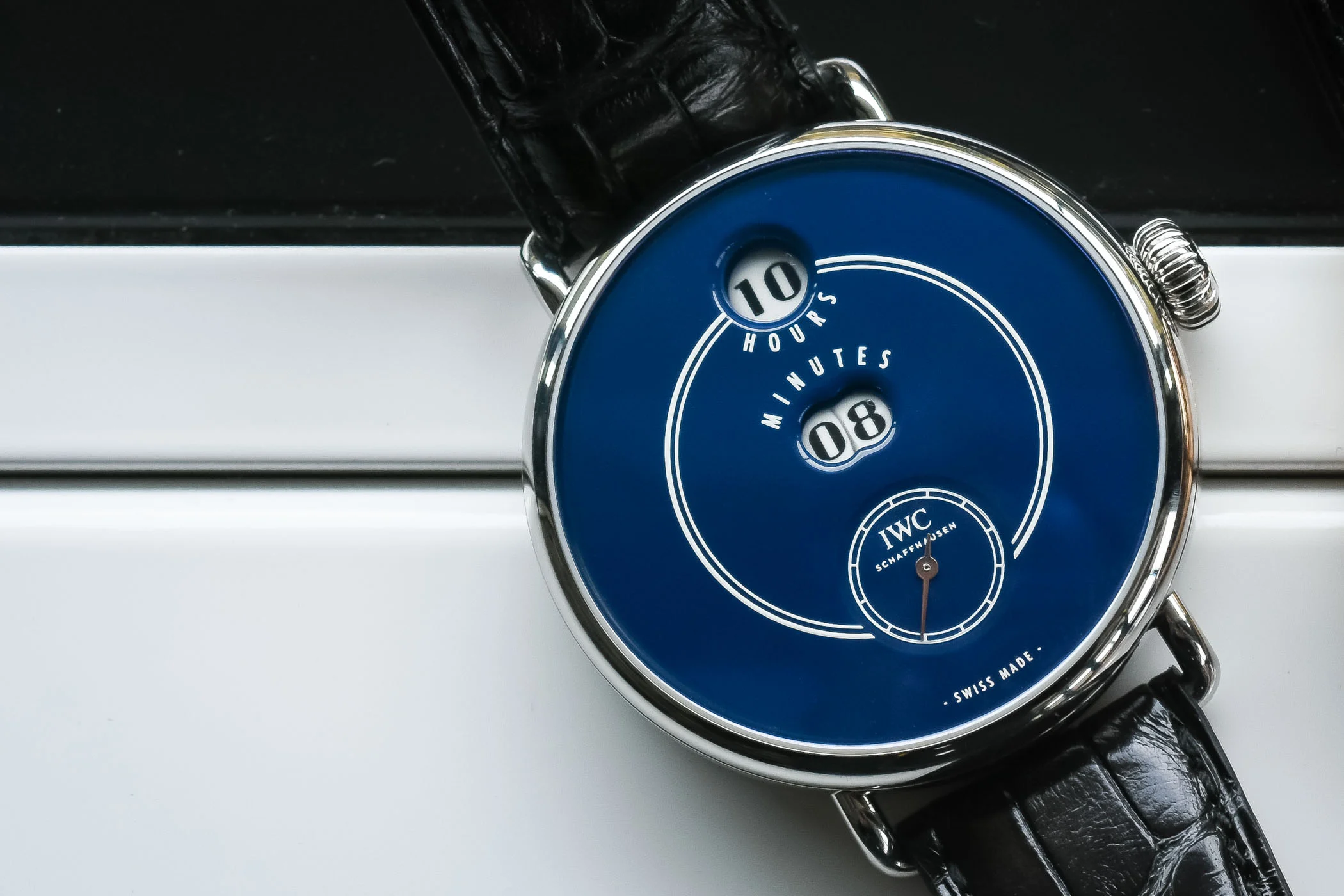
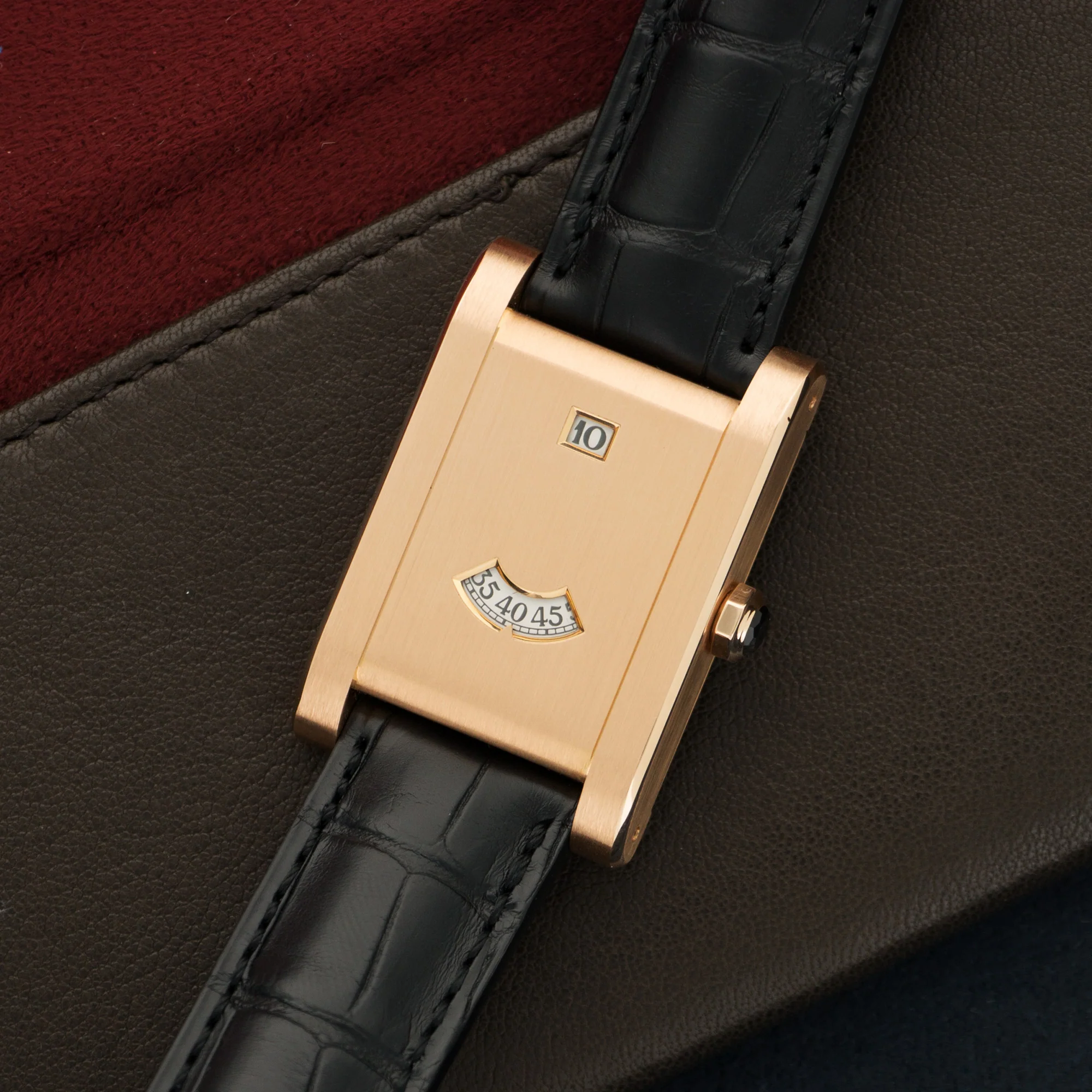
A jumping hour watch is a watch whose hours are indicated by a disc – or an aperture – which changes instantly at each full hour. Unlike an hour hand which advances gradually, the display moves suddenly from one number to the next. This fascinating mechanism recalls the precision and complexity of an automatic movement, where each component plays a crucial role in ensuring perfect time display.

In most configurations, the minutes remain displayed in the traditional way (central hand) or via a disc. But the essence of the complication is the time that “jumps”.
One display per window, with a very “instrument” charm
Visually, the jumping hour is often recognized by a window cut into the dial, generally placed at 12 o’clock, 6 o’clock or sometimes on the side. Through this window appears a number printed on a disk. When the full hour comes, a spring system releases the disc which advances one notch, sharply, immediately.
Jumping hours vs digital time
Jumping hours are often confused with a “digital watch”. In common usage, “digital” refers to watches with an electronic screen. However, the jumping hour can be 100% mechanical: no chip, no screen, only wheels, cams and springs. It is this ambiguity that gives it its charm: reading numbers, but animated by the most traditional of watchmaking technologies.
Without going into the complete movement plan, the principle is broken down into a few key elements:
- A disc of hours (bearing the numbers 1 to 12, or 0 to 23) visible in a counter.
- A restraint mechanism which keeps the disc perfectly aligned on each hour.
- An energy storage system : over 60 minutes, a spring gradually tightens.
- A trigger (often a cam or a finger) which, at the exact moment, releases the accumulated energy.
The result is this instantaneous, almost theatrical change. Some fans watch for it as we wait for a chapter to pass: a mechanically choreographed micro-scene, at a fixed time.
A little history: when jumping hour was the future
Jumping hours are not a contemporary fad. Their story spans the 20th century with very revealing peaks of interest.
The origins: the quest for readability
The idea of displaying time by numbers long predates quartz. From the end of the 19th and the beginning of the 20th century, watchmakers imagined aperture systems to simplify reading, particularly for professional or nighttime use. Reading “3:15” at a glance, without interpreting the position of the hands, is obviously practical.
The 1920s-1930s: the golden age of Art Deco
The Art Deco period loves geometry, structured dials, the idea of “modernist” time. Aperture watches, including jumping hours, fit perfectly into this aesthetic: rectangular cases, typographic display, ocean liner spirit and architecture.
The cyclical return: watchmaking retro-futurism
In every era that fantasizes the future, the jumping hour returns. For what ? Because it looks like a promise of modernity… but in a mechanical version. It speaks as much to those who love history as to those who love design, and it offers a rare pleasure: that of a complication that is visually understood.

Why enthusiasts love jumping hours
Interest is not limited to originality. A good jumping hour has very precise, almost sensory qualities.
1) Immediate, graphic reading
A time window can be read in a fraction of a second. In a world saturated with screens, paradoxically, this “digital” readability on a mechanical watch is something refreshing.
2) A complication that tells something
Wearing a jumping hour is carrying a small manifesto: we choose an object that does not seek the norm. It is the elegance of the connoisseur, closer to an editorial choice than a purchasing reflex.
3) The pleasure of jumping
There is also the fun dimension: waiting for the time change, sometimes feeling a slight tension in the crown when winding, knowing that a spring stores energy for a specific event. It’s mechanical theater, discreet but real.

Limits and points to check before buying
Like any complication, the jumping hour has its constraints. Knowing them avoids disappointments.
Alignment accuracy
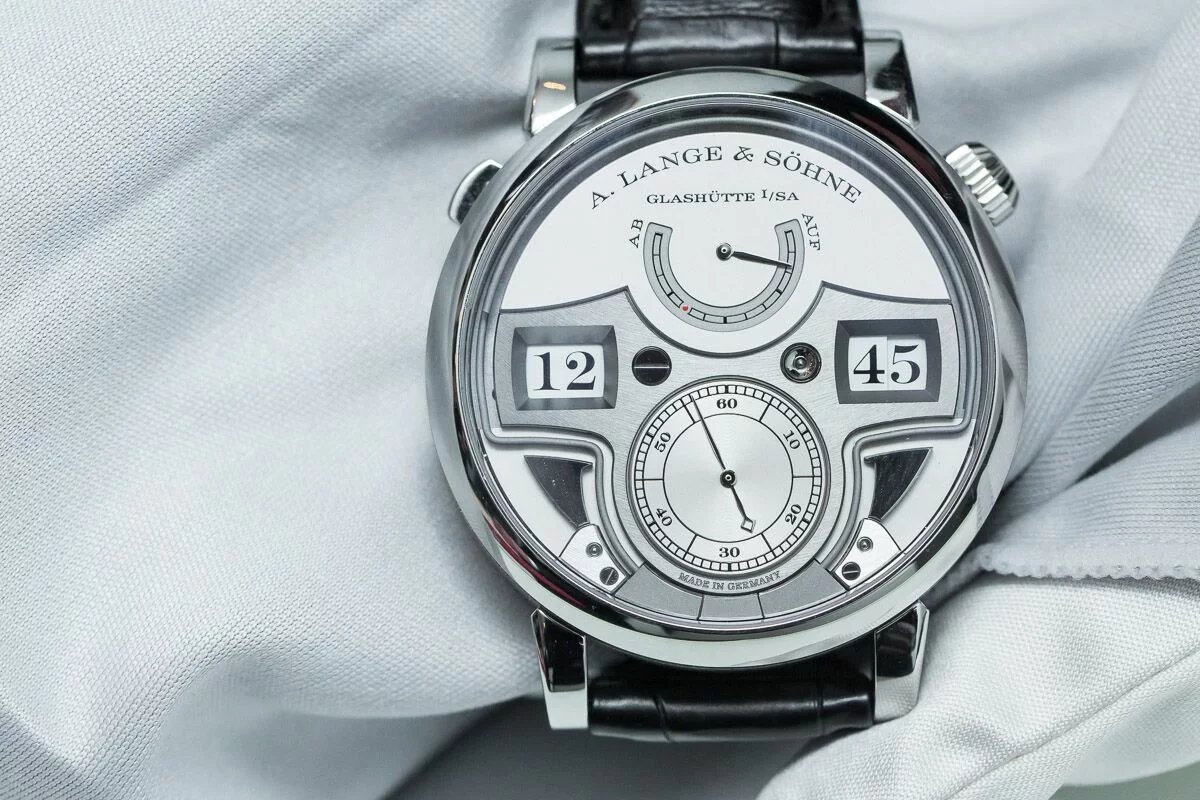
A successful jumping hour must display a perfectly centered figure in the window. On some less well-tuned parts, we can observe a slight shift, especially around the moment of the jump.
Setting the time: watch out for the jump zone
Depending on the construction, it may not be advisable to manipulate the time during the period when the mechanism arms and triggers (for example in the half hour before the full hour). Serious marks clearly indicate the precautions for use.
Energy consumption
“Jumping” a disc requires more energy than simply moving it continuously. On certain watches, this may influence the power reserve or require a caliber designed specifically for this complication.
Jumping hours, retrograde minutes and traveling companions
In contemporary watchmaking, the jumping hour is often combined with other narrative displays:
- Retrograde minutes : the minute hand travels through an arc then instantly returns to zero, creating a double spectacle (hour jump + minute return).
- Wandering hours (wandering hours): a more complex variant where the hours move in the space of the dial before disappearing.
- 24 hour display : very appreciated on pieces of instrumental or travel inspiration.
These combinations reinforce the impression of wearing not a simple timepiece, but a staging of time.
Some iconic watches to know
Without drawing up a catalogue, certain families of watches have contributed to popularizing or reinventing jumping hours:
- Art Deco aperture watches from the 1920s and 30s, often in rectangular cases, real design objects.
- Independent watchmaking creations which challenge the display, with dedicated modules and a high-end finish.
- Contemporary reinterpretations large houses, which like to combine jumping hours and “driver” or “on-board instrument” aesthetics.
The simplest advice: observe the quality of reading (typography, centering, contrast), then pay attention to the movement. A jumping hour is not just a style: it is a mechanical solution.
Why this complication is still attractive today
In the age of notifications and the time always visible on a corner of the screen, the mechanical watch no longer has to prove its usefulness. It must justify its existence by something else: culture, gesture, emotion. The jumping hour perfectly meets this expectation. It combines a modern reading, numbers, with ancient know-how: energy stored then released.
And this is perhaps its true definition: a jumping hour watch is not only a way of telling the time, it is a way of punctuating it. A time which not only passes… but which is triggered.