A simple idea, a genius move
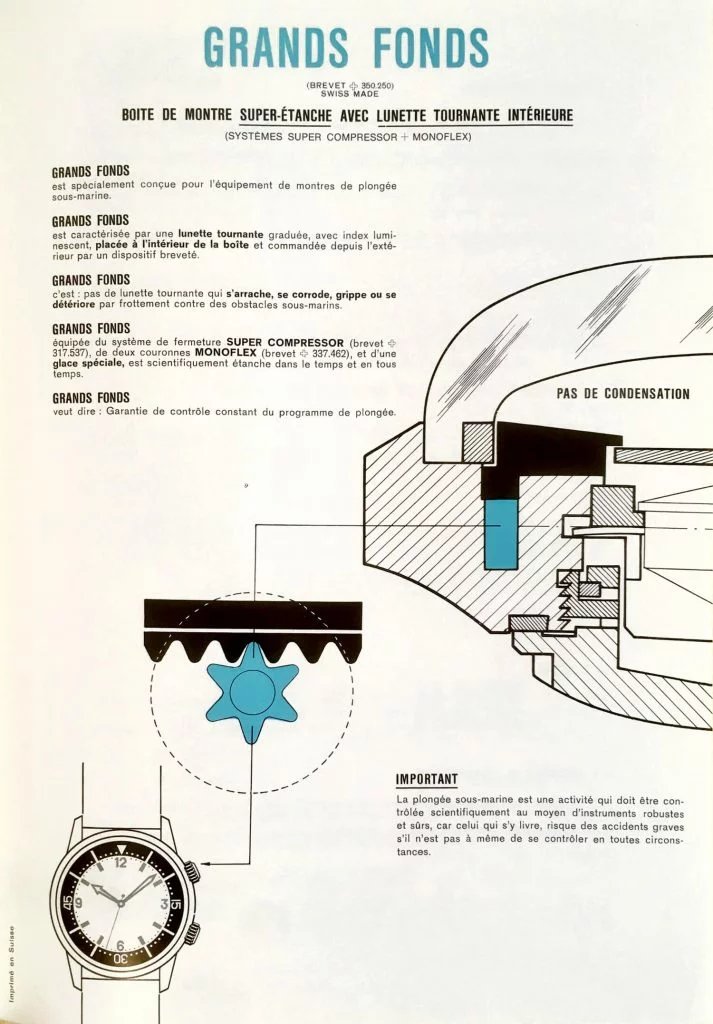
In the history of diving watches, the term “super compressor” is not a marketing flair. It is a patent born at Ervin Piquerez SA (EPSA), a Swiss case specialist, at the end of the 1950s. Its principle, deliciously ingenious, can be summed up in one sentence: the more the pressure increases, the more the watch is compressed on its seal, and the more waterproof it becomes. Where traditional divers rely on a screwed bottom which forces the seal from the surface, the super compressor box uses a bottom mounted on springs which is pressed against the seal as the descent progresses. Water, paradoxically, becomes an ally.
This architecture opened an era where we could reconcile relative finesse, urban elegance and underwater performance. It was the EPSA signature: a science of the case, calibrated springs, fine tolerances, and this famous diver’s helmet marking inside the caseback, which has become a collector’s favorite.
The vocabulary of a super compressor
If the term primarily designates a construction, it has also shaped an immediately recognizable style.

- Two crowns at 2 o’clock and 4 o’clock, often with “checkerboard” guilloche (cross-hatch), the EPSA tab.
- An internal rotating bezel, controlled by the upper crown, protected from shocks and salt.
- A spring-loaded base that compresses with pressure, optimizing sealing at depth.
- Measured cases (36 to 42 mm at the time), dials with clear graphics, sometimes shelled with vanilla lume, now patinated.
Beware of preconceived ideas: not all watches with internal bezels are super compressors, and some EPSA “compressors” were not divers. But the archetype that has remained in the collective imagination is the diving dual-crown with a compressible bottom.

Super compressor vs. classic diver: two schools
Compared to the “tool watch” with a notched external bezel and screw-down crown, the super compressor offers another philosophy. Manipulating the bezel via the crown makes the whole thing smoother and more protected. The absence of a prominent piece prevents snags. And on the skin, these cases often have a soft curve, a more discreet presence. She’s the diver who knows how to slip under a shirt cuff, without denying her marine roots.
The cult models who wrote the legend
In the 1960s, many houses called on EPSA. A few milestones are enough to understand the aura of the genre.
- Longines 7042/7150, ancestor of the Legend Diver: refined silhouette, fine-grained internal bezel, clean typography. An icon born to last.
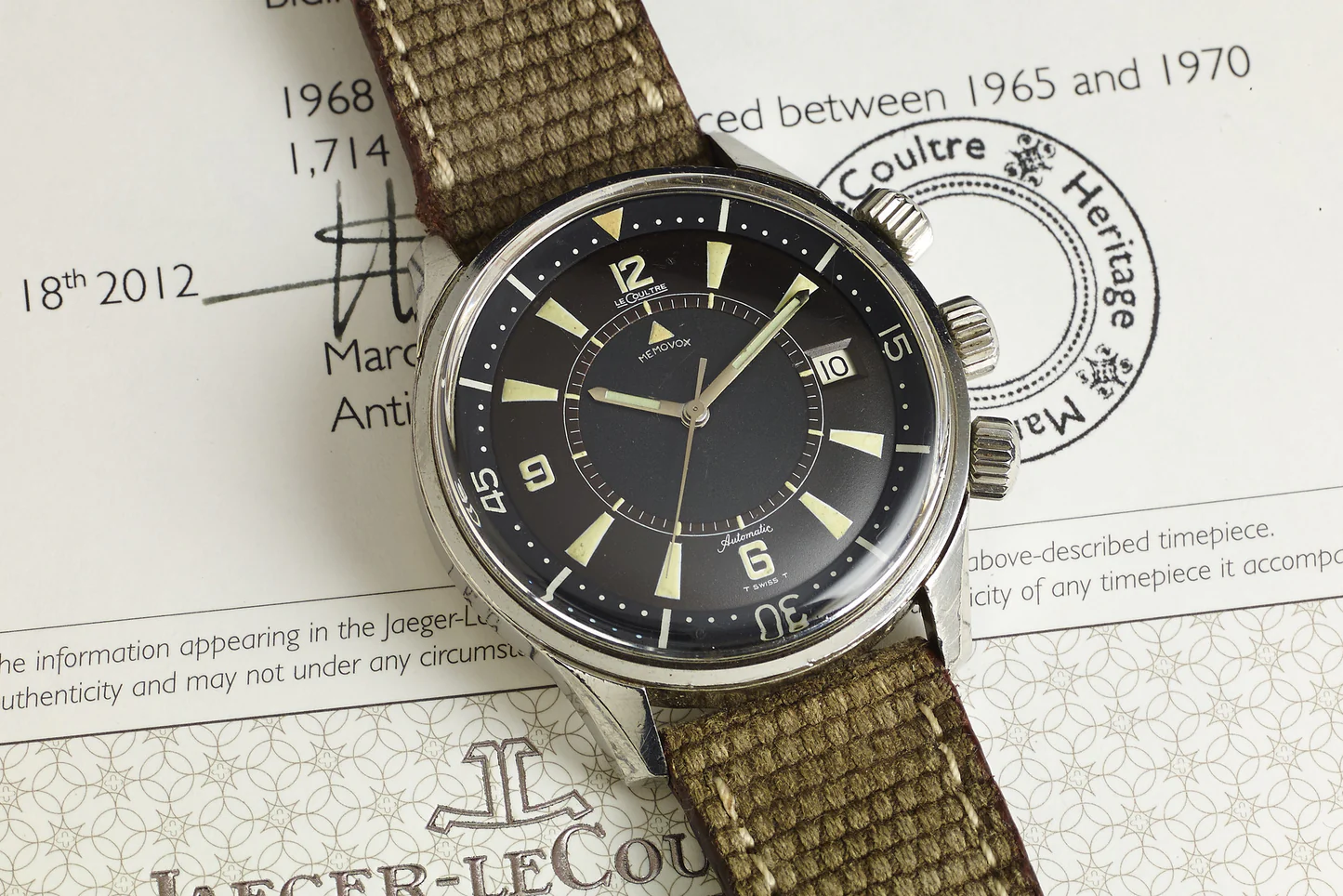
- Jaeger-LeCoultre Polaris (1963–1968): the rare combination of a super compressor case and a diving alarm. Poetic engineering.
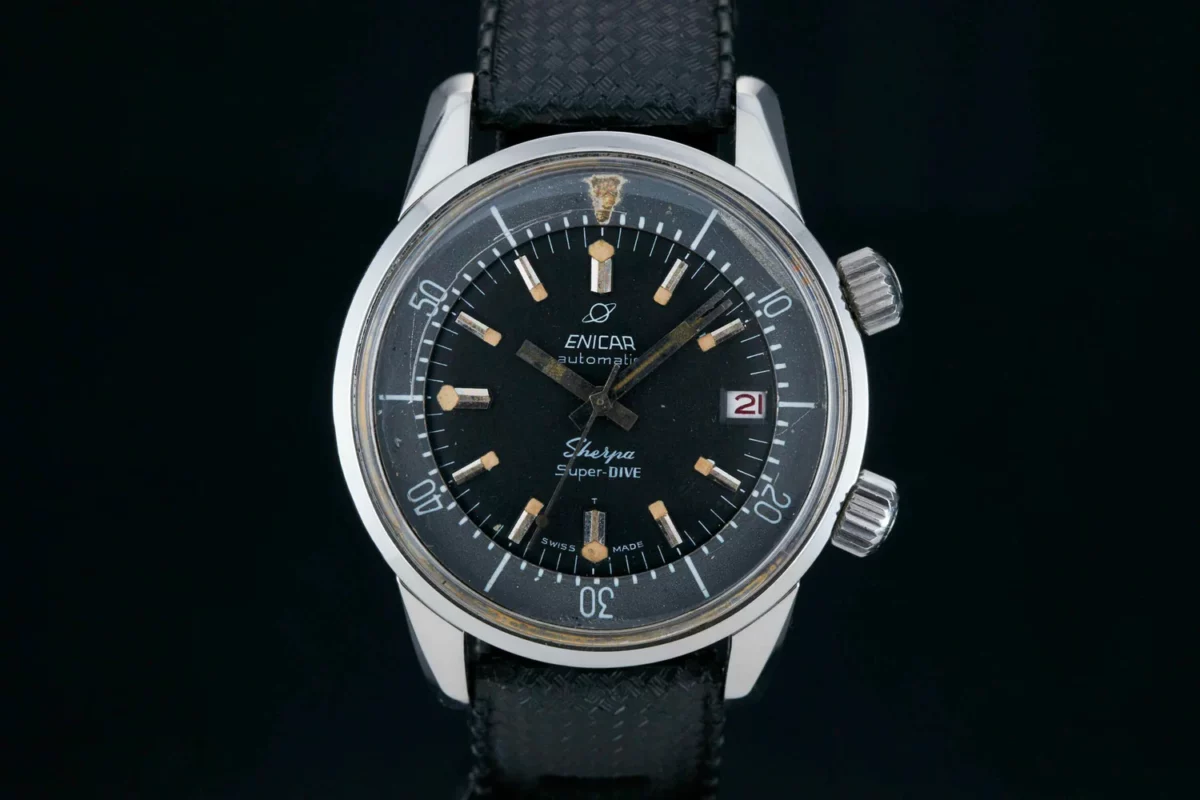
- Enicar Sherpa Super-Dive / Sherpa Ultradive: expedition spirit, exemplary readability, Swiss robustness and exoticism of “Sherpa” dials.
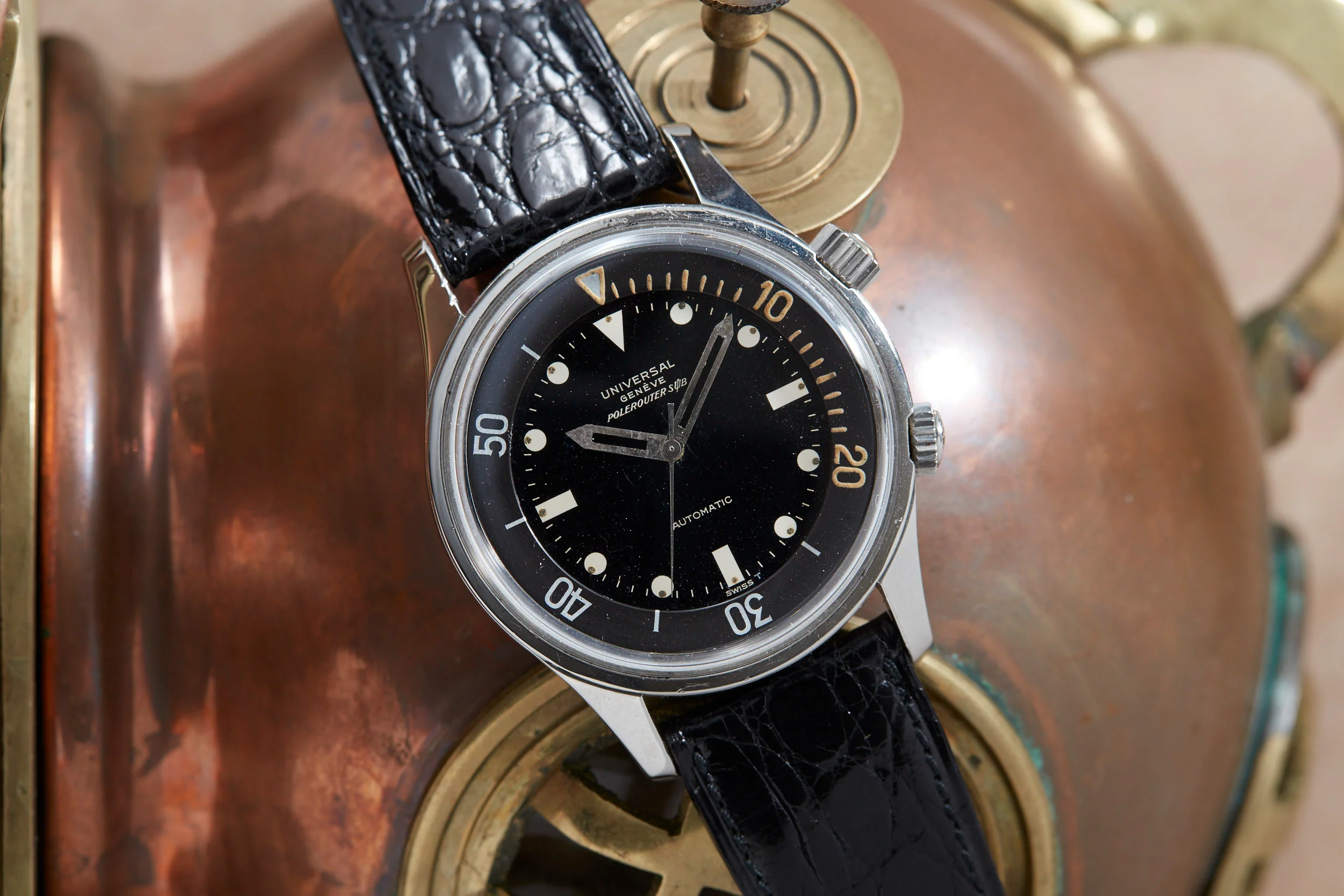
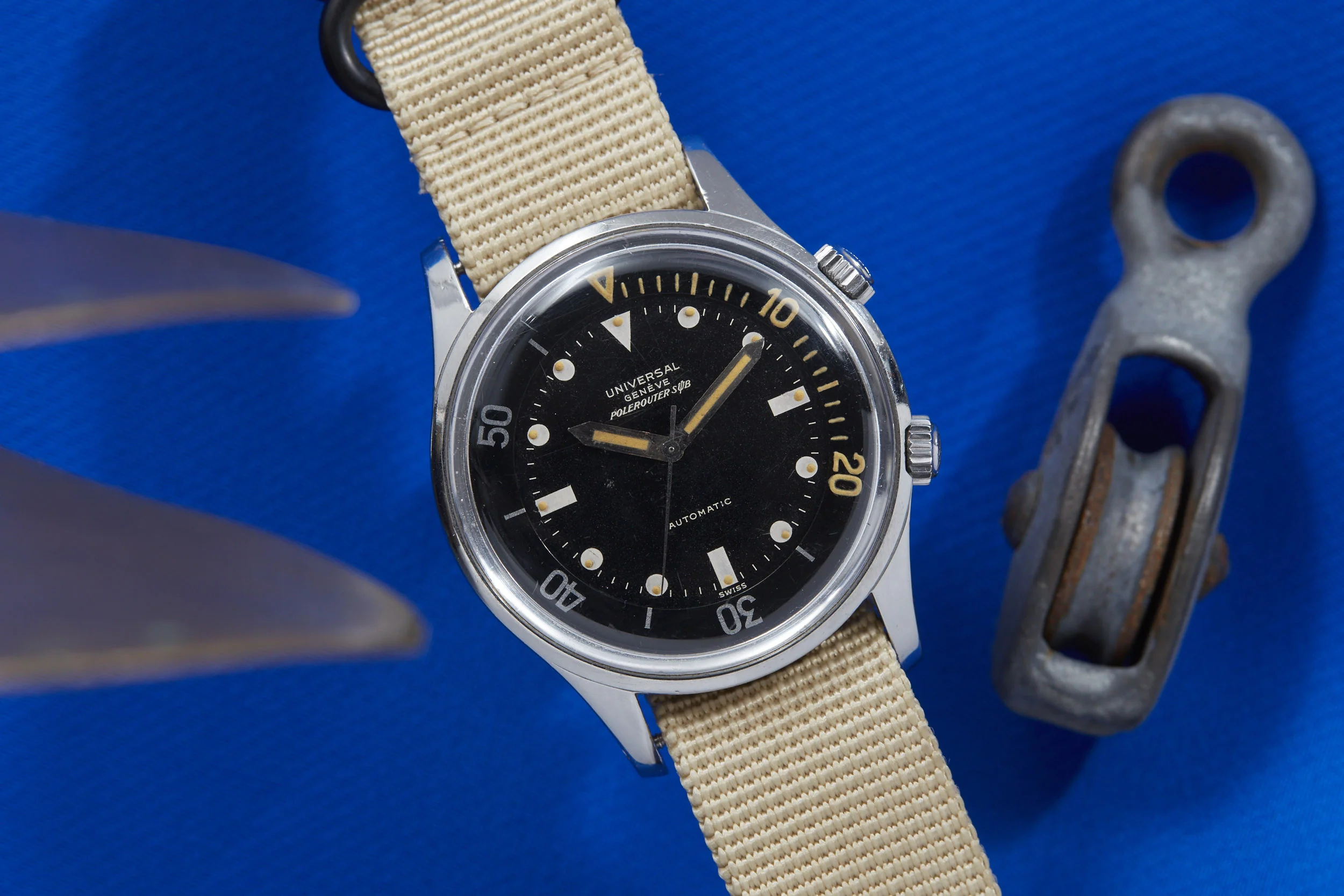
- Universal Genève Polerouter Sub (first series): designed elegance, explorer’s soul, this mixture of finesse and functionality which still seduces.
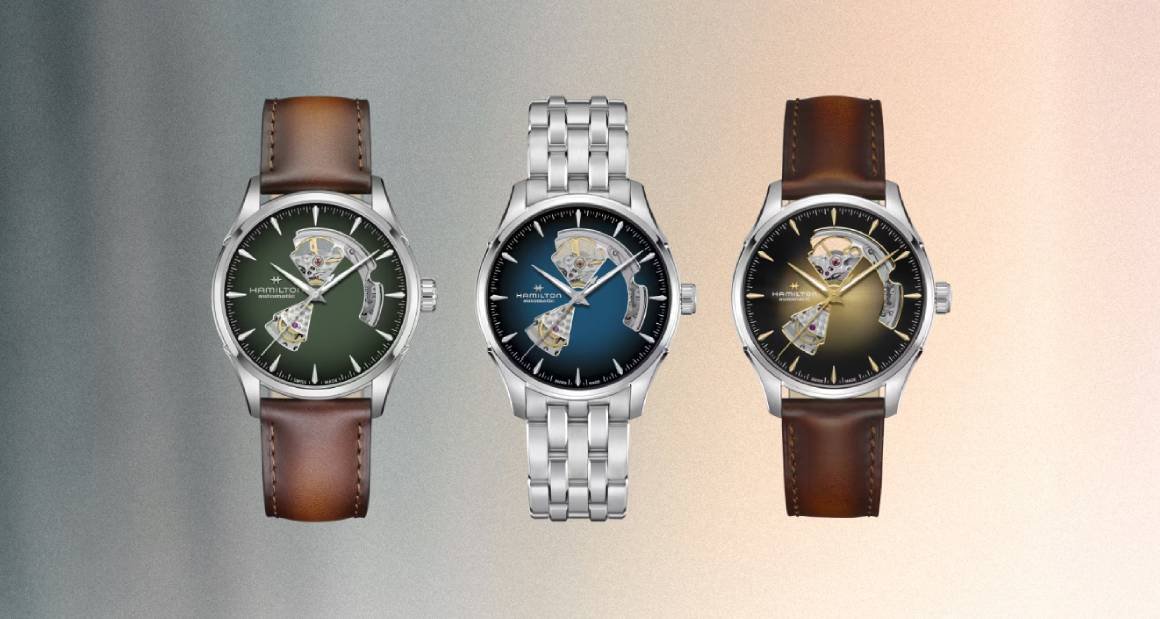
- Wittnauer, Benrus, Bulova, Hamilton: an ecosystem of period references, highly sought after for their variants of dials and crowns.
These watches share a common DNA, but each tells a nuance: adventure, the city, technology, the modernity of the sixties. They have become the totems of a dive that is more romantic than “tooled”.

The contemporary renaissance
The neo-vintage wave has revived the myth. Longines has brought the Legend Diver back to the surface with tact, respecting the proportions and graphic spirit. Jaeger-LeCoultre has rebuilt a Polaris family that replays the codes with know-how. Others, from Christopher Ward to demanding micro-brands, have given new meaning to the very function of compression, sometimes visible via a colored ring inside the case to materialize the pressure. And then there are these assumed “compressor-style”: the dual-crown aesthetic and the internal bezel without the original EPSA mechanism, but with contemporary comfort of use. The style remains intact: sporty, sharp, timeless.
- The back generally has, inside, the famous EPSA diver’s helmet and case references.
- The two crowns often have a crisscross pattern. If they have been replaced, the checkerboard may be missing.
- The internal bezel is manipulated by the high crown, with precise and regular notching.
- The case is not necessarily thick: the tightness comes from compression, not mass.
- The whole thing exudes period coherence: typographies, hands, tritium patinas, coherence of the pieces.
As always in vintage, the devil is in the details. A dial that is too new, a poorly typed “service” bezel, anachronistic crowns: so many signals that require us to slow down and document.
Why she still fascinates
Because it tells another way of going underwater. The gesture is different: you adjust your bezel with your fingertips, without clicking an external insert. The sound is hushed, the touch precise. And above all, the watch lives with its environment: the water that presses becomes a protective force. This mechanical poetry, combined with a perfectly balanced double crown design, explains the almost emotional attachment that super compressors arouse. On aged leather, tropic rubber or polished mesh, they have this athletic elegance that spans the ages.
Purchase and maintenance advice
- Waterproofing: on a vintage, consider water as an enemy. Have it bench tested, change seals and crown tubes if necessary, but be careful.
- Originality: favor original dials, hands and bezels. The checkered crowns are a plus, but may have been replaced over time.
- Documentation: cross-check case references, EPSA markings and brand archives where they exist.
- Service: entrust the watch to a watchmaker familiar with compression cases. The adjustment of the springs and the condition of the bottom are key.
For lovers of watches with a strong story, the super compressor is a sesame. It condenses the spirit of innovation of the Trente Glorieuses and a chic graphic that speaks to our times. A diver’s watch that doesn’t need to raise its voice to get noticed: perhaps that’s true luxury.