A miniature motor…that lives in your wrist
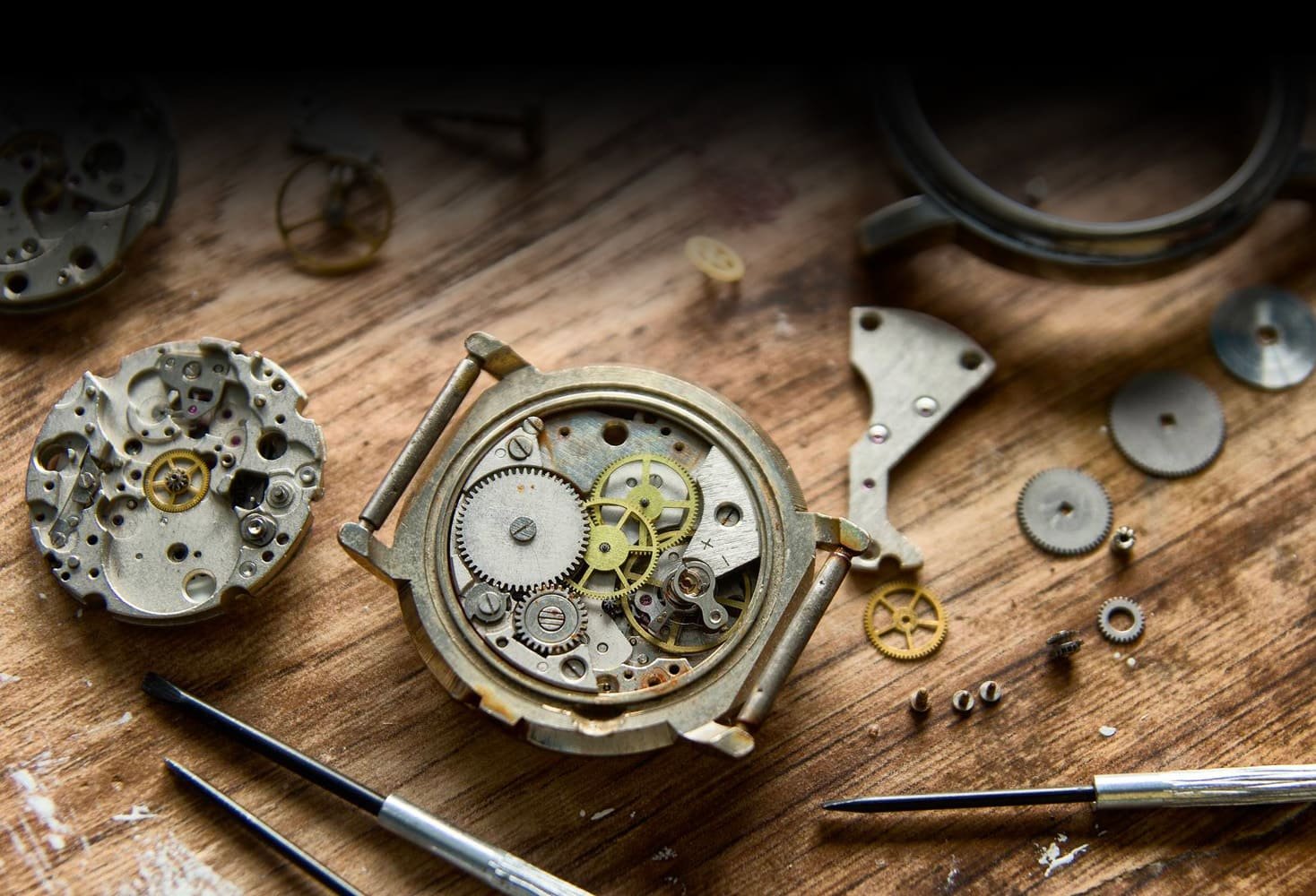
A mechanical watch is not a simple instrument that tells the time. It is an autonomous micro-machine, an architecture of metal and rubies, a story in motion. Under the dial, everything is a question of balance: a hairspring that breathes, a balance wheel that oscillates, wheels that pass energy like a well-kept rumor. And like any living mechanism, it needs attention.
If you agree to have your car serviced without waiting for a breakdown, why treat a mechanical watch like an “untouchable” object until the day it stops? Regular servicing is not a watchmaker’s whim: it is the condition for preserving the precision, reliability, water resistance and—more discreetly—the heritage value of the timepiece.
Why a service is essential (even if the watch “works”)
Oils age, even behind closed doors
The secret of a high-performance mechanical movement lies partly in lubrication. The extremely localized friction points are lubricated with specific oils. However, these lubricants do not last forever. Over time, they dry out, migrate or degrade. Result: friction increases, wear accelerates, and the power reserve can drop. The most misleading? The watch can continue to function “more or less” correctly for a long time… while silently being damaged.
Dust and micro-particles also exist in your daily life
We often imagine movement as a perfectly sealed universe. In reality, a watch lives in real conditions: temperature variations, humidity, shocks, vibrations, crown manipulation. Over time, fine particles can appear. And in a caliber, a tiny grain is not a detail: it is sometimes the equivalent of a stone in a gear.
Waterproofing is not forever
A “100 m” endorsement is not a lifetime promise. The seals (crown, bottom, pushers) age, settle, crack. A watch worn every day is also subject to commonplace attacks: soap, perfume, sweat, hot water. A service is an opportunity to replace the seals and test the tightness. Because the number one enemy of a mechanical movement remains humidity, an often irreversible tragedy.
A small adjustment today avoids a major repair tomorrow
On a watchmaking scale, a few seconds of drift per day can indicate tired lubrication, an unnoticed shock, a balance wheel that needs adjusting, or a decreasing amplitude. Regular maintenance allows for timely correction. Waiting too long means taking the risk that a simple maintenance will turn into an expensive restoration (marked center wheel, worn axle, sprockets to replace).
The mechanics of time: what a revision actually does
A “service” is not a wipe and an ultrasound bath just to be polite. At a serious watchmaker—or at the brand’s after-sales service, it’s a complete, methodical, almost ritual operation:
- Complete disassembly of the movement : each component is separated, inspected.
- Cleaning parts : removal of old oils and deposits.
- Wear check : replacement of worn elements (subject to availability, especially on vintage).
- Lubrication : oils adapted to precise points, in microscopic quantities.
- Reassembly and adjustment : gait adjustment, amplitude control, stability tests.
- Checking the tightness : joints, pressure, checking for leaks.
- Performance testing : several days of observation depending on positions and power reserve.
It is this process that gives the watch its vitality. Without it, we don’t necessarily “gain” seconds per day, we mostly lose years.
How often should a mechanical watch be serviced?
The honest answer depends on movement, usage and environment. But we can give reliable benchmarks:
- Watch worn often : generally every 4 to 7 years.
- Little worn watch : lubrication also ages, so 6 to 8 years remains a good practice.
- Vintage watch : increased caution, especially if the history is unknown; have it checked quickly after acquisition.
- Waterproof “tool” watch (diver) : more frequent leak tests (ideally every year) and revision according to use.
Some brands recommend precise intervals, sometimes longer on modern calibers and new generation oils. But the classic mistake is to confuse “functioning” with “healthy”.

The signals that should alert you
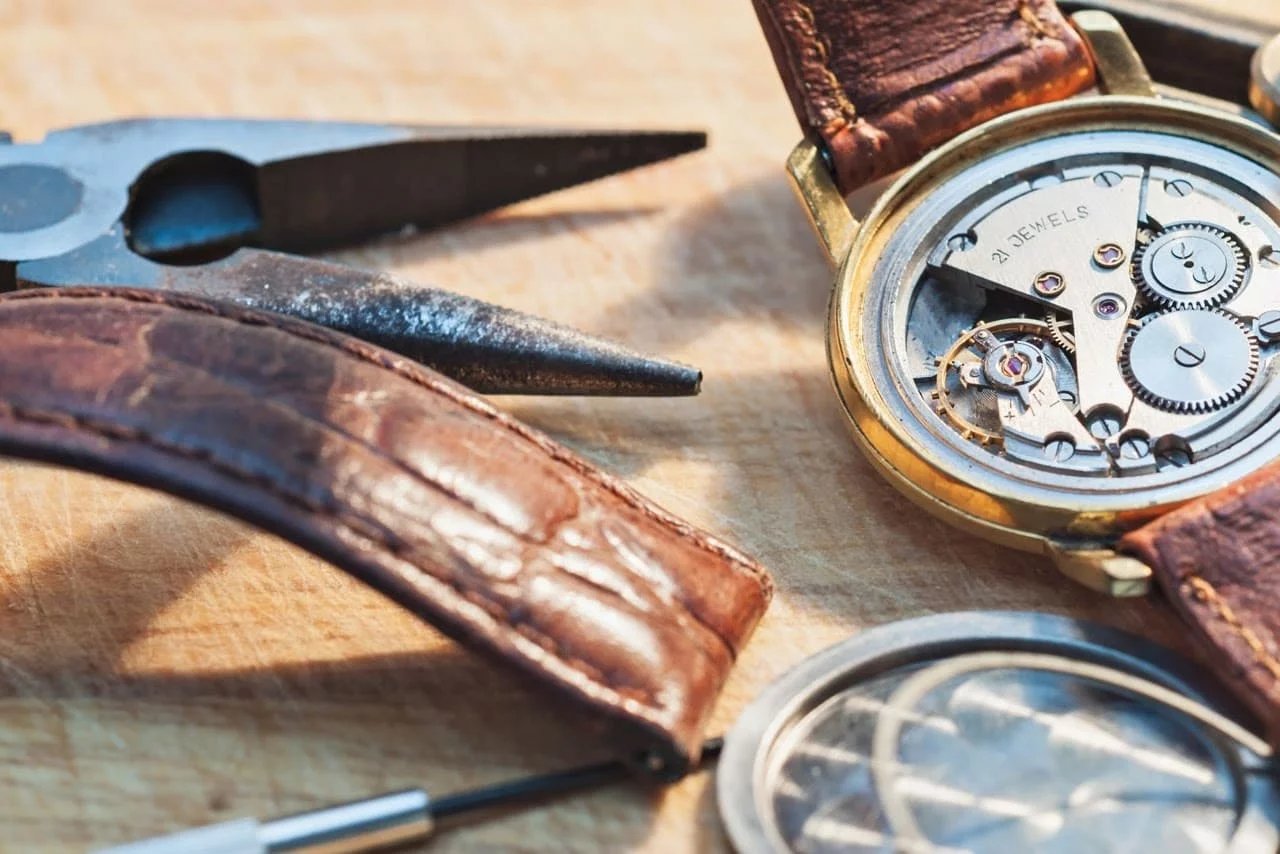
If you collect, you know: a watch speaks, subtly. Here are the most common signs that it is time to consult:
- Abnormal drift (advance or delay which gets worse).
- Power reserve decreasing.
- Irregular winding : harder crown, “grainy” feeling.
- Fogging under the glass : absolute emergency (humidity).
- Significant shock even though the watch looks OK.
- Noisy rotor on an automatic, or new noises.
The best reflex: don’t wait for the movement to “stop”. A breakdown is often the final chapter in a long history of neglect.
Review: Preserving Value, Not Just Accuracy
The discreet luxury of traceability
In the world of watches, the maintenance history carries as much weight as the reference. A documented revision, with supporting invoices, reassures a future buyer and protects your investment. On certain pieces, particularly sports or vintage pieces, clean and consistent maintenance can make the difference between a desired watch and a “at risk” watch.
However, be careful with vintage: the patina has its rights
Revise, yes. “Remake new”, not necessarily. On an old watch, excessive polishing can destroy the edges, the chamfers, and therefore part of the identity of the piece. Likewise, replacing certain visible parts (hands, dial, bezel) can affect the collectible value. The ideal is to discuss before intervention: what are we replacing, what are we keeping, and why? A good watchmaker does not impose, he advises.
Where to service: brand or independent watchmaker?
Two paths are available to you, each with its virtues.
- Brand after-sales service : access to original parts, standardized procedures, complete tests. Often more expensive, sometimes more conservative on replacements.
- Qualified independent watchmaker : direct relationship, flexibility, sometimes more respectful approach to vintage. The important thing is competence, equipment (tightness testing, measuring machine) and reputation.
In all cases, ask for a diagnosis, a clear estimate, and explanations of what will be done. A serious revision is said: it is a guarantee of professionalism.
Between two revisions: gestures that prolong life
- Avoid magnets (speakers, magnetic cases, tablets with accessories). A magnetized watch goes wrong quickly.
- Do not manipulate the date at the wrong time (often between 9 p.m. and 3 a.m.) to avoid damaging the mechanism.
- Rinse after sea (if the watch is truly waterproof) and avoid hot water.
- Have the waterproofness tested regularly, especially before vacations and swimming.
- Wear your watch : a movement that lives regularly often behaves better than a movement that has been immobilized for years.
Revision, or the art of making it last
A mechanical watch is a paradoxical object: it measures time, but it depends on it. Regular review means accepting this elegant truth. It is not a constraint, it is a way of honoring the intelligence of the mechanism, and of keeping intact the initial promise: that of a lasting companion, transmitted, told, worn.
Basically, revising a mechanical watch means taking care of a story that you keep on your wrist. And nothing is more modern than making it last.