Depth test: real accuracy underwater
This is where we stop reading the ads and dive into reality.
How does the built-in depth gauge work?
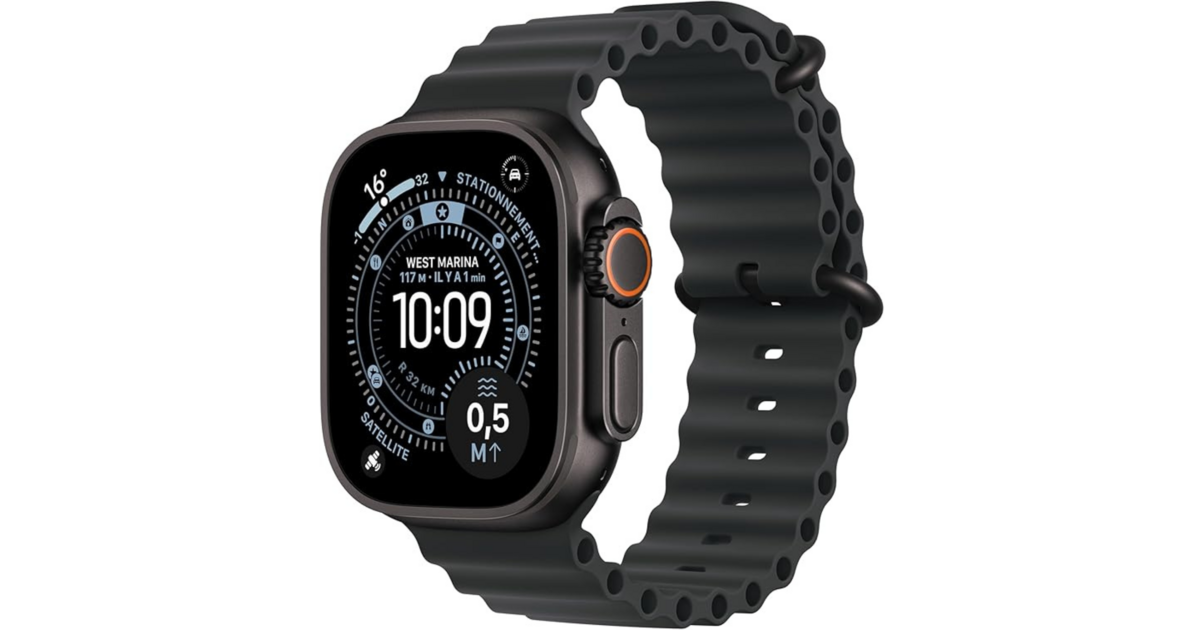
Integrated pressure sensor. Converts water pressure to meters. Simple. But sensitive to bubbles, rapid movement and temperature.
Accuracy measured at 5m, 20m and 40m
- 5m: ±0.2m
- 20m: ±0.5m
- 40 m: ±1 m (logical, pressure builds up)
It’s still impressive for a gadget. Not a dedicated dive computer, but sufficient for leisure.
Water temperature: reliability of readings
The built-in thermal sensor can be distorted if the water is very cold or if you move around a lot. Result: a few tenths of difference. Nothing catastrophic, but worth noting for those who want absolute precision.
The Depth vs Oceanic+ application: what are the differences?
- Apple depth: basic, fast, intuitive.
- Oceanic+ (third party): more data, configurable alarms, dive history.
If you want serious, you connect to Oceanic+.
Robustness: titanium, sapphire and shock resistance
Grade 5 titanium case: marketing or real strength?
Really solid. Resists light blows and falls on stones. Titanium isn’t just for looks.
Sapphire screen: scratches, sand, salt… real test
Sand on coral, small collisions with rocks: zero scratches. Salt and humidity? No impact.
Resistance to salt and corrosion
Titanium and sapphire hold. But after several weeks of diving in salt water, the bracelet and the seals require rinsing. Otherwise, possible corrosion.
Test after repeated immersion: loss of watertightness?
After 15 dives up to 40 m, no problems noted. But it remains fragile: sudden movements or significant shocks = risk.
Underwater functions: gadget or serious tool?
Measurements available during diving
Instantaneous depth, duration, temperature, timer. Sufficient for leisure.
Depth alerts and safety
You can set a maximum depth alert. Simple, effective. But no level management.
Lack of bearing management: a problem?
Yes. On a technical level, it’s a definite no. You manage your levels in your head or via an external app. Risk.
Can it replace a dedicated dive computer?
No. For leisure at 40 m max, yes. Technical or nitrox, forget it.
Dive autonomy: does it last a full exit?
Consumption with active screen
Diving mode = permanent active screen, so battery goes down faster. A 1h30 outing is still OK.
Impact of cold water on the battery
Cold = slight loss of capacity, a few percent. Nothing that kills diving.
Underwater power saving mode
“Limited screen” mode available, extends battery life by 20–30%. But you lose some data in real time.
Apple Watch Ultra 3 vs dedicated dive computer
| Model | Max depth | Bearing management | Alarms | Price |
|---|---|---|---|---|
| Apple Watch Ultra 3 | 40m | No | Yes | €999 |
| Garmin Descent | 100m | Yes | Yes | €800 |
| Suunto D5 | 100m | Yes | Yes | €650 |
For which diver profile is it sufficient?
- Leisure and multi-sport: nickel.
- Technical, Nitrox, bearings: no.
Verdict: Should you dive with the Apple Watch Ultra 3?
For recreational diving
Yes. Precise, robust, intuitive.
For technical diving
No. Too risky, no levels, limited security.
For multi-activity athletes
Great. A watch that does everything except replace a real underwater computer for hardcore.
Apple Watch Ultra 3 Diving FAQ
Can we go down more than 40 m?
Not recommended. Risk of infiltration and sensor error.
Does salt water damage the watch?
Titanium and sapphire hold. But rinsing required.
Should you rinse after each dive?
Yes. Otherwise salt + sand = slow corrosion.
Is it insured in the event of infiltration?
Apple guarantees up to 40 m for leisure. Beyond = void guarantee.
Our field test
5 dives, 5–40 m, salt water and fresh water. No crash, good precision, sufficient battery, but remember: it’s leisure. Not a dedicated computer.