Table of Contents
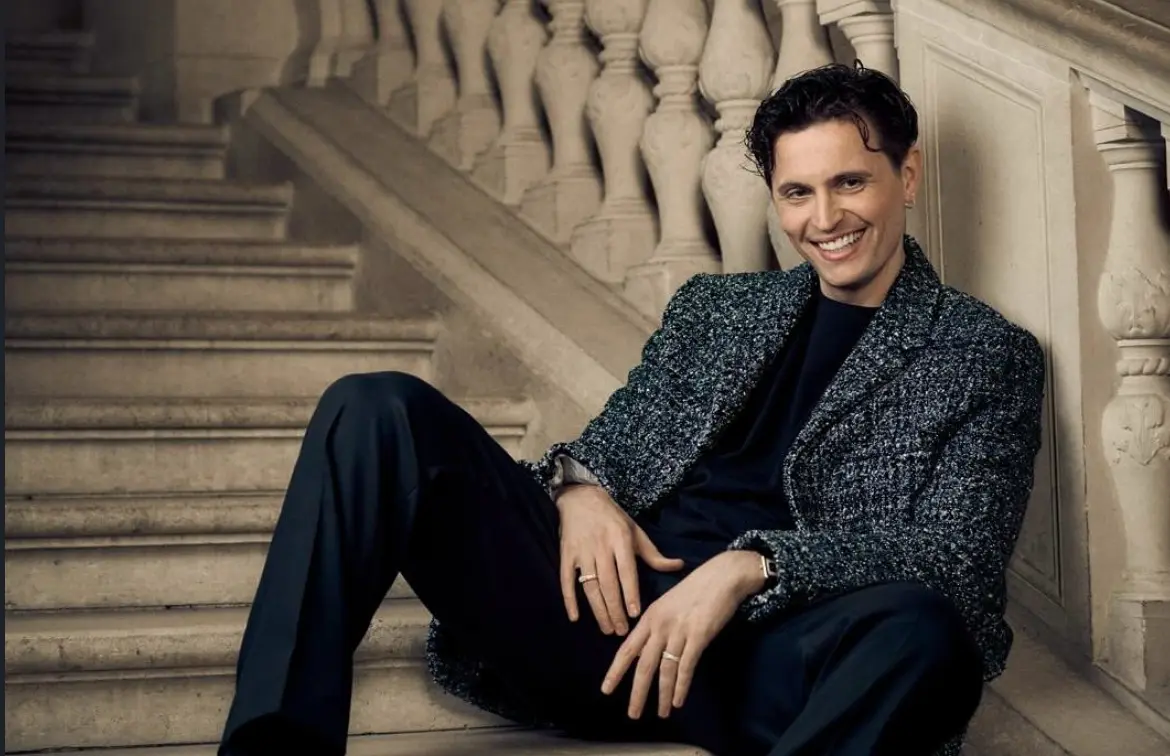
In the Who wears what? section, today we are interested in the watches worn by Raphaël Quenard. A prominent actor in French cinema, he divides: we adore him for his singular acting, his atypical phrasing and his verve, or we reject him for these same reasons. One thing is certain: Quenard does not leave anyone indifferent. And for some time now, he has regularly appeared with Cartier watches, as part of a clearly commercial collaboration with the Parisian house. Among these watches, the famous Cartier Tank, whose fascinating history reveals how a war machine became a style icon, particularly attracts attention.
If the actor has been seen with several emblematic Cartier models on his wrist, one watch comes up particularly often in his public appearances. A very recognizable piece, luxurious, almost theatrical in its presence: the Tank Louis Cartier WGTA0269.
The Tank Louis Cartier WGTA0269: the most visible watch on Raphaël Quenard’s wrist
Among all the Cartier watches worn by Raphaël Quenard, the Tank Louis Cartier WGTA0269 is undoubtedly the one we notice most often. This is not a “wise” Tank: it is a very jewel-like interpretation of this iconic model, with a black lacquered dial set with diamonds. A Tank which fully embraces its status as a luxury object, far from the minimalist image that we sometimes associate with this century-old collection.
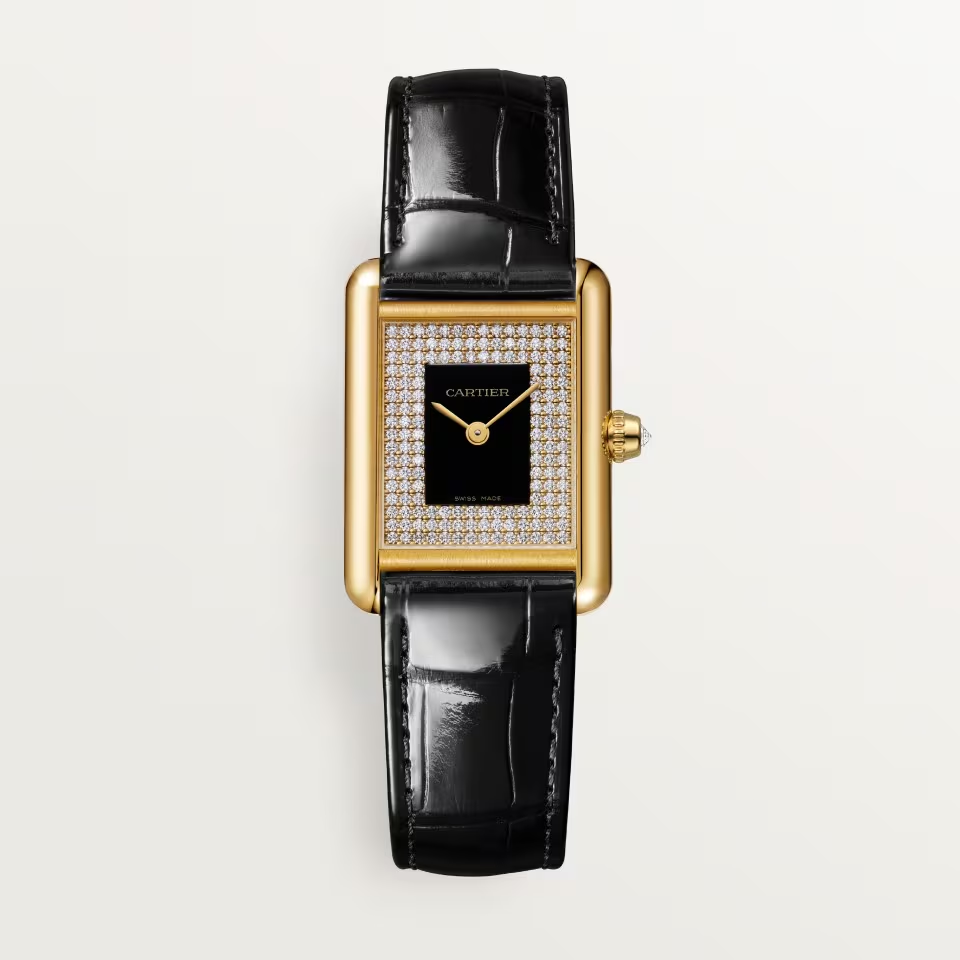
Originally imagined by Louis Cartier in 1917, the Tank is one of the pillars of 20th century watch design. Its geometric design, inspired by tanks seen from above, has spanned the decades without ever really aging. The model worn by Raphaël Quenard is part of this historical connection, while pushing it in a more spectacular, almost jewelry-like direction.
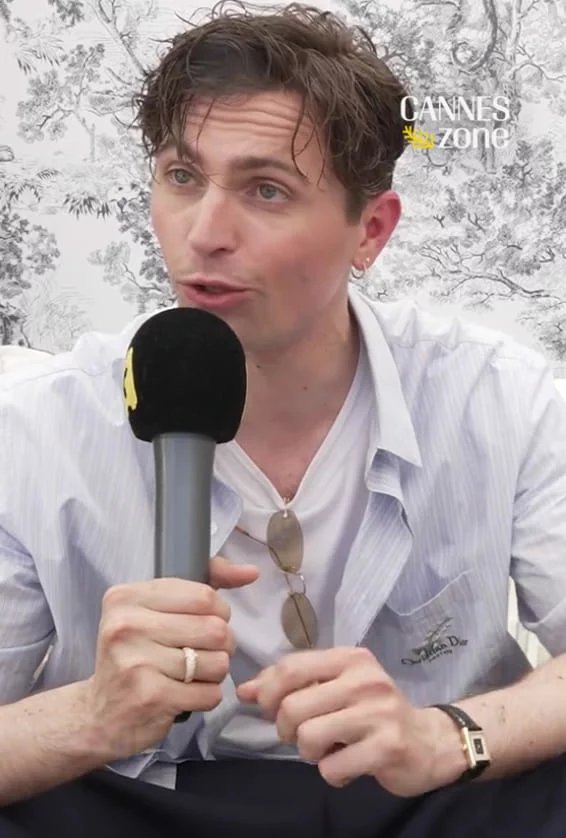
Displayed around 14,000 euros In the Cartier catalog, this Tank Louis Cartier WGTA0269 is not just a watch: it is an image marker. On Quenard’s wrist, it becomes a style element in its own right, which contributes to the construction of his public persona, between assumed elegance and slight aesthetic provocation.
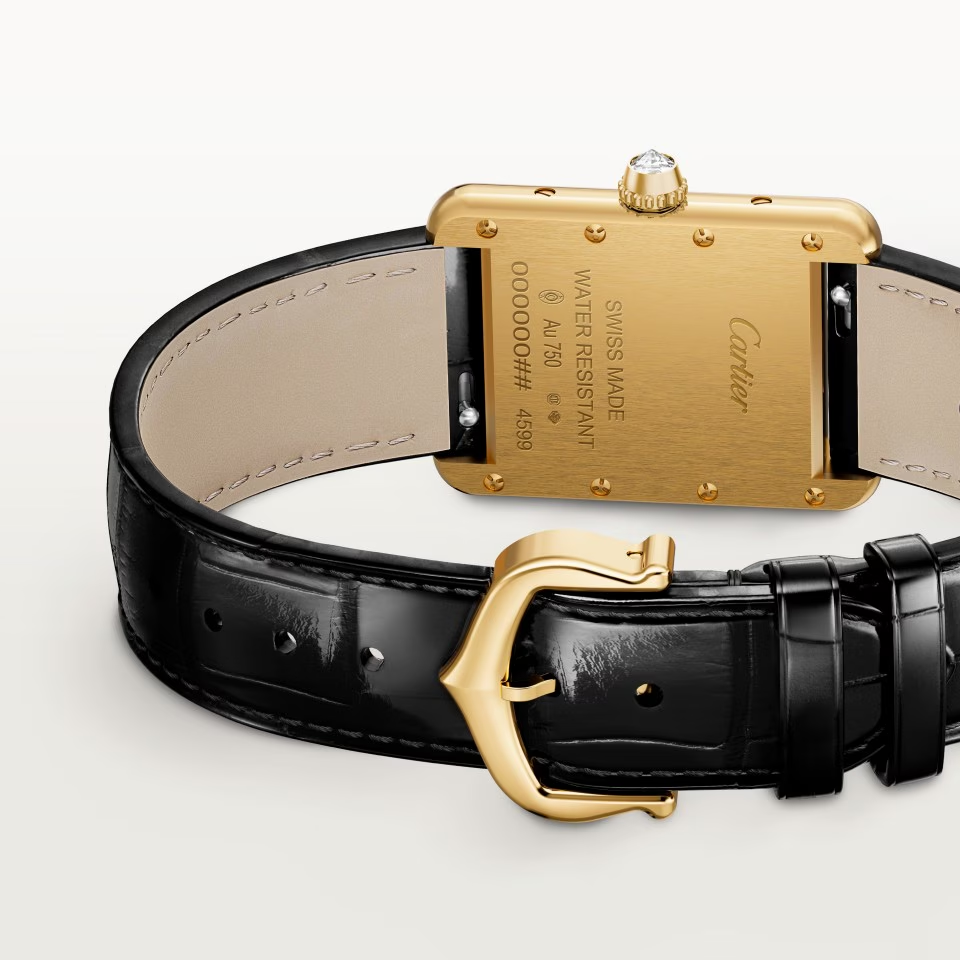
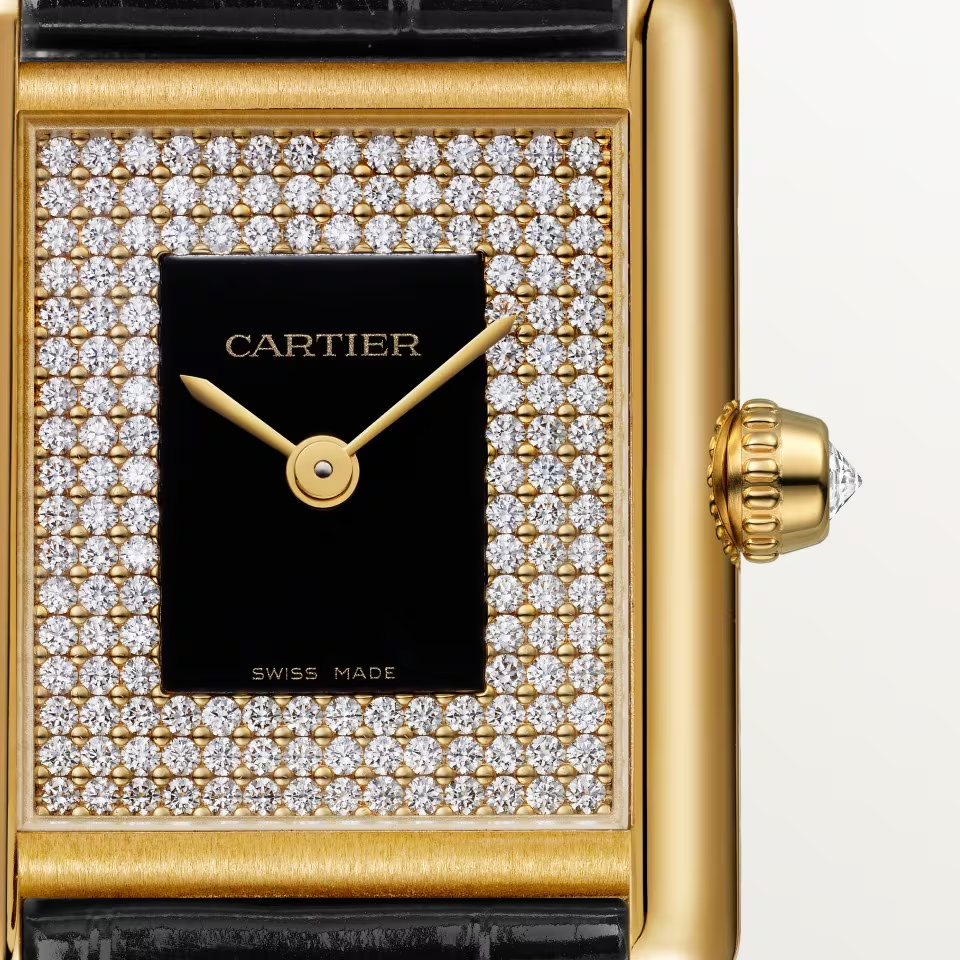
Technical sheet – Tank Louis Cartier WGTA0269
Movement : quartz
Box : 750/1000 yellow gold
Crown : beaded, decorated with a diamond
Dial: black lacquer set with 151 brilliant-cut diamonds (0.71 carat)
Needles: sword shape, gold-finish steel
Ice : mineral
Bracelet : shiny black alligator
Loop : barb in 750/1000 yellow gold
Dimensions: 29.5 x 22mm
Thickness : 6.35mm
Waterproofing: 3 bars (approximately 30 meters)
The Cartier Crash: the anti-watch par excellence
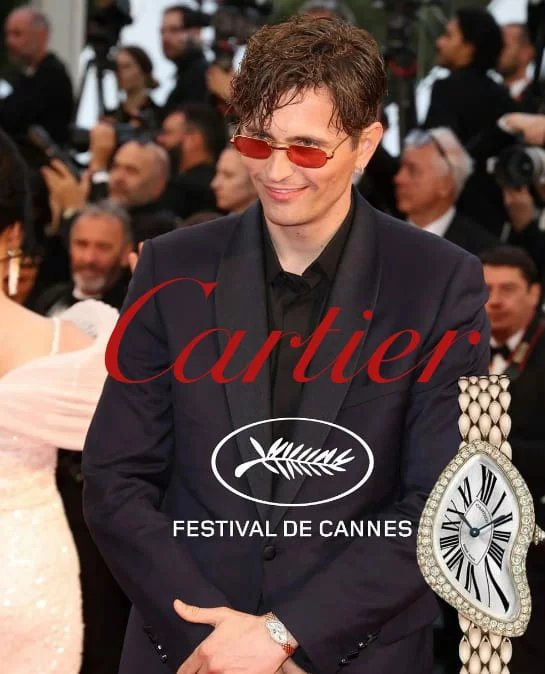
In contrast to the geometric rigor of the Tank, Raphaël Quenard was also seen with one of the most radical watches ever produced by Cartier: the Crash. A timepiece whose case seems to have collapsed, as if distorted by heat or time. A watch that seeks neither symmetry nor discretion, but assumes a deliberately strange, almost disturbing shape.
The model worn by the actor on the red carpet at the Cannes Film Festival is a Cartier Crash in 18k rose goldfrom a limited edition of 267 pieces, with diamond-set bezel. A rare, very expressive piece, which transforms the watch into a real conversation piece. More than an accessory, the Crash here becomes an aesthetic manifesto.
This Crash is distinguished in particular by its asymmetrical case, its dial with deliberately “distorted” Roman numerals and its mechanical movement with manual winding. A watch which does not seek to reassure with its classic codes, but on the contrary to disrupt the usual visual cues of luxury watchmaking.
Technical sheet – Cartier Crash (model worn in Cannes)
Housing: 18k rose gold, asymmetrical (38.5 x 23.1 mm)
Telescope : paved with diamonds
Crown : pearled, topped with a brilliant-cut diamond
Dial: silver, distorted Roman numerals
Movement : mechanical manual caliber 8970 MC
Bracelet : pink gold, signed Cartier
Loop : Cartier deployant
A brief history of the Cartier Crash
The Crash was created at the end of the 1960s in Cartier’s London workshop. At the time, Jean-Jacques Cartier, then head of Cartier London, worked with designer Rupert Emmerson to create a watch that reflected the creative excitement of London in the Swinging Sixties. The objective is not to create another classic watch, but to offer a watchmaking object that breaks with established forms.
A legend has it that the shape of the Crash was born from an damaged Cartier watch, the case of which was deformed during an impact. This story is part of the folklore surrounding the Crash, but the reality is simpler: it was above all an assumed desire to create an extraordinary watch, in tune with the avant-garde spirit of the time.
Produced in very small quantities in London until the early 1970s, the Crash quickly became a rare piece, coveted by collectors. It will be reinterpreted by Cartier Paris from the 1990s, notably in platinum then in gold, often in limited series. Each reissue further maintains the legend of this now legendary watch.
Santos-Dumont, Baignoire: the other Cartiers on the wrist of Raphaël Quenard
In addition to the Tank Louis Cartier and the Crash, Raphaël Quenard was also seen with other emblematic models from the Cartier house. Among them, the Santos-Dumontaeronautically inspired watch, fine and elegant, which refers to a more classic watchmaking, almost bourgeois in the good sense of the term.
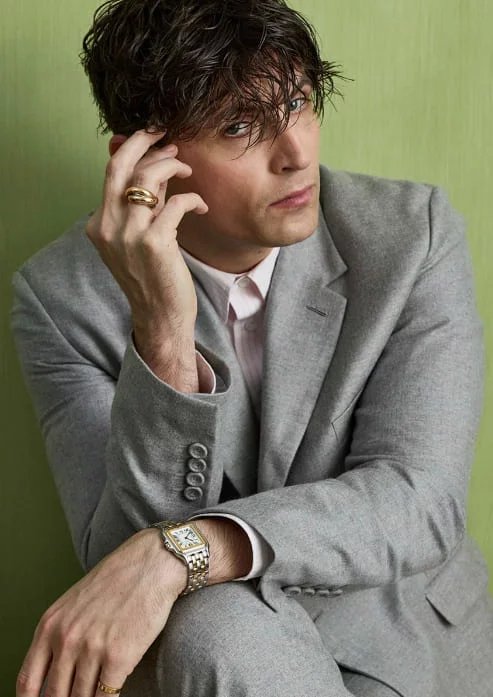
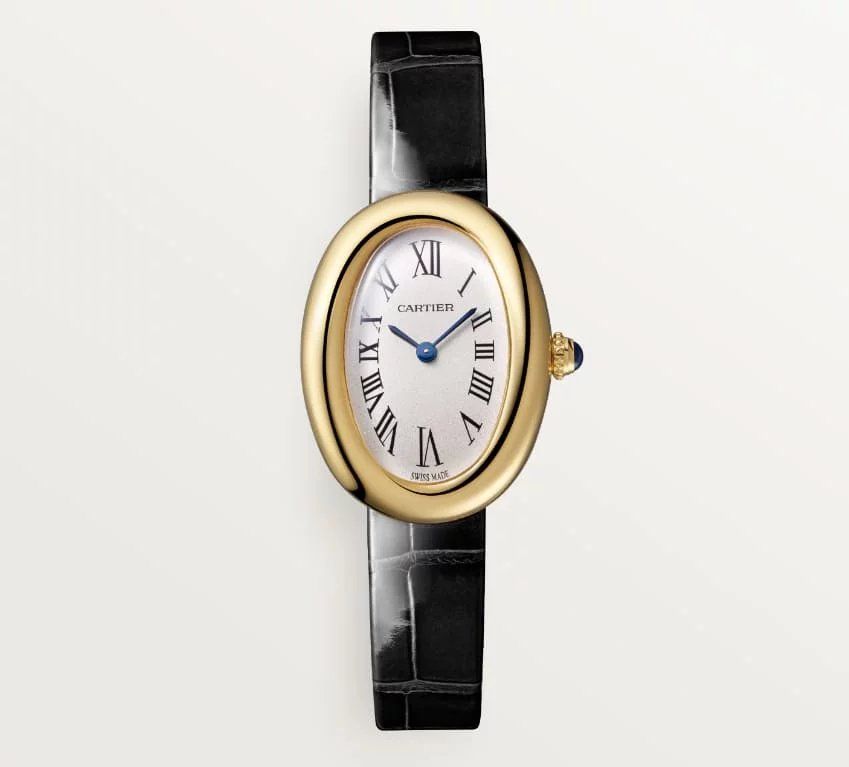
He was also seen wearing the Bathtuban oval watch with sensual lines, historically associated with a more feminine universe, but which Cartier today claims to be perfectly unisex. On Quenard’s wrist, the Bathtub becomes a style object in its own right, which deliberately blurs the codes of gender and elegance.
When the watch becomes a storytelling tool
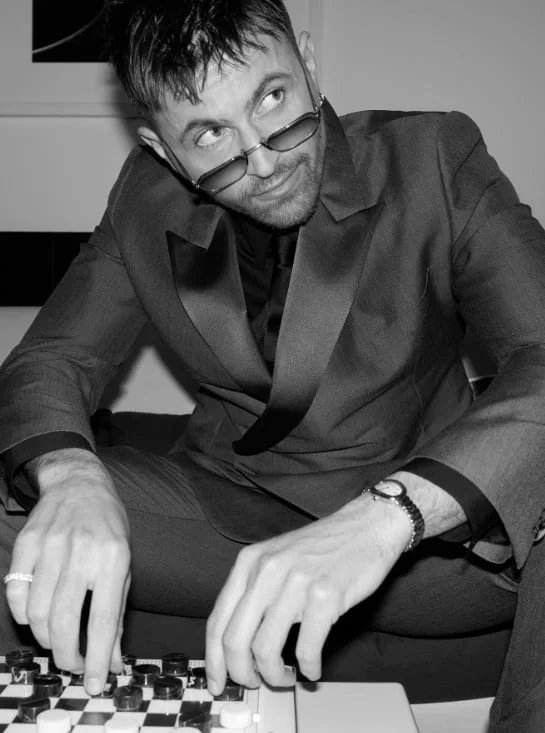
In the case of Raphaël Quenard, the watch does not seem to be just a simple accessory. She fully participates in the construction of her public image. Cartier, by associating it with models as different as the Tank, the Crash or the Baignoire, is not so much trying to fit it into a mold as to exploit its singularity.
Quenard thus embodies a form of watchmaking that accepts strangeness, discrepancy, and even a certain aesthetic provocation. Through him, Cartier shows that a historic house can still dialogue with a generation of actors with a rougher, less smooth style, without denying its heritage.
Watches in his image
Ultimately, the watches worn by Raphaël Quenard paint a fairly faithful portrait of the public character he embodies: eclectic, sometimes confusing, never completely consensual. Between the “jeweled” Tank, the radical Crash, the sensual Baignoire and the more classic Santos-Dumont, we find the same tension between heritage elegance and a taste for the opposite.
One thing is certain: with Quenard, the watch is never neutral. She tells something, about him as much as about the house that accompanies him. He likes to tell stories and there are many to tell about the history of Cartier and its models. This is very well seen on their part.