Table of Contents
There are two schools of watchmaking, those who trigger a chronograph like pressing “start” in the gym, and those who want to feel the small, clear, almost aristocratic click of a well-made mechanism under their finger. If you are here, you have already guessed that the column wheel chronograph is not a slogan, but an architecture. A way of controlling measured time with refined mechanical logic, closer to a conductor than a switch.
We talk about it a lot, sometimes too quickly. “Column wheel = better”. End of discussion. Except no. The column wheel is neither a magic wand nor a moral label. It is a technical solution, brilliant when well executed, demanding to manufacture and adjust, and which explains why some chronographs give the impression of sliding through time, while others seem to hang in the process.
What is the column wheel really used for?
A chronograph is a watch capable of measure durations regardless of the time display. To achieve this, three fundamental actions are required, triggered by the pushers, to start up, Stop, reset. And they must be triggered in the right order, without the mechanism contradicting itself, without the parts colliding, and if possible without visible shaking of the needle.
There column wheel is the “distribution” organ. Imagine a small wheel equipped with columns (vertical pillars) and hollows between them. By turning a notch with each press, it authorizes or blocks levers. It doesn’t do the work for the other parts, it order ballet.
The desired result is not just the beauty of the component. This is an order more progressivemore legible in its kinematics, and often a touch of the pusher more net and more constantwhen everything is well settled.
Mechanics on stage, a chronograph is a theater of levers
To understand how a column wheel chronograph works, you need to identify the main players.
1) The column wheel, the conductor
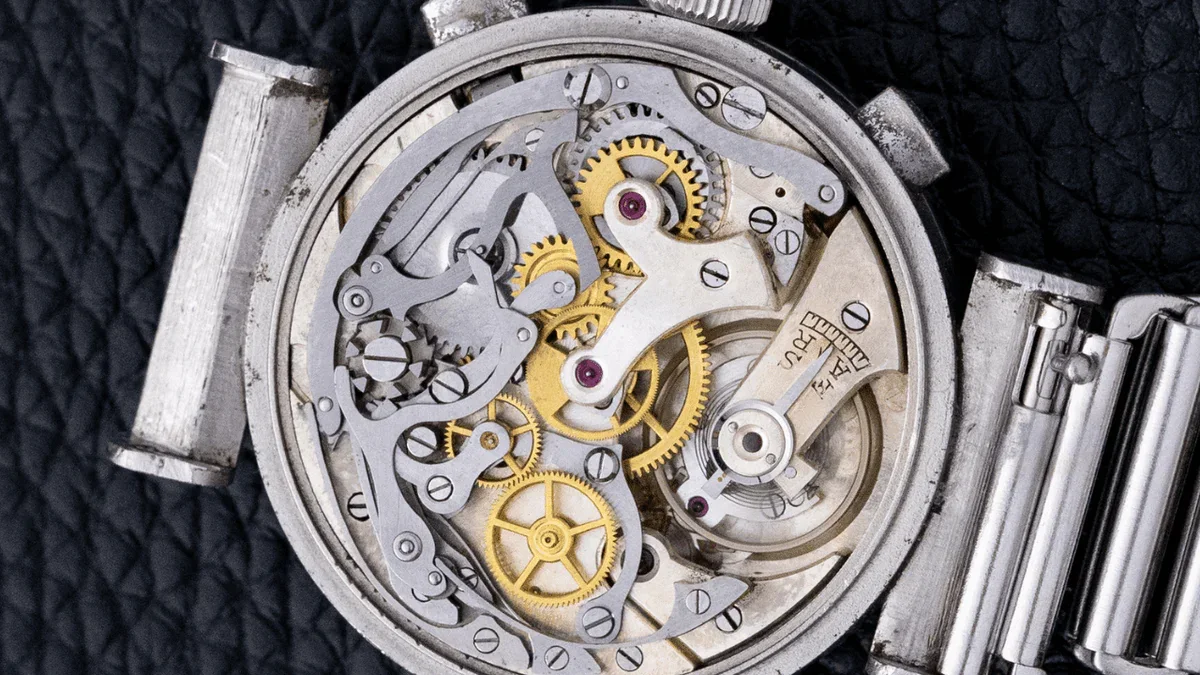
It turns in increments, usually using a ratchet and spring. Each press of a pusher moves the wheel one step forward. The columns, passing under the ends of the levers, determine which levers can swing.
This “column” format is old, historically considered more noble than the cam control, not by magic, but because it requires a geometry finer, a machining more expensive, and setting more pointed.
2) The levers, interpreters of the command
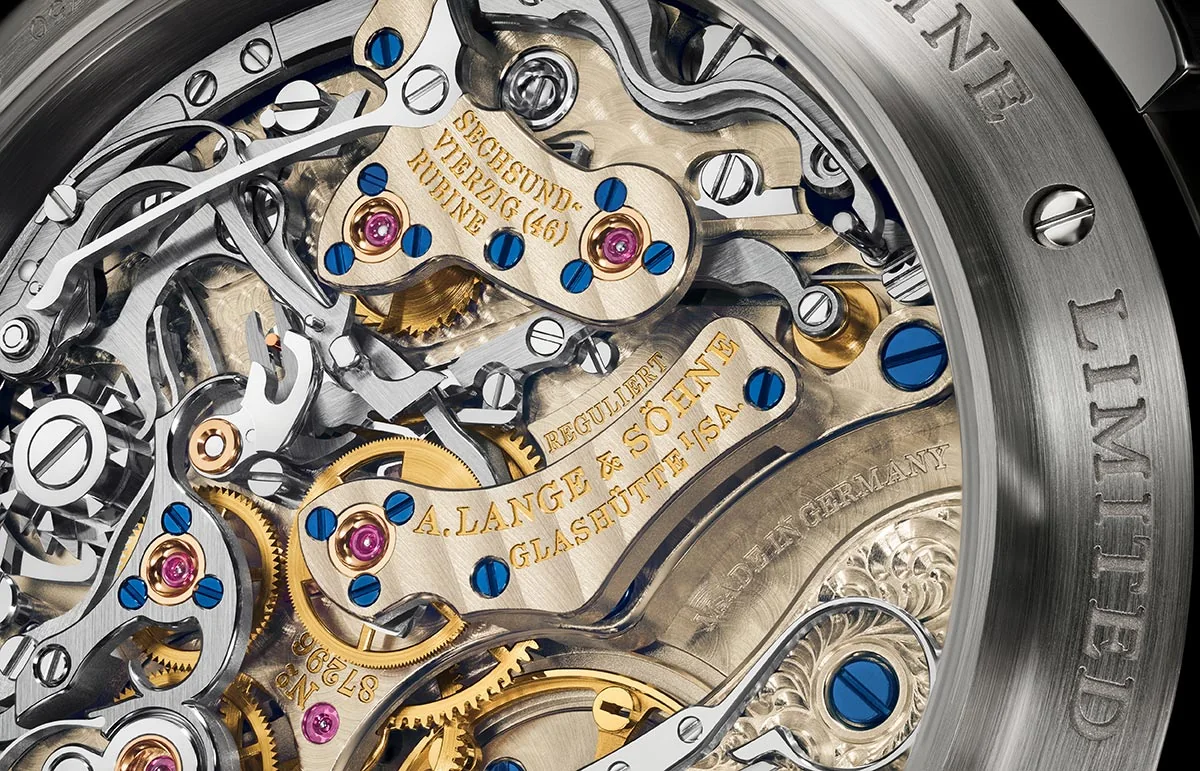
The levers translate the position of the column wheel into concrete actions, engaging the clutch, immobilizing or releasing the chronograph wheel, authorizing the reset, etc. This is where the watch becomes a “logical” mechanism.
3) The clutch, the connection between walking and measuring
For the chronograph hand to turn, energy must be transmitted from the base gear train to the chronograph mobile. Two large families exist:
- Horizontal clutchalso called “lateral”, with a wheel that moves to mesh with another. Very readable on the background side, often spectacular, but can cause the needle to jump a little at the start if the adjustment is not perfect.
- Vertical clutchwhere engagement is by friction, like a mini automobile clutch. Often softer departures, less “stutter”, but less visually “demonstrative” architecture.
The column wheel can control one or the other. It does not impose the type of clutch, it imposes a method order.
4) Brake and reset, authority and erase
When you stop the chronograph, a piece comes brake the chronograph wheel, so that it stops without rebound. And when we reset, hammers fall on hearts (the famous heart-shaped cams on the counter mobiles) to instantly return the hands to 12. This system is as elegant as it is relentless, a sharp tap, and everything returns to its place.
Start, stop, reset: the column wheel in three acts
Act 1, start
You press the pusher at 2 o’clock. The column wheel moves forward one notch. A previously blocked lever frees itself and tilts. According to the movement:
- the horizontal clutch moves and meshes,
- or the vertical clutch tightens and transmits torque.
At the same time, the brake is raised to no longer rub the chronograph wheel. The central chrono hand leaves. If it “jumps”, it is rarely the column wheel that is the cause, it is more often the mesh adjustment, excessive clearance, or a tooth that is not properly aligned. The column wheel simply authorizes the action.
Act 2, stop
Second press. The column wheel moves forward again. This time, she orders the opposite: disengage the clutch, then apply the brake. The chronograph stops. A good adjustment gives a push feel farm And ownnot a pasty thing that reminds you of a leaky pen.
Act 3, reset
You press the pusher at 4 o’clock. The mechanism first checks a simple rule: you do not reset a running chronograph (except flyback). The column wheel must be in a position that allowed the fall of the hammers. If everything is consistent, the hammers fall on the hearts of the counters, chrono seconds, minutes, sometimes hours, and everything returns to noon in a fraction of a second.
This is the moment when we understand the intellectual superiority of a chronograph; it does not “erase” a position, it mechanically forces an absolute, geometric, inevitable return.
Column wheel vs cam: why the comparison keeps coming up
The cam chronograph, often called “cam switching”, replaces the column wheel with a profiled part, which switches levers. The interest is the simplicity of production and often better robustness at equal cost. The downside is that the pusher feel is more dependent on a rocker spring, and can feel less silky.
But watch out for the lazy reflex. There are remarkable cam chronographs, and poorly adjusted column wheels. The column wheel is not a diploma, it is a requirement.
Why some column wheel chronographs are so “satisfying” on the finger
The famous “feeling” comes from several factors:
- A more regular lever strokethe columns guide the tilting without brutal force.
- Better defined support surfacesfewer imprecise friction zones.
- Clearer synchronization between lifting the brake and engaging the clutch.
When everything is done well, you are not “pushing” to overcome a mechanism, you are triggering a sequence. You feel that the watch understands what you are asking of it. It’s almost annoying for humans, but very reassuring for the collector.
Horizontal or vertical clutch: the column wheel is not everything
Many associate a column wheel and a horizontal clutch, because the historic grand chronos exhibit this spectacle on the bottom side. However, the column wheel + vertical clutch combination is common on modern calibers, in particular to limit the start-up jerk and allow prolonged use of the chrono with less impact on the amplitude.
Translation, if you like to let the chronograph run like an animated central seconds hand, a vertical clutch is often a useful ally. If you like to see the teeth live and approach like tango dancers, the horizontal has an almost indecent charm.
The special case of flyback: when resetting becomes a pilot gesture
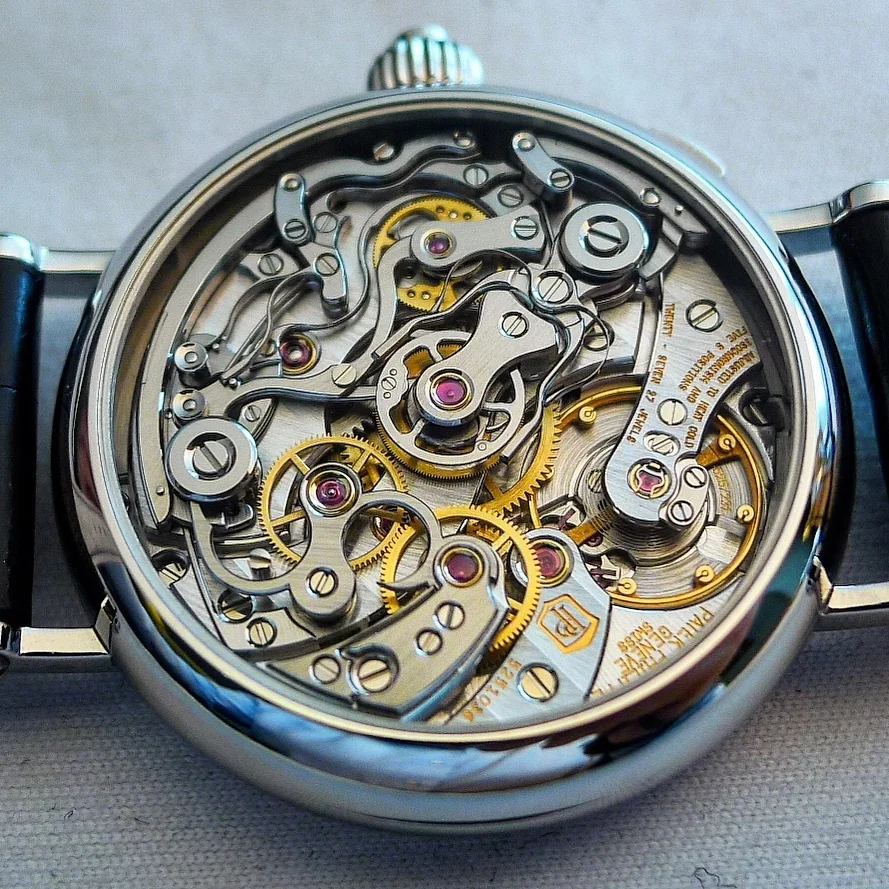
A flyback chronograph allows you to reset and restart in one presswithout stopping. There, the column wheel plays an even more delicate role: it must allow the hammers to fall while managing the clutch to avoid destroying the transmission.
This is typically the kind of complication that reveals the quality of architecture and setting. A poorly thought-out flyback is mechanical violence. A good flyback is choreography.
Concrete examples of column wheel chronographs
Rather than remaining in abstraction, here are some benchmarks known to amateurs. Prices vary depending on configuration, market and year, but these models are classics in the category.
Omega Speedmaster Chronoscope
- Movement : Omega Co-Axial Master Chronometer Caliber 9908 (manual), column wheel chronograph
- Certification: Master Chronometer
Interesting because it shows that a modern chrono can combine column wheel, serious industrial finishes and contemporary chronometric requirements.
TAG Heuer Carrera chronograph (Heuer 02 family)
- Movement : Heuer 02 (automatic), column wheel
- Power reserve: often announced around 80 hours.
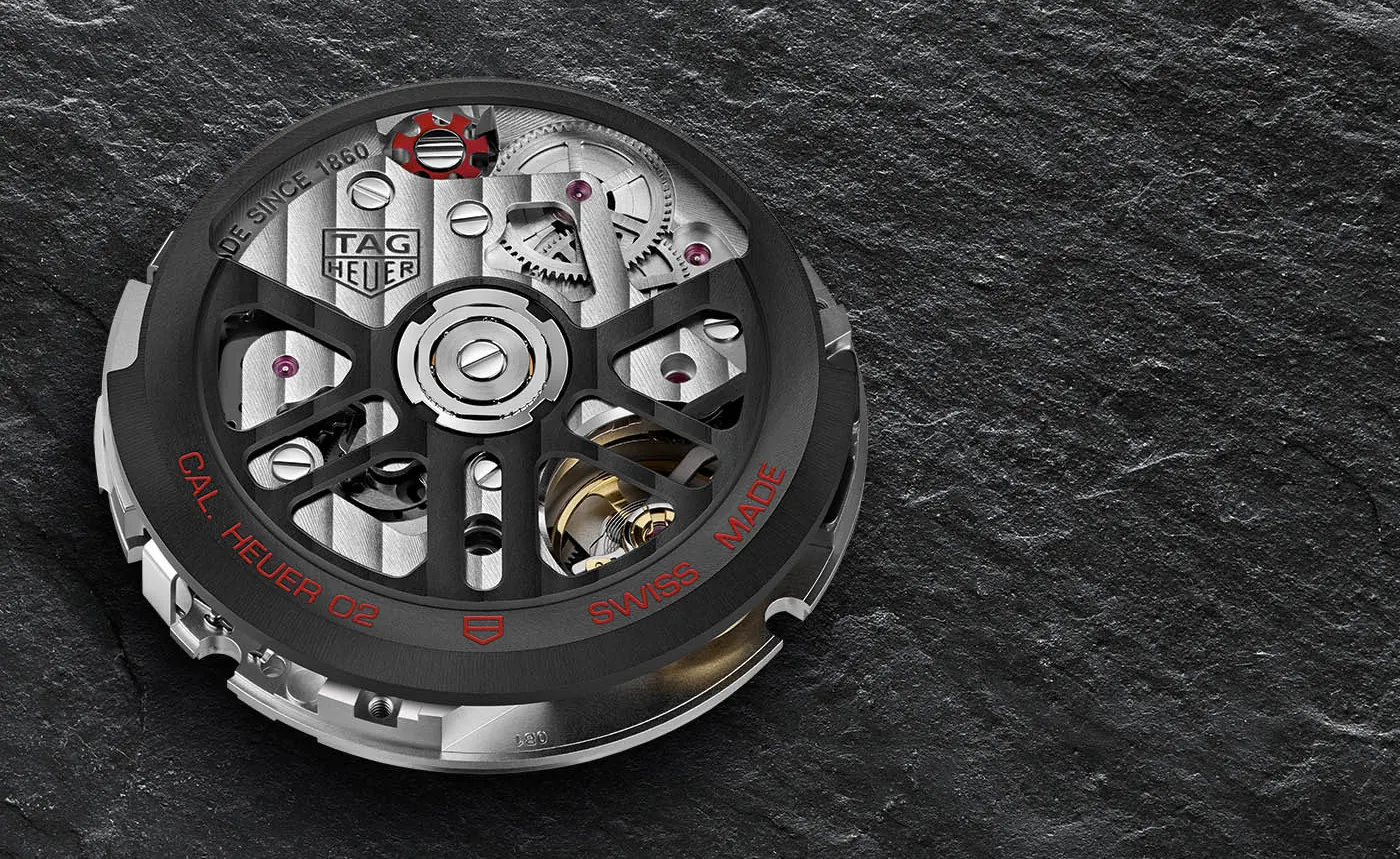
A general public example, in the noble sense, of a column wheel chronograph accessible in modern production.
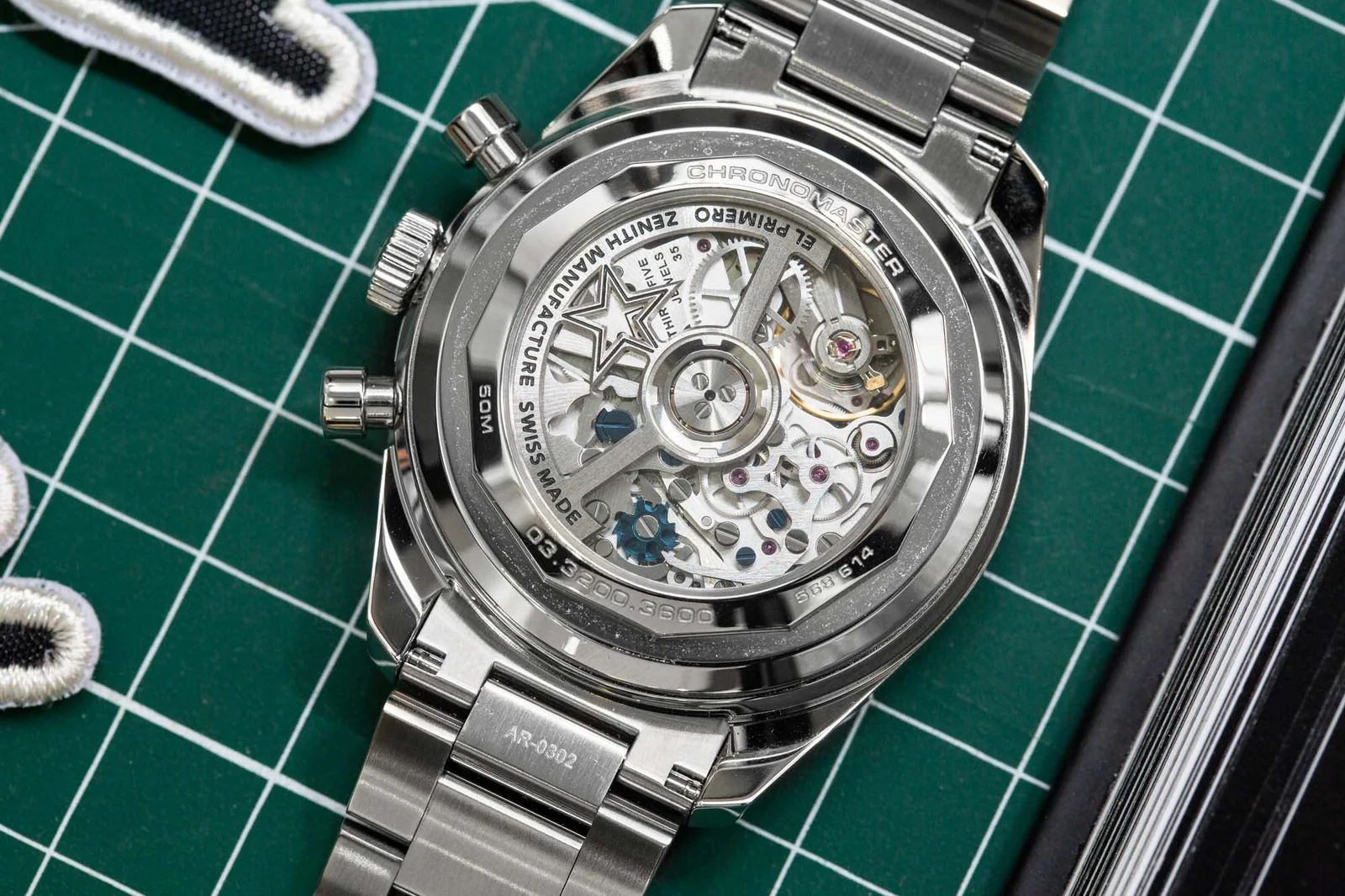
Zenith Chronomaster Original
- Movement : El Primero 3600 (automatic), chronograph with column wheel
- Specificity: measurement at 1/10th of a second via central needle making one revolution in 10 seconds
A demonstration that the column wheel can be integrated into a high-frequency architecture, and remain readable, nervous, alive.
You can’t be 100% sure without seeing the movement or reading the spec sheet. But there are clues:
- The touch of the pushersoften sharper and less “screechy”, even if this is not proof.
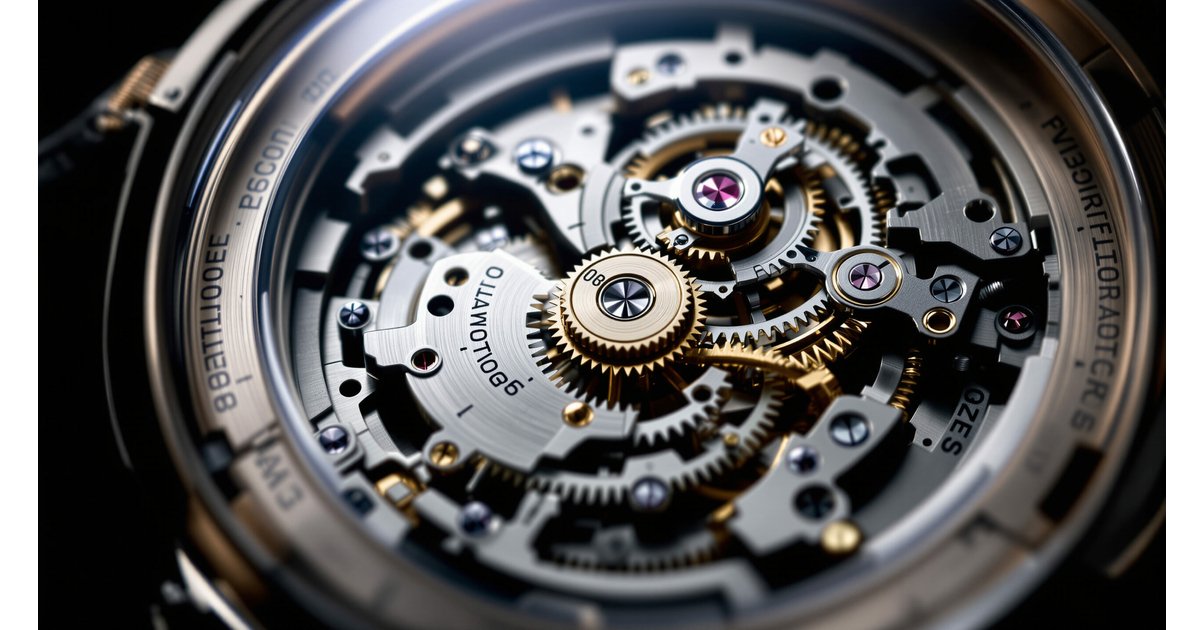
- The transparency of the backgroundon certain chronographs with horizontal clutch, we can see a small “crenellated” wheel with columns.
- Documentationbrands willingly mention it… sometimes as a talisman.
The most reliable remains the caliber reference. A chronograph doesn’t lie, but the brochure can embellish it.
Why collectors care about it, beyond snobbery
Because basically, the column wheel tells an idea of watchmaking: control by mechanical, clear, hierarchical sequencing. It’s a detail that isn’t one. A chronograph is already a control complication. And the column wheel is control of control.
It is not obligatory to make a good chronograph. But when it is well designed, machined cleanly, polished where necessary, adjusted without approximations, it gives the user this rare pleasure, that of feeling material logic being executed at the tip of the finger. Discreet luxury. Not fireworks.
To remember
- A column wheel chronograph uses a pillar wheel to coordinate start, stop and reset.
- The column wheel controls levers which manage clutch, brake and reset hammers.
- It can work with a horizontal clutch Or verticalsensation and behavior strongly depend on it.
- “Nobility” comes above all from manufacturing complexity and of settingnot a myth.