Table of Contents
Traveling with time on your wrist: why the dual time zone has changed watchmaking
There are complications that arise from an aesthetic whim, and others from pure necessity. The dual time zone watch belongs to the second category. It tells the story of the rise of commercial aviation, the globalization of trade and this new form of practical elegance: knowing where you are, while keeping one foot in “home”. In the 1950s, when transatlantic flights became the new playground for businessmen, pilots and journalists, the single hour ceased to be obvious. The wrist calls for a time compass.
But “dual zone” does not mean only one possible architecture. Behind the expression hide several mechanical solutions, each with its logic, its ergonomics and its poetry. Understanding how a dual time zone watch works also means understanding what watchmaking does best: translating a daily need into the language of hands.
Large families: GMT, jumping local time and worldtimer
Before we get into the swing of things, let’s clarify the terms. A “dual time” watch shows two different times: local time (where you are) and reference time (often home). The most common systems are divided into three families.
1) The GMT watch (24 hour hand)
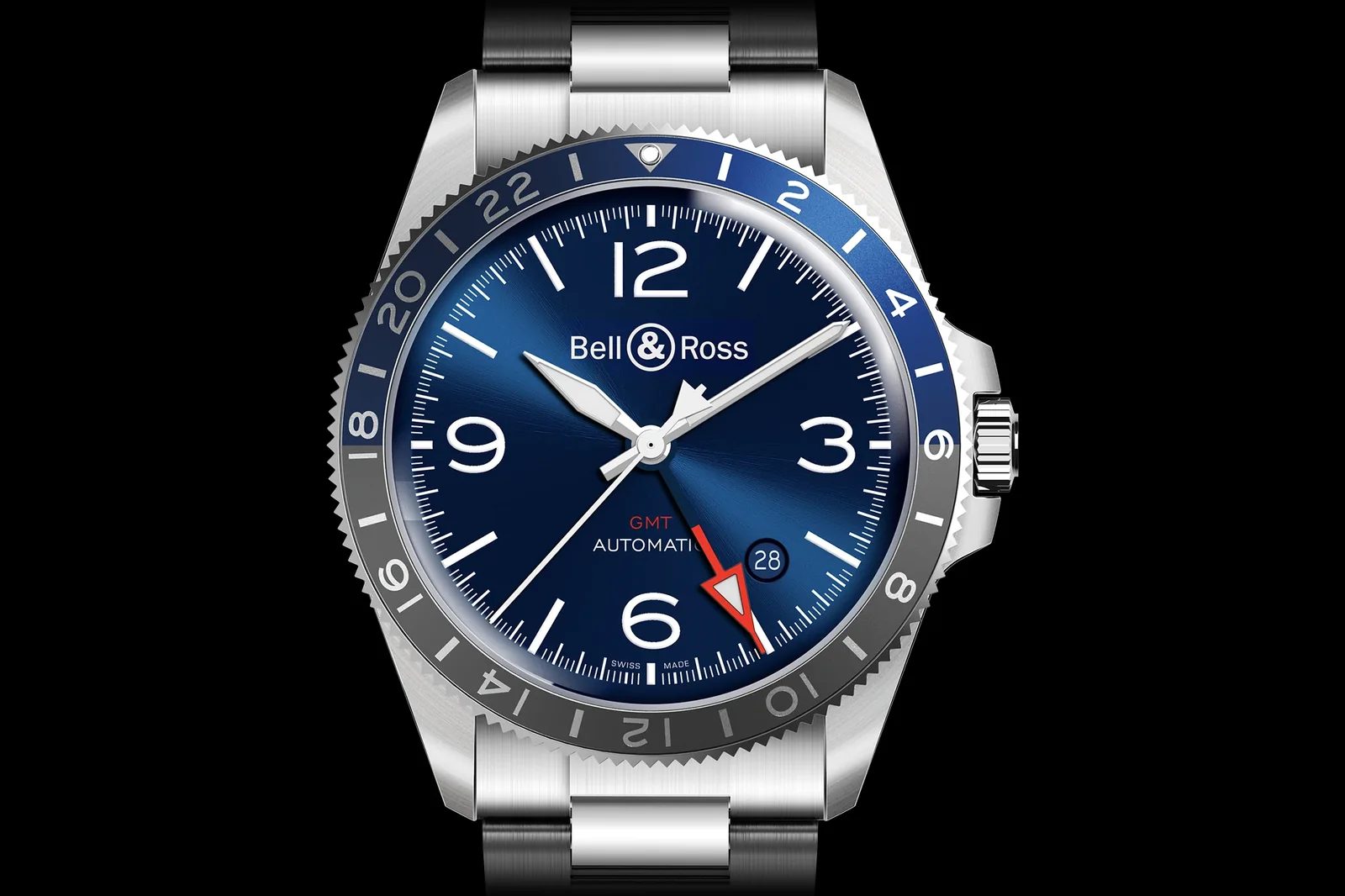
The most emblematic. It adds a fourth hand, often colored, which circles the dial in 24 hours. This hand can be read on a 24 scale (printed on the dial, the bezel or a flange). Result: you keep the classic time on 12 hours, and the “GMT” time on 24 hours, which avoids any confusion between morning and evening.
2) “True GMT” (jumping local time)
Here, the watch is designed for the frequent traveler. The local hour hand is adjusted in one hour jumps (without stopping the watch), while the 24 hour hand remains on the reference time. It’s absolute comfort when leaving the plane: no laborious setting of the time, no disruption of the minutes, and often a date which automatically follows the change of time zone.
3) The worldtimer (universal time)
More spectacular: it can display the time in 24 cities (so 24 zones) thanks to a 24-hour disc and a city ring. It is not a “double time” in the strict sense, but it is the encyclopedic version of the same idea: embracing the world in one glance.
In this category, there is an accessible one that has caught my eye for a long time: the Frederique Constant Worldtimer.

A classic mechanical watch transmits energy from the mainspring to the escapement and the regulating organ, then to the gear train which drives the hands. The magic of the dual time zone consists of add a second time indication without disrupting walking or sacrificing readability.
The GMT hand: a second “reading” of time
In a GMT, the 24-hour hand is driven by a gear train that makes one revolution in 24 hours, while the hour hand makes one revolution in 12. In simple terms, the watch creates a reduction (or a different gear ratio) for that extra needle. The movement keeps a “base time”, and distributes this time to several displays.
Reading is then done via:
- A fixed 24-hour scale (on the dial): practical, sober, immediate.
- A rotating 24-hour bezel : it sometimes allows you to display a third time zone by shifting the reference of the GMT hand.
The key difference: “office GMT” vs “true GMT”
Two philosophies coexist, often confused:
- GMT says “office” : the 24 hour hand is adjusted independently (practical in the office to follow a head office abroad), while the hour hand is linked to the minutes and moves in a classic way.
- GMT says “true” (or “flyer”) : the local hour hand jumps by one hour, independently of the minutes, and the GMT hand remains stable on the reference time.
This distinction is not a forum detail: it changes daily usage. “True GMT” is designed for border crossings. The “office GMT” is designed for remote calls.
The procedures vary depending on the brand, but the logic remains the same: set a “home” time and a “local” time. Here is a reliable method, to adapt to your watch.
Setting a GMT with 24 hour hand
- Step 1: set the reference time (home) with the GMT hand on the 24-hour scale.
- Step 2: set the local time via the hour hand (12 o’clock), maintaining the exact minutes.
- Step 3: make sure the date is the correct local day, especially if you crossed the date line.
If your watch has a rotating 24-hour bezel, you can shift the bezel to read a third time zone: you keep the GMT hand, but you change its “reading scale”.
Setting a “true GMT” when traveling
- Before departure: place the GMT hand on home time, ideally within 24 hours.
- On arrival: jump the local hour hand one notch per time zone, forwards or backwards, without touching the minutes.
- Check the date: on the right calibers, it will follow the hour jumps; otherwise, adjust it according to the manufacturer’s instructions.
Golden rule: avoid correcting the date in the “danger zone” (often around 9 p.m. – 3 a.m.), when the date change mechanism is engaged. The manuals differ: if you don’t know it, be careful.

Why the 24 hour scale is so important
A dual-time watch should not only display two hours: it should avoid errors. The 24 hour scale provides vital information: day or night on your reference zone. When you call Tokyo from Paris, you’re not just looking for “what time is it?”, you’re looking for “is it reasonable?” This cultural readability – respect for the time of others – is perhaps the true sophistication of a GMT.
Dual time zone and design: when functionality becomes a signature
The GMT complication has generated an immediately recognizable aesthetic vocabulary: arrow hand, fine second hand, two-tone bezel, graduated flange, very readable dials. It is no coincidence that the piece has become a symbol of contemporary mobility. The GMT is to watchmaking what the cabin suitcase is to travel: an object designed to be elegant under duress.
The most common display solutions
- Central 24 hour hand : the sportiest, the most intuitive.
- 12 or 24 hour subdial : more dressed, more “office instrument”.
- 24 hour disc and window : very readable, often associated with a contemporary touch.
Which dual time zone to choose according to your life
It’s all about rhythm. Watchmaking, when it is well thought out, embraces a way of life rather than a fantasy.
- You travel often : favor a true GMT (jumping local time). It’s the choice of terrain.
- You work abroad without moving : A office GMT is more than enough, often at a more affordable price.
- You juggle several capitals : A worldtimer offers a panoramic, more contemplative reading.
Wearing a dual-time watch isn’t just about showing two hours. It means taking on a life that straddles several horizons: a permanent back and forth between here and elsewhere, between the present and memory. In a world saturated with screens, GMT has something deliciously human: it transforms the complexity of the globe into a simple gesture, that of reading a hand.
And that’s perhaps its secret: when everything goes quickly, it reminds you that time is not just a measure. It’s a geography.
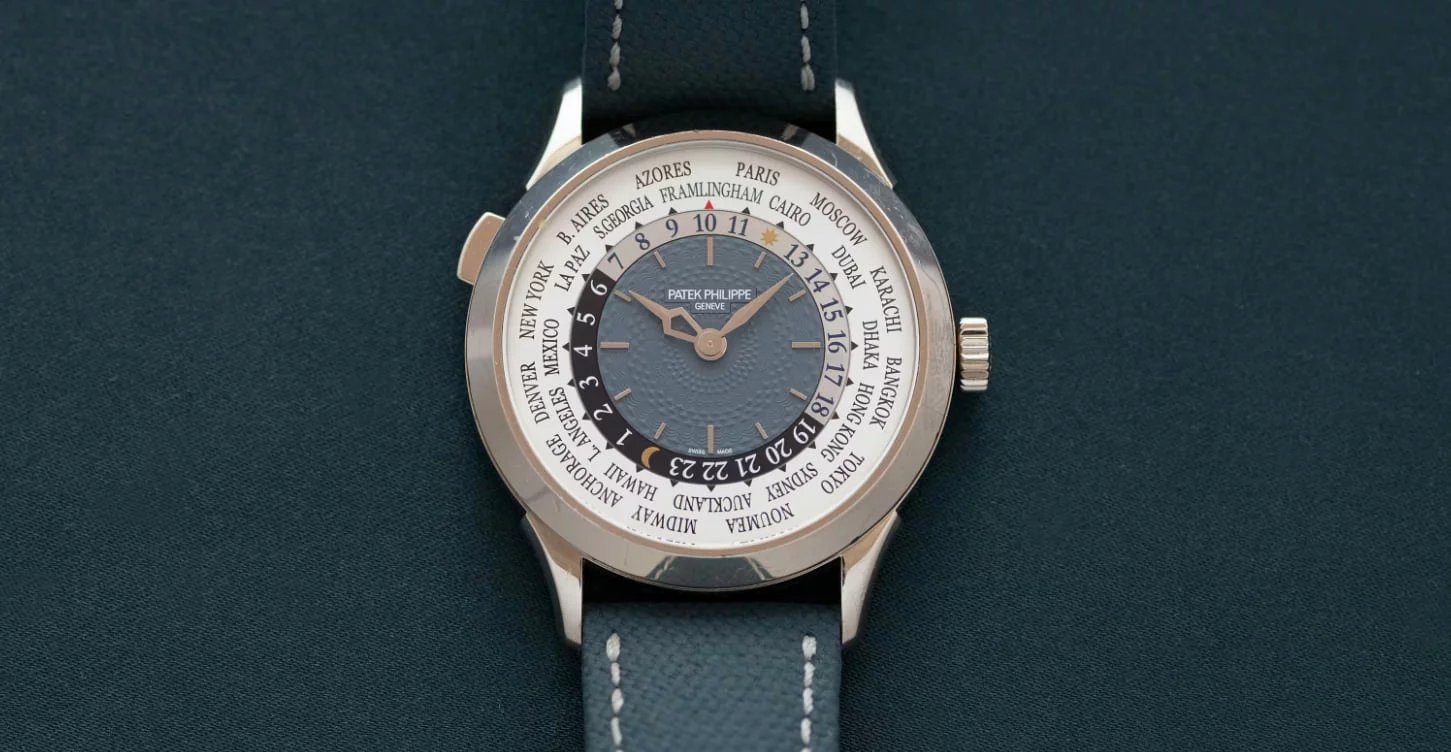
Come on, let’s finish with a very special Ed Sheeran watch because its dial shows at noon the village where he grew up and where he lives (Framlingham). Such customization on a Patek Philippe was worth mentioning.