Table of Contents
Before optical sensors, connected watches and electronic oximeters, mechanical watchmaking had already found an elegant solution to this very concrete problem: measuring heart rate. This is the origin of the doctor’s watch, known as a pulsometer watch.
At the crossroads of medical science and watchmaking precision, this complication tells a fascinating story. A story of real utility, far from decorative complications. A story where the watch is not a piece of jewelry, but an instrument.
The pulsometer watch, above all a medical tool
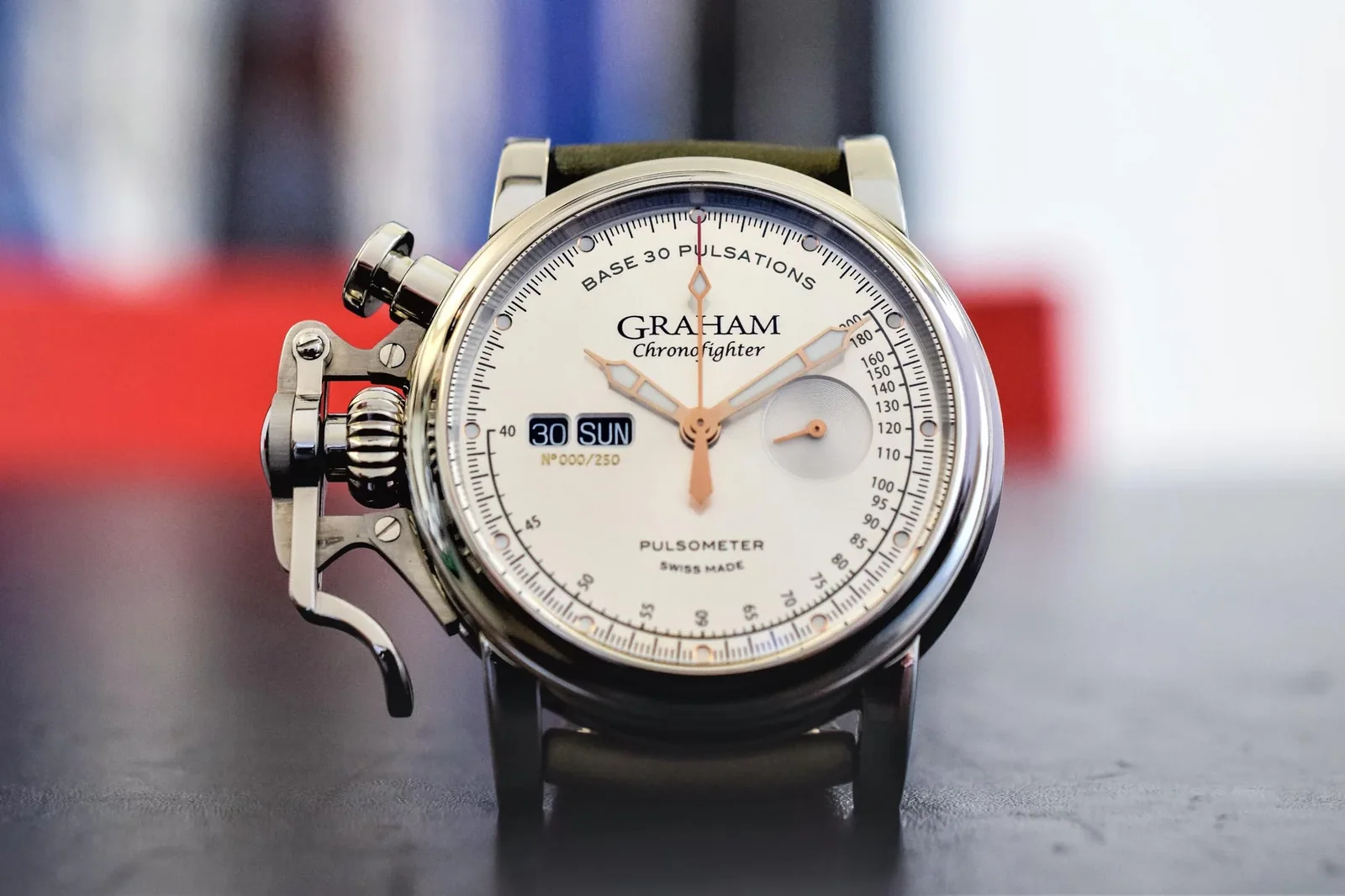
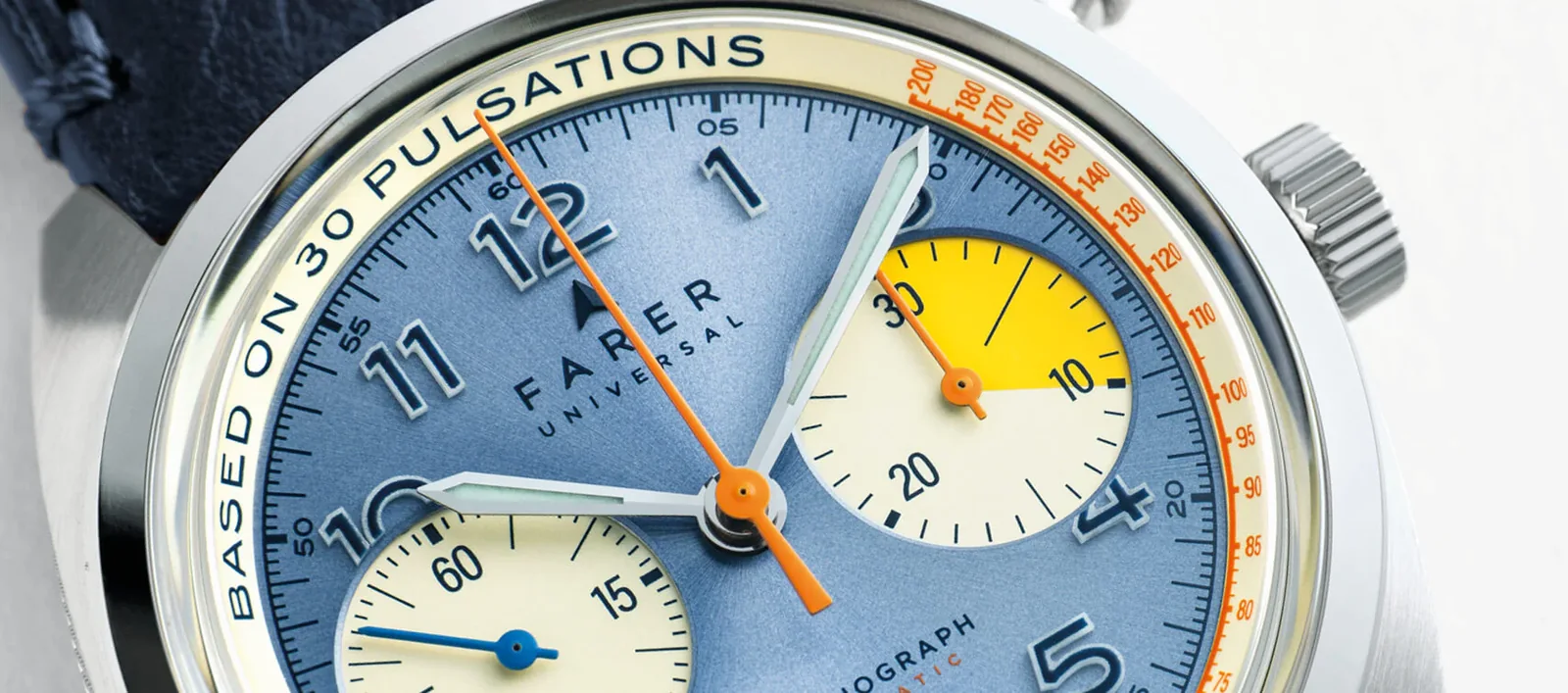
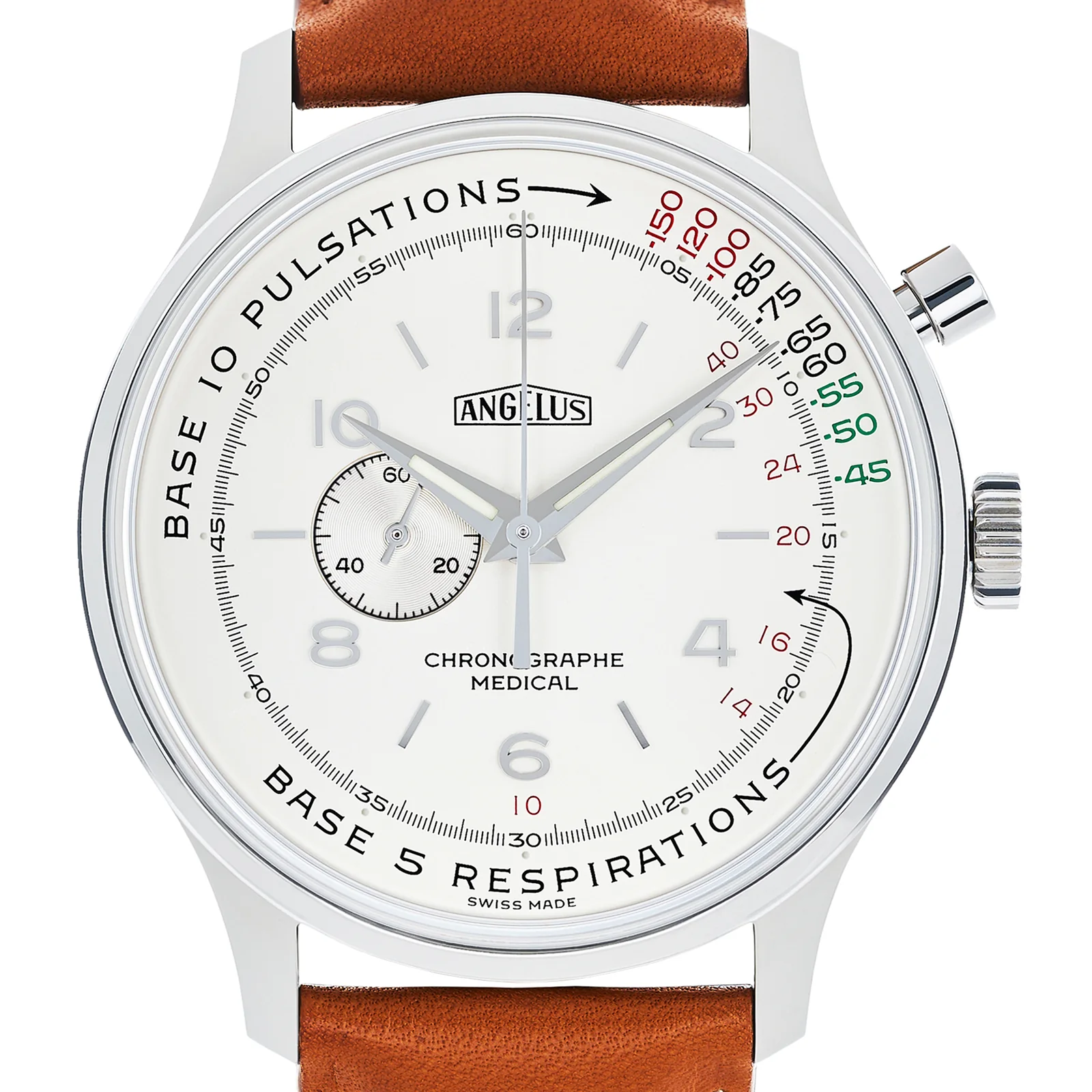
A pulsometer watch is, in most cases, a chronograph equipped with a specific scale called pulsometer. This scale, printed on the dial or around the edge of the dial, allows you to calculate a patient’s heart rate in a few seconds.
The principle is remarkably simple. The doctor starts the chronograph the moment he feels a beat. It then counts a precise number of pulsations, generally 15 or 30 depending on the scale chosen. Once this number is reached, it stops the chronograph. The needle then directly indicates the number of beats per minute on the pulsometer scale.
No mental arithmetic. No conversion. The information is instantaneous.
This system appeared at the end of the 19th century, when chronographs became sufficiently precise and reliable for scientific use. Several Swiss manufacturers quickly understood the benefit of integrating these medical scales directly onto the dials.
Longines, Omega, Universal Genève, and later Patek Philippe or Vacheron Constantin will produce chronographs specifically intended for doctors.
Understanding the pulsometric scale
Let this eminent doctor known to everyone (don’t pretend…) explain to us:

“Visually, the pulsometer scale looks like a graduation that rotates around the chronograph dial. It is often marked Pulsometer followed by an indication like Graduated for 15 pulsations or even Graduated for 30 pulsations.
This precision is essential, because the entire scale depends on this number. The reasoning is mathematical. If the hand takes 10 seconds to measure 15 pulses, the watch automatically converts this duration into beats per minute using the graduation.
The higher the number of pulses counted, the more precise the measurement becomes. In practice, many doctors preferred scales of 30 pulses. »
-Thank you Doctor.
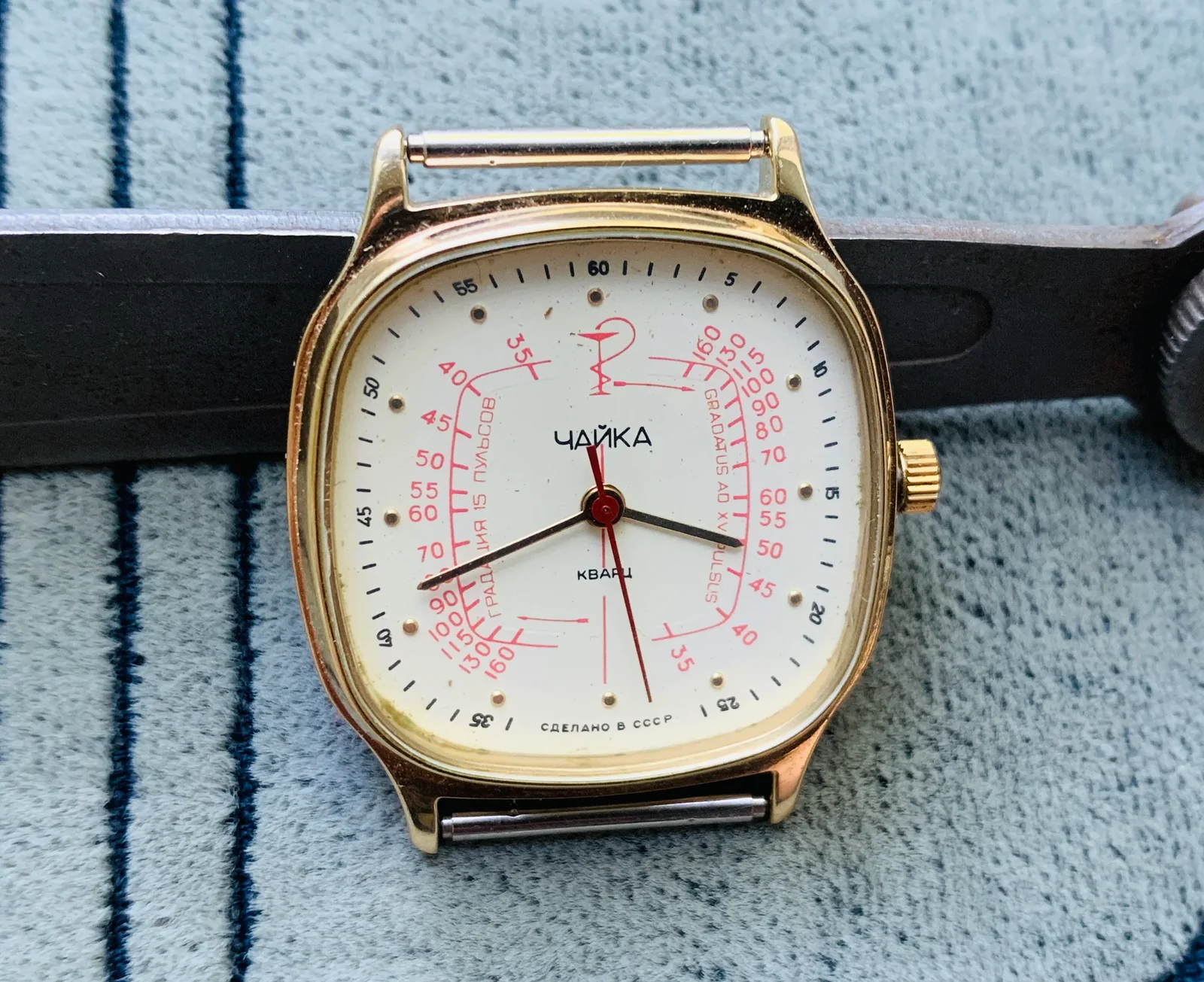
This detail also explains the very particular appearance of certain pulsometric dials. The numbers may appear irregular, sometimes tightly packed on one side and more spaced apart on the other. It is simply a reflection of the conversion of time into heart rate.
The chronograph, the mechanical heart of the doctor’s watch
The pulsometric complication relies entirely on the chronograph. Without him, no measurement is possible.
The chronograph is a function that allows you to measure an interval of time independent of the main time. It has a dedicated central hand, often accompanied by counters for minutes or hours.
In a classic doctor’s watch, the operation is very direct:
- press the pusher, start the chronograph
- manual beat counting
- press the pusher to stop
- immediate reading on the pulsometric scale
Early models often used column-wheel chronograph movements, noted for their smooth activation and precision. Calibers that have become legendary such as the Longines 13ZN or the Valjoux 22 are found in many historic medical watches.
The golden age of doctor’s chronographs
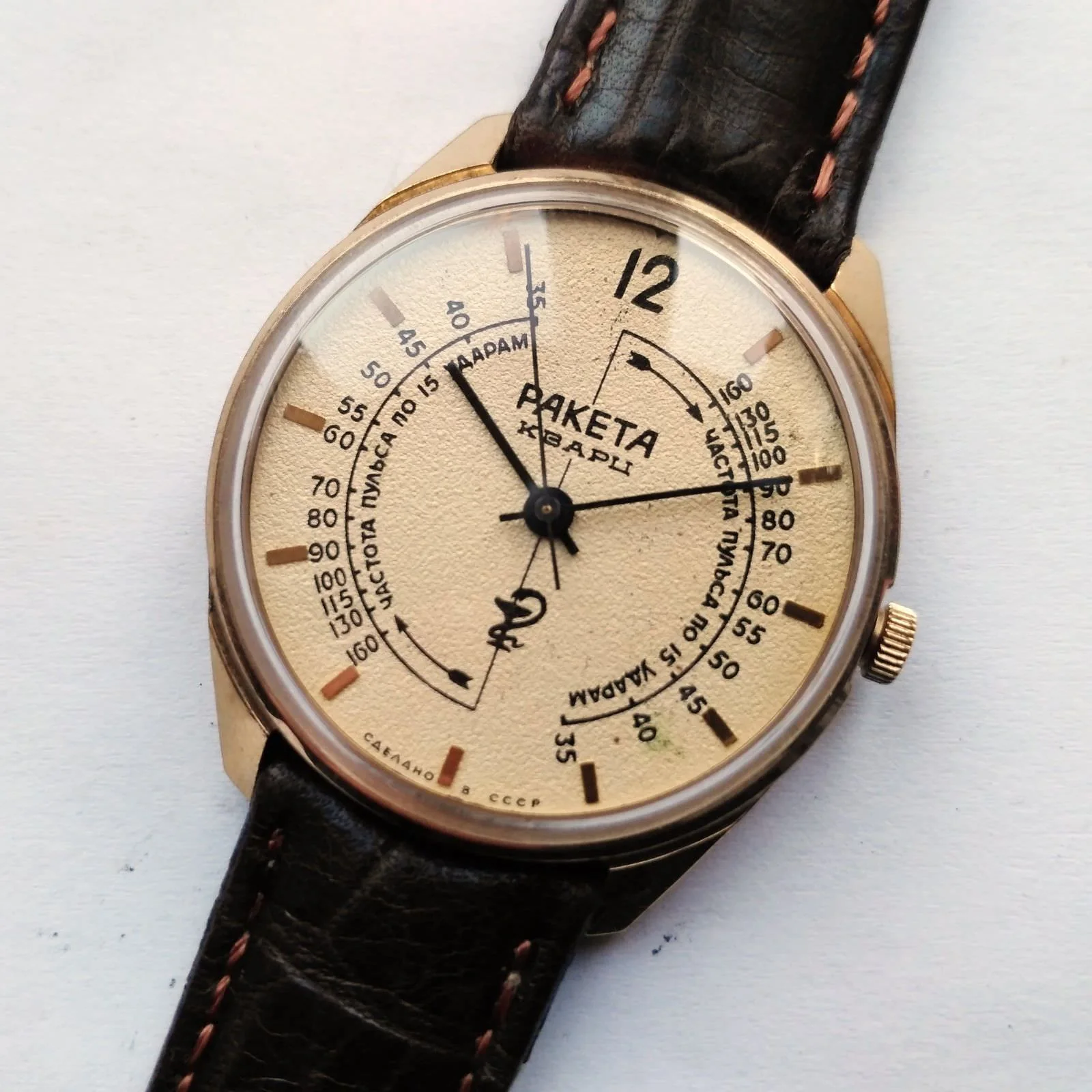
The 1930s to 1950s represent the golden age of pulsometer watches. Chronographs are becoming more accessible, more robust, and clinical medicine still relies largely on analog instruments.
The dials of these watches are often magnificent. Many adopt a configuration bi-compax with two counters, with a pulsometric scale on the periphery and very readable Arabic numerals. The whole thing is designed for quick reading.
Some models even integrate several scientific scales:
- pulsometer for heart rate
- rangefinder to measure distance using the speed of sound
- tachometer to calculate speed
We then obtain these spectacular dials, almost saturated with information, but with absolutely brilliant scientific instrument logic.
Swiss houses compete in ingenuity, sometimes using pulsometric spirals which rotate towards the center of the dial. A bold graphic choice, but which increases reading precision.
Famous examples of pulsometer watches
Longines Pulsometer Chronograph
Longines has one of the richest histories in this field. The brand was already producing medical chronographs at the beginning of the 20th century, notably with the famous caliber 13ZN, considered one of the largest chronograph movements ever built.
The house of Saint-Imier has regularly paid tribute to this heritage. One of the best known modern interpretations is the Longines Pulsometer Chronographinspired directly by medical models from the 1920s.
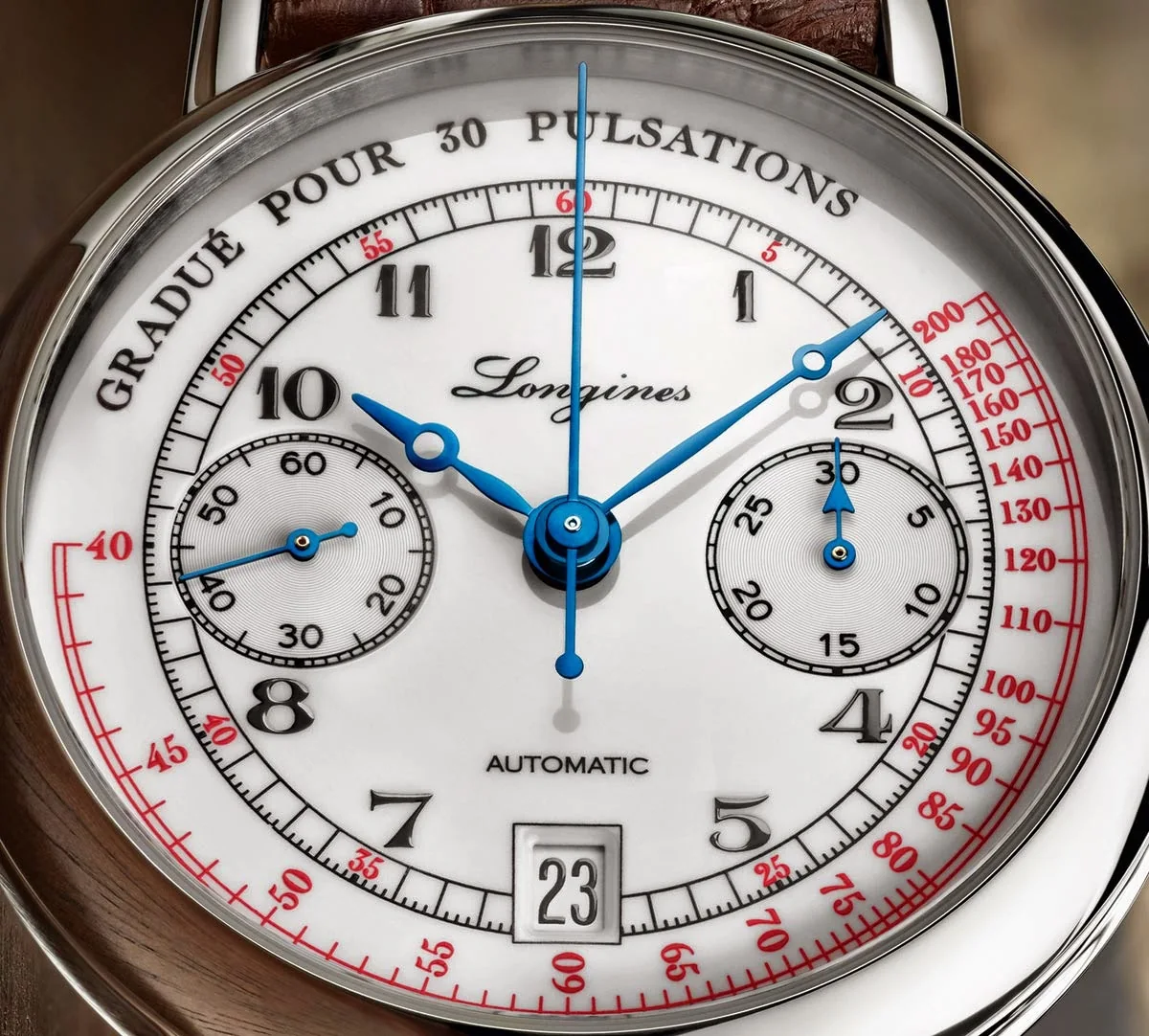
The white enamel dial, the highly contrasting black numerals and the red pulsometer scale create a vintage style extremely faithful to period medical instruments.
The watch was priced around a few thousand euros when it was marketed, which made it one of the most accessible entry points into the world of medical chronographs.
Patek Philippe Chronograph pulsometer ref. 7150R
In a much more exclusive register, Patek Philippe has integrated a pulsometric scale on certain classic chronographs.
The reference 7150R, for example, combines a manually wound chronograph with a medical scale printed on a superb opaline dial. The result is typically Patekist: scientific, refined, almost aristocratic.
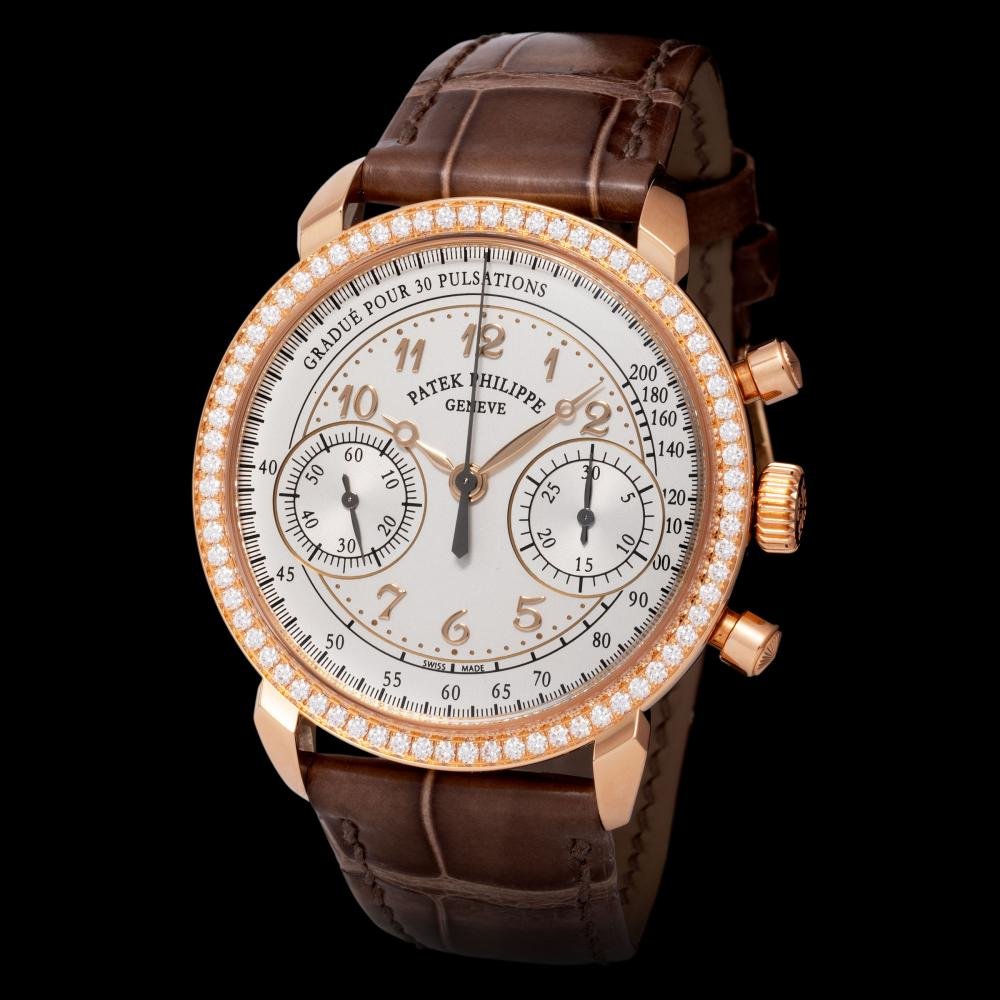
The price well exceeds 70,000 euros, proof that even a complication born in doctors’ offices can become an object of very high watchmaking.
Why these watches are still sought after today
You have to be honest. No doctor today measures the pulse of his patients with a mechanical chronograph. Pulsometric watches have been replaced by infinitely faster electronic tools.
And yet, these watches continue to fascinate collectors.
For what ? Because they tell a very particular moment in watchmaking history: the one when the watch was a real professional instrument. Like aviator’s, diver’s or racing driver’s watches.
The heart rate monitor is not a decoration. It is a function born from a concrete need.
Add to that extremely graphic dials, perfect readability and a very particular scientific charm, and we understand why these medical chronographs are so sought after on the vintage market today.
Certain pieces from the 1940s or 1950s now fetch very high prices at auction, particularly when they are signed Longines, Universal Genève or Rolex in their multi-scale versions.
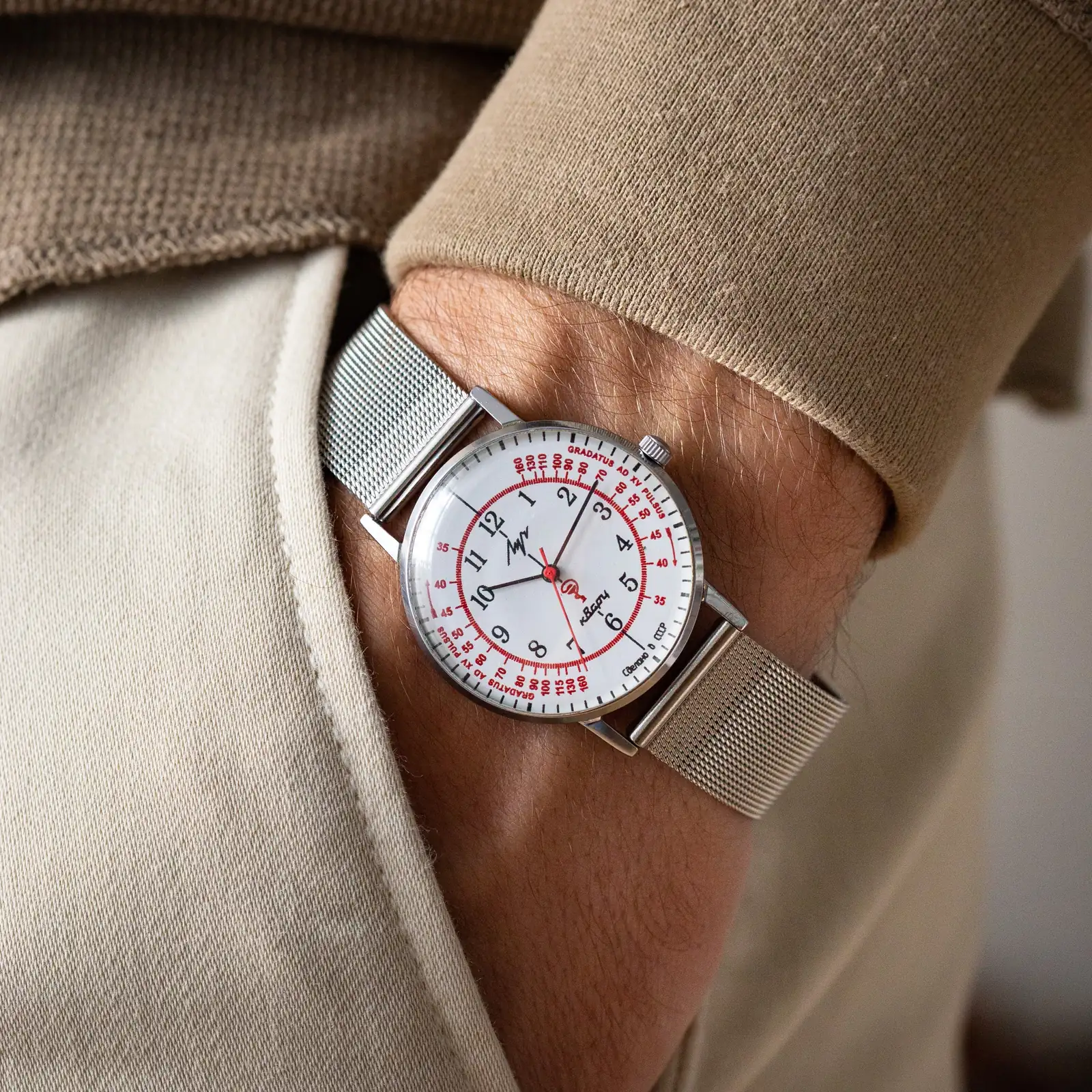
A symbol of instrumental watchmaking
Basically, the doctor’s watch embodies an idea that is somewhat forgotten today: that of instrument watch.
Before being a social marker, a mechanical watch was a measuring tool. Measuring time, of course, but also depth, speed, distance. Or, in this case, heart rate.
The pulsometer watch is perhaps one of the most elegant expressions of this philosophy. A few wheels, a spring, a chronograph. And suddenly, a vital piece of data becomes readable on a dial.
For a mechanism that only knows one unit, time, it is an almost poetic performance.