Table of Contents
A watch born from a country to rebuild
When we talk about reference watches, the conversation often turns to Switzerland, its valleys and its dynasties. However, in the heart of Saxony, another story is playing out: that of a return. There Diaper 1 is not only a remarkable watch; it is a cultural symbol, a mechanical manifesto born in a context of industrial and identity reconstruction.
At the beginning of the 1990s, reunified Germany rediscovered part of its heritage that the war, then the planned economy of the GDR, had frozen. Glashütte, a small historic watchmaking town, still bears the traces of a past greatness: that of Ferdinand Adolph Lange, founder in 1845 of a tradition of Saxon precision. When Walter Lange, great-grandson of the founder, relaunched A. Lange & Söhne in 1990, the ambition was clear: not to copy Switzerland, but to revive a German school, both strict and inventive.
1994: Lange 1, founding act of a renaissance
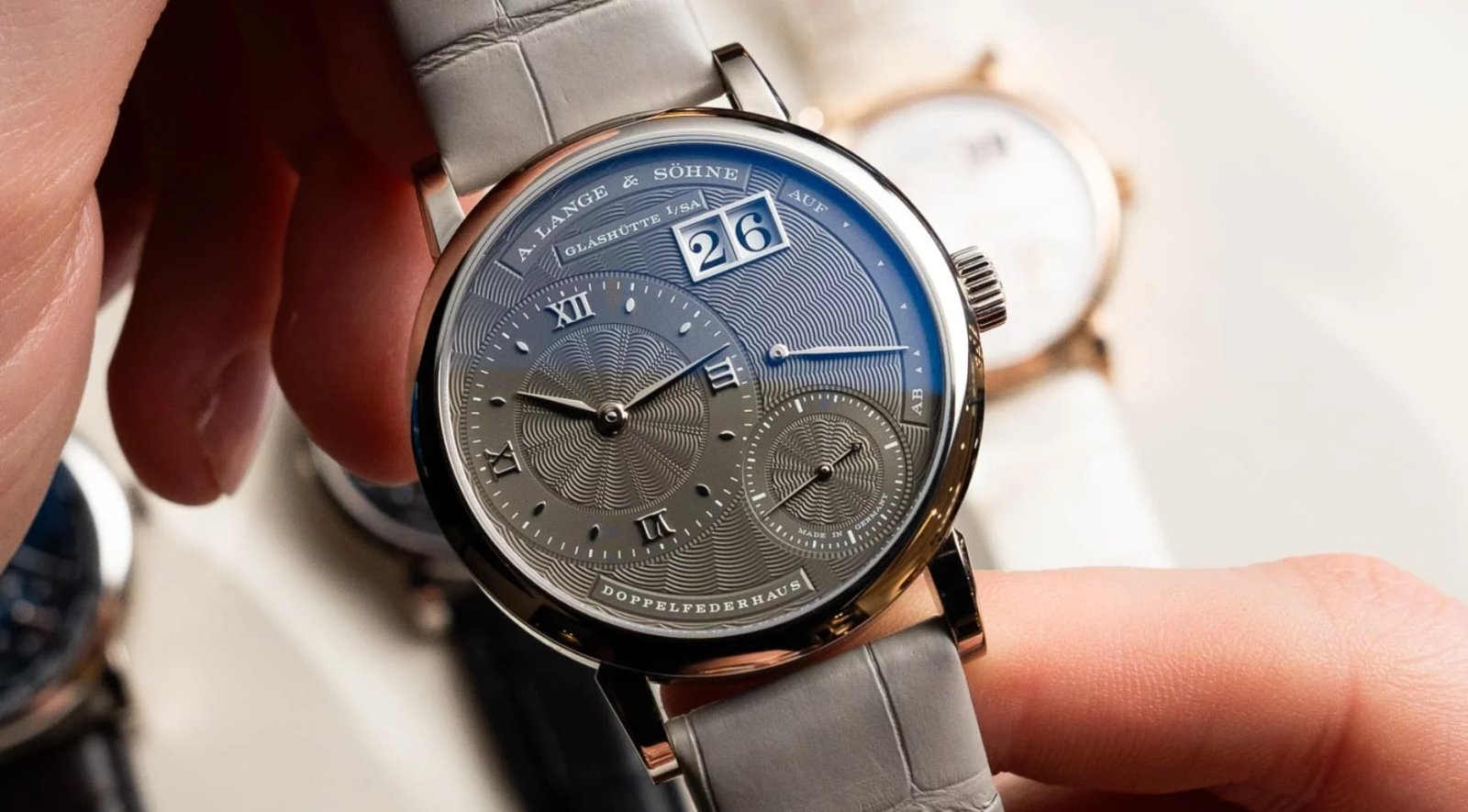
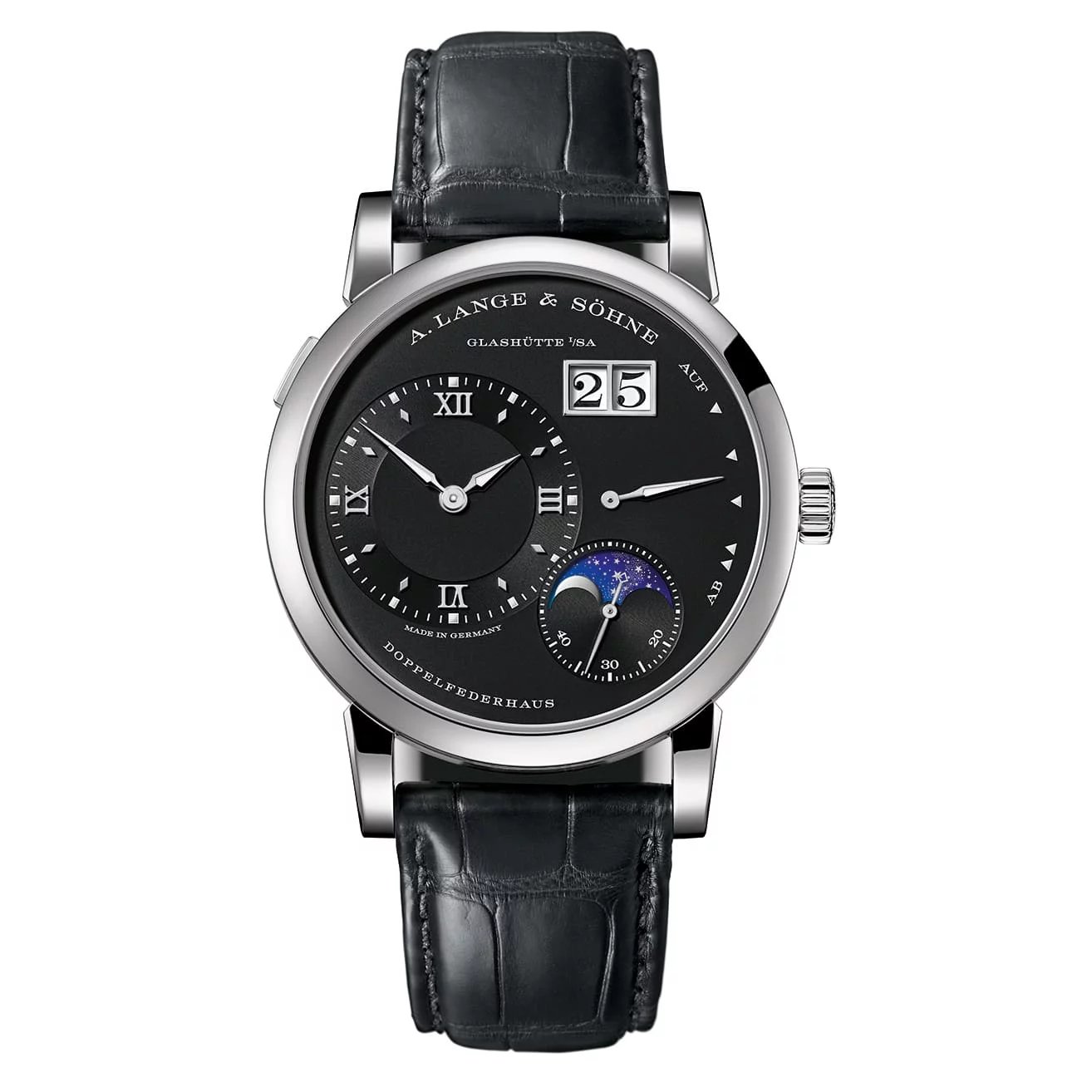
On October 24, 1994, A. Lange & Söhne presented its first modern collection. In the lot, the Lange 1 immediately stands out as a separate piece. It is unlike anything known, while displaying visual evidence: an off-center dial, a large date, an off-center small seconds, and a power reserve inscribed as a reminder of the discipline of time.
What fascinates is the insurance. Where many renaissances begin with cautious imitation, Lange chooses singularity. La Lange 1 is not a nostalgic homage; it is a contemporary proposal, built on German codes: rigorous readability, rational architecture, obsessive finishing.
The detail that changes everything: the Big Date
There Big Date (outsize date) becomes one of the house’s most recognizable markers. Inspired by a device from the Semperoper in Dresden, it gives the watch a cultural and local signature. In the 1990s, it was also a technical demonstration: displaying two large date discs, perfectly aligned, without sacrificing the harmony of the dial.
Why its “asymmetrical” dial is actually mathematically precise
We often talk about the dial of the Lange 1 as an exercise in asymmetry. In reality, it is a hidden symmetry, a meticulous geometric balance. The subdials and date are positioned according to studied axes and proportions, creating an almost architectural visual stability.
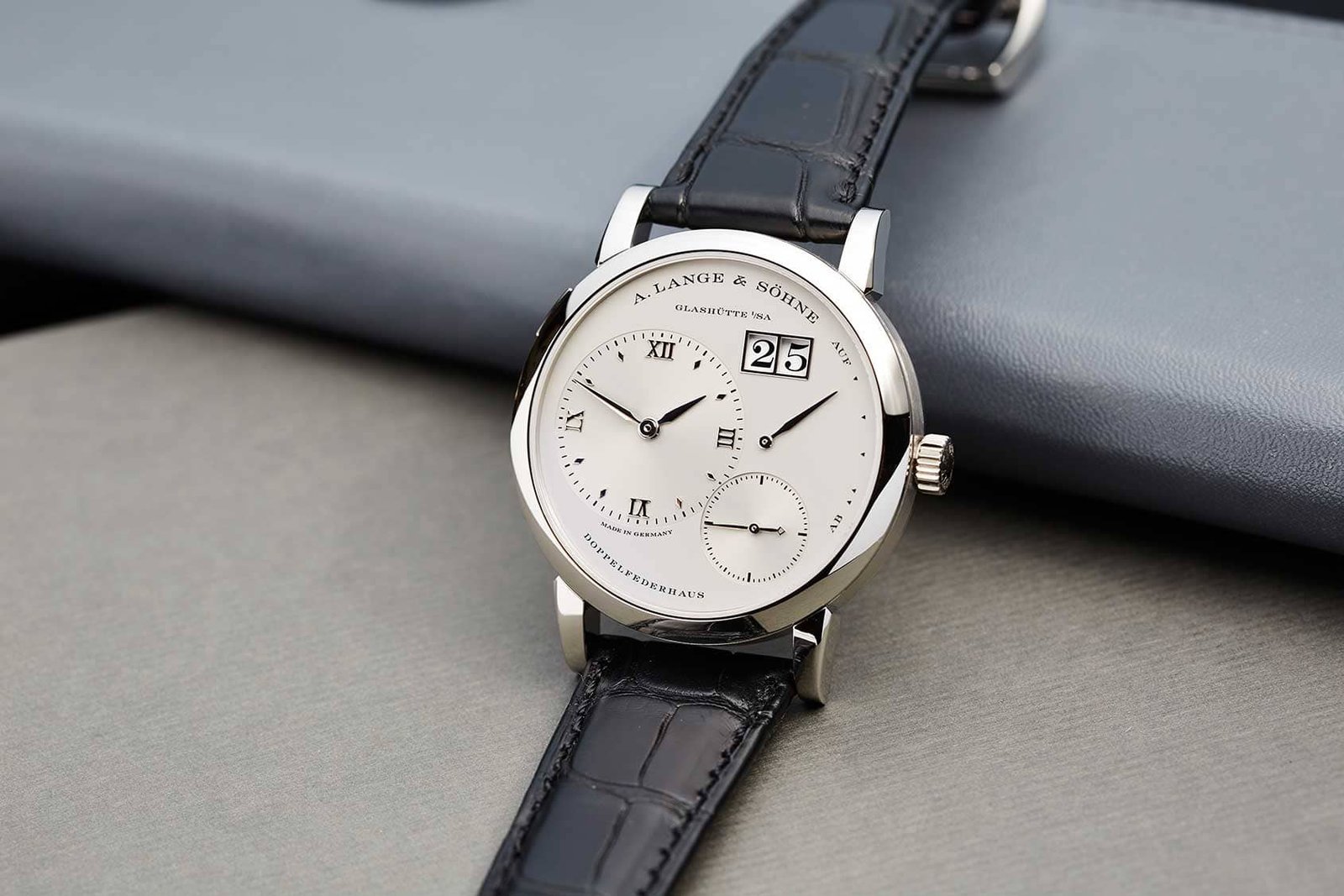
This feeling of order is no coincidence: it reflects a German design philosophy, more Bauhaus in spirit than Baroque in intention. No free ornaments. Each element has a role, a function, a justification.
- Immediate readability : the main information is hierarchical.
- Instant Identity : just one glance is enough to recognize a Lange 1.
- Emotional balance : the eye circulates, then settles, as if in front of a well-drawn plan.
The movement: the proof from the back
If the Lange 1 has won over enthusiasts, it is also thanks to what it hides or rather what it reveals once the watch is turned over. From the outset, A. Lange & Söhne has focused on a finish that has nothing to envy of Swiss fine watchmaking, with an aesthetic language specific to Glashütte.
Saxon codes: an engineering luxury
The Lange 1 movement displays signatures that have become cult: the three-quarter plate (local heritage), screwed gold chatonsTHE blued screwsand especially the hand engraved pendulum cocka true human imprint at the heart of mechanics. This mixture of rigor and craftsmanship hits the mark: we are not in decoration for decoration’s sake, but in an aesthetic born from construction.
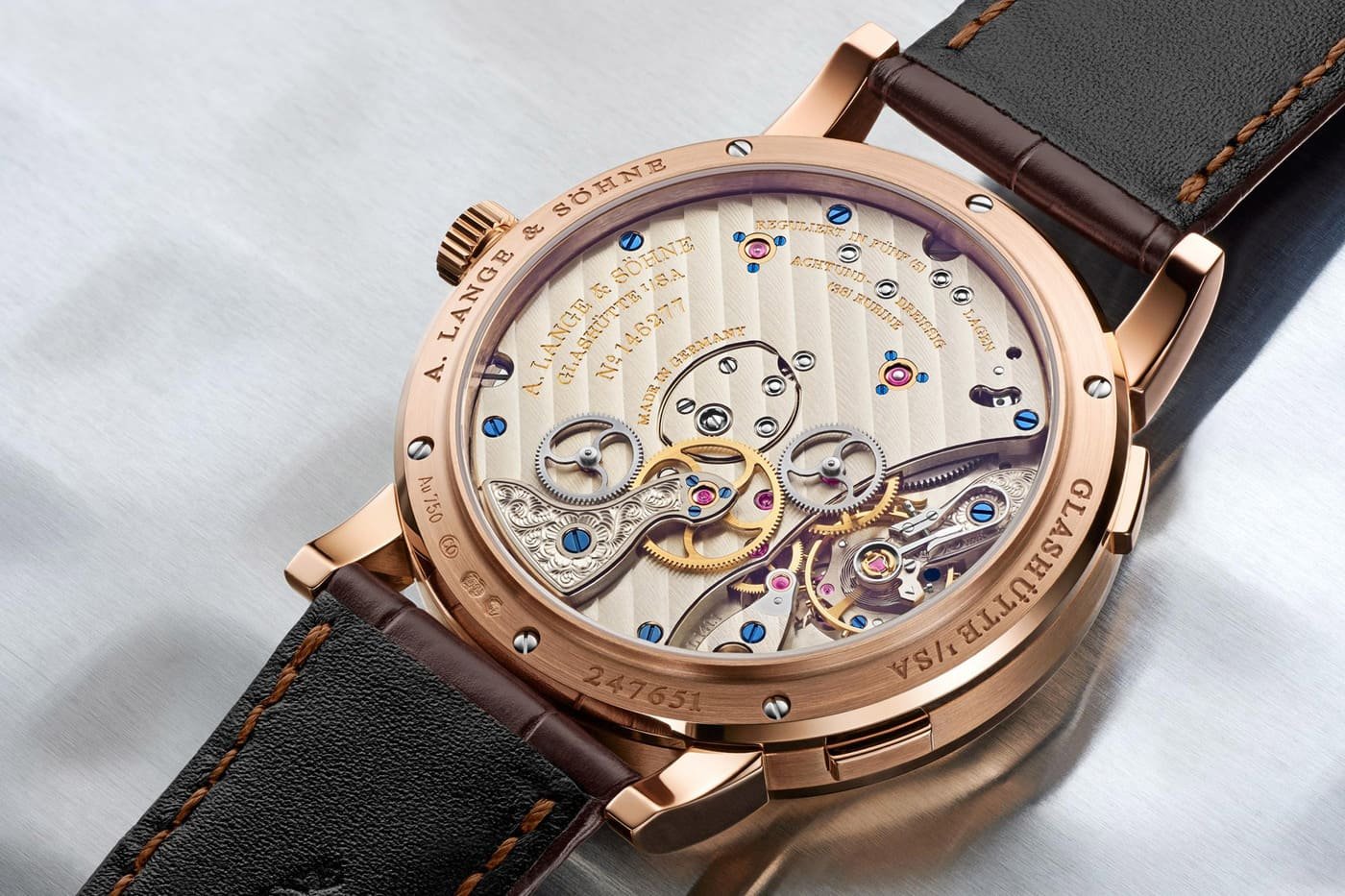
And then, there is this rare feeling: that of a watch designed as a precision instrument, but finished like a work of art. La Lange 1 reminds us that Germany can produce a different luxury, less talkative, more internalized.
Becoming a reference watch does not only depend on a successful design. We must last, evolve without betraying ourselves, and create a grammar that collectors recognize. The Lange 1 achieves this in several ways.
1) It sets a standard for German watchmaking
In the collective imagination, watchmaking Germany was for a long time a footnote compared to Switzerland. Lange 1 reverses the perspective: it proves that another center of gravity exists. Not in copying, but in an alternative path – technical, cultural, aesthetic.
2) It imposes a brand signature as strong as a logo
Lange’s great achievement is to have transformed a dial architecture into an absolute identity. Where other houses rely on a bezel, a case shape or a color, Lange anchors its recognition in the arrangement of time itself. It is more difficult to reproduce, therefore more durable.
3) It is available, but not diluted
Over the years, the Lange 1 has come in multiple interpretations: different materials, additional complications, revisited dimensions. But the essential remains: this sensation of off-center order, this great date, this quiet nobility.
- Lange 1 Moon Phase : poetry without renouncing rigor.
- Little Lange 1 : more compact proportions, without losing the DNA.
- Lange 1 Time Zone : the usefulness of travel treated with the same graphic discipline.
A watch that tells the story of contemporary Germany
What makes Lange 1 a reference is also the symbolic charge it carries. It embodies reunification not as a political discourse, but as a cultural renaissance: a mark that returns from history, reconstructed with modern demands.
In a world where many luxury products seek to seduce through noise, the Lange 1 stands out through silence: that of indisputable quality, thoughtful design, impeccable execution. It appeals to amateurs who like prestige not to be a spectacle, but a consequence.
Why it remains essential today
Thirty years after its presentation, the Lange 1 has not aged. It belongs to this rare category: objects which defined their era and which, by the force of their coherence, end up lasting the decades without going out of fashion. Its dial, once bold, has become classic; its big date, once surprising, has become a standard; its finishes, once a declaration of intentions, have become proof of established craftsmanship.
The Lange 1 became a benchmark in Germany because it did more than relaunch a manufacture: it restored watchmaking pride. And because it showed, with almost philosophical elegance, that there are several ways to achieve excellence. In Saxony, this involves precision, restraint, and this magnificent idea that time deserves architecture.