Table of Contents
The enamel dial, this silent luxury that never goes out of style
In a watchmaking world saturated with spectacular finishes, new textures and bold colors, the enamel dial advances quietly. He doesn’t try to dazzle at first glance, and that’s precisely what makes him magnetic. There’s nothing flashy about its shine: it’s more reminiscent of porcelain, a living surface that catches the light with an almost aqueous depth. Some dials seem lit from within, as if time was floating there instead of registering there.
If enamel dial watches are so sought after today, it is not only for their beauty. This is why they tell: permanence in the face of obsolescence, art in the face of process, happy accident in the face of industrial repetition. To wear an enamel dial is to wear a piece of controlled fire, like Hephaestus (yes, I’m re-reading Homer at the moment…).
A material born from fire: understanding enamel in watchmaking
Watch enamel, in the traditional sense, is a glass powder (silica) mixed with oxides, sometimes colored with metallic pigments. This powder is deposited on a base (often a metal disc) then cooked at high temperature, generally between 750 and 900°C. When cooked, the powder melts and becomes vitrified, forming a smooth and shiny layer. We then start again: several layers, several firings, until we obtain the desired color and flatness. This video below illustrates the manufacturing process very well.
Everything in this process resists the logic of performance. The enamel can crack, bubble, shrink, change shade. Cooking slightly too long, invisible dust, residual tension in the metal base… and the part is lost. This is the first reason for the rarity: enamel is unforgiving.
Grand Feu, flinqué, champlevé: these words that make desire rise
The vocabulary of enamel is a world in itself. In collectors’ conversations, certain terms act like a key.
- Grand Feu Enamel : the most sought-after appellation. It refers to high temperature firing and true vitrification. Result: stable color, deep shine, and a surface that ages superbly.
- Flinqué enamel : a transparent enamel applied to a guilloche pattern. The light is caught in the furrows, and the dial gains an almost three-dimensional depth.
- Champlevé / Cloisonné : decorative techniques where we create compartments (hollowed out or formed by partitions) filled with colored enamel, ideal for scenes, coats of arms or artistic motifs.
Without entering into a definitive hierarchy, one thing is certain: the more the technique requires rare gestures, the more it nourishes the myth.
Beauty that lasts: a patina without patina
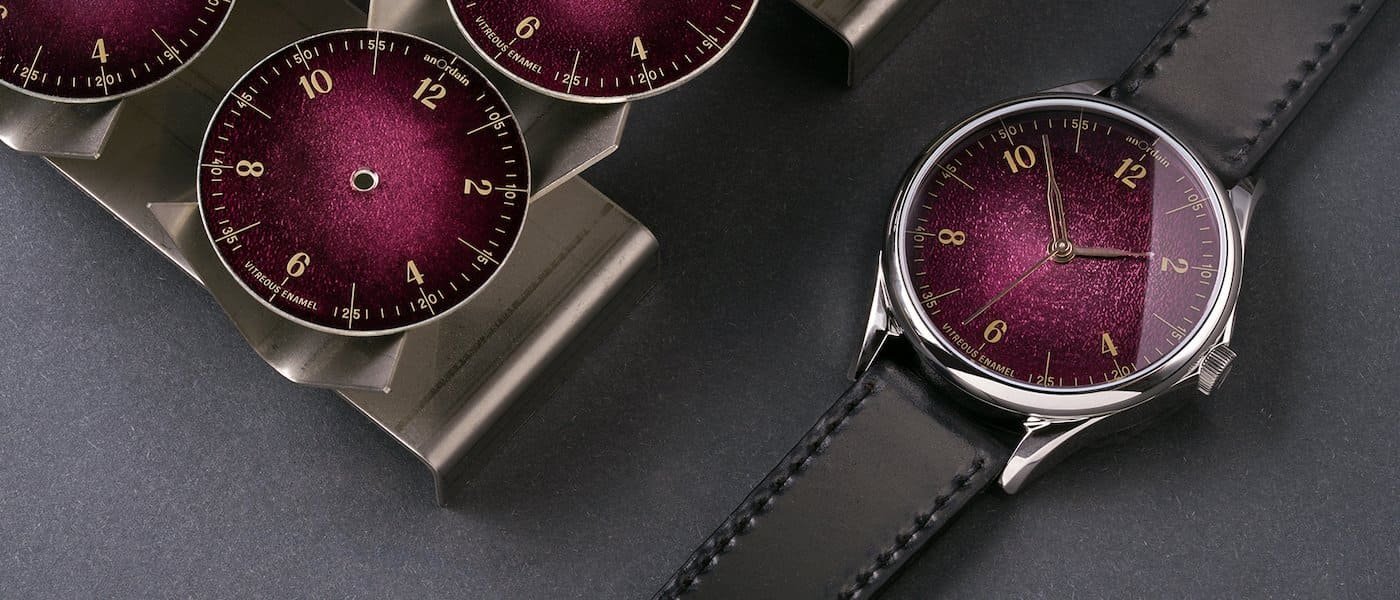
Most modern dials are superb when they come out of the factory, but aging is a lottery. Some lacquers tarnish, some prints fragment, some colors fade. Enamel behaves like a timeless material. It does not oxidize, resists UV surprisingly well, and maintains a chromatic stability that borders on insolence.
It’s a paradox that amateurs love: enamel ages without aging. It changes little, but it tells time differently. With a magnifying glass, we can perceive a micro-topography, a density of material, sometimes tiny irregularities which signify the hand more than the machine. And if a crack appears, which can happen in the event of an impact, it does not look like ordinary wear and tear: it looks like an event, almost like a scar.
Why it’s so rare: craftsmanship, risk and slowness
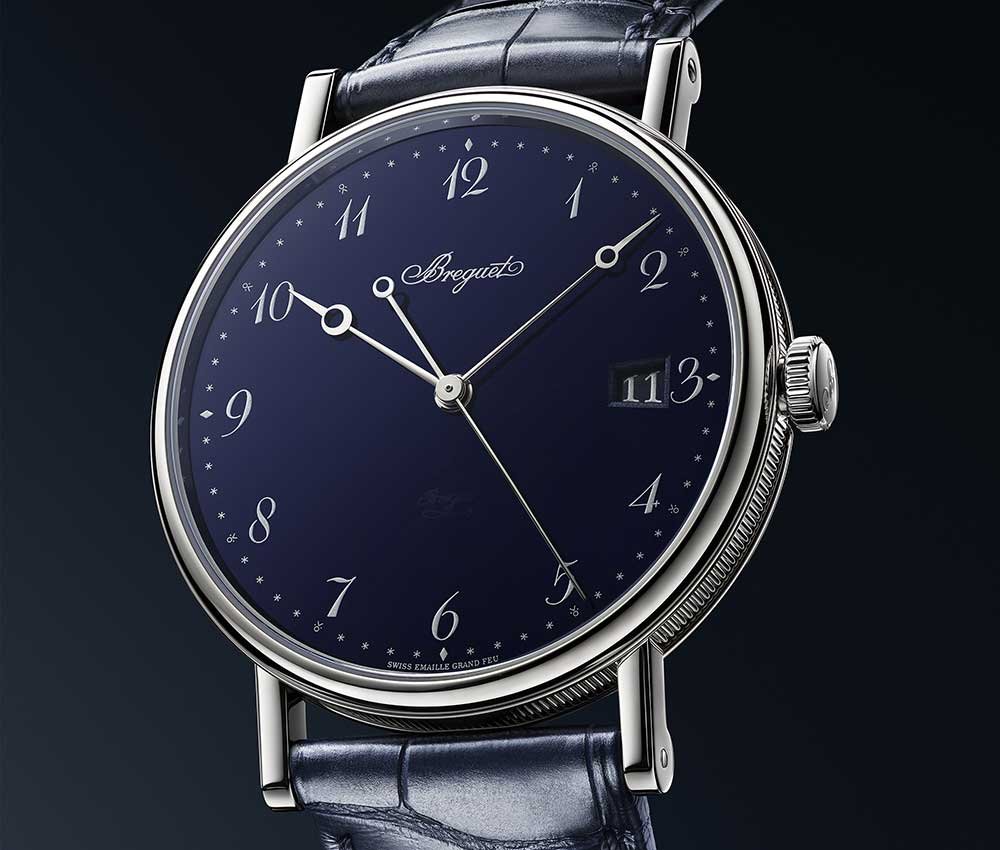
The production of an enamel dial is not only long: it is uncertain. Where a galvanic or lacquered dial can be repeated with remarkable consistency, enamel lives under the law of the oven. Each firing is a test, and the reject rate can increase, especially when aiming for a perfect white, a deep black or delicate colors.
Add to this the difficulty of detail: drilling, homogeneous flat areas, printing of indexes, installation of appliques, tolerance adjustments. An enamel dial is not just “pretty”: it must remain functional, readable, stable, and compatible with the final assembly. Excellence is measured when art meets engineering.
The perfect white: the top of the mountain
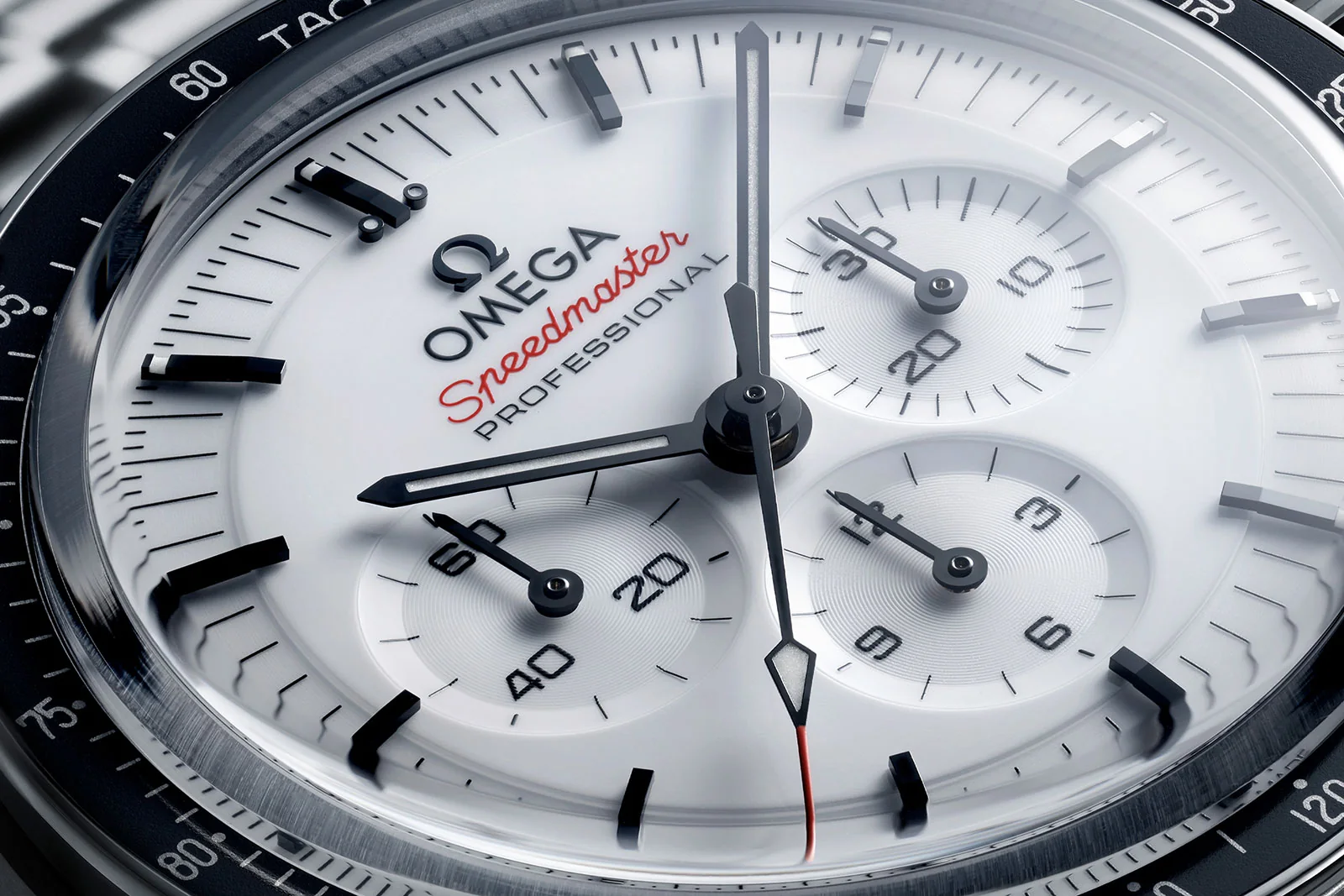
The white enamel dial, apparently the simplest, is often the most implacable. The slightest defect stands out: a bubble, a dust, an unintentional cream shade. This is why a truly clean, luminous white, without visible defects, has a particular attraction. It recalls pocket watches and the great classics, but with an almost contemporary freshness.
A long history: from the artistic profession to the contemporary object of desire
Enamel is part of the historical DNA of European watchmaking, particularly in pocket watches, where it served as much for readability as for ornament. The white enamel dials, with black numerals, have stood the test of time with almost graphic clarity. At the time, it was not a whim: it was a noble, durable solution, and perfectly suited to the use.
Later, industrialization and the arrival of new techniques made enamel less “necessary”. It has moved from the status of high-end standard to that of specialty. And as is often the case in luxury, what becomes rare becomes desirable. Today, enamel returns in waves, driven by a desire for true, slow, visible gestures, even when they are hidden under an immaculate surface.
What Collectors Really Buy: Surface Emotion
An enamel dial is first and foremost a sensation. The way the light slides over it is not that of a lacquer or varnish: it is softer, deeper, almost “mineral”. The reflections have something round about them, as if the dial had its own temperature.
Collectors also look for a cultural signal. The enamel tells of a connection with the classic watch, but without forced nostalgia. It can dress up an ultra-contemporary piece or a minimalist three-hander. And above all, it contradicts the logic of permanent novelty.
The details that raise the odds
- Balanced typography : Roman, Arabic, railway numerals… on enamel, the slightest disproportion is obvious.
- Print quality : sharpness of lines, depth of black, perfect alignment.
- Suitable needles : blued, polished, leaf… enamel requires needles that match.
- Housing consistency : a watch that is too sporty can make the enamel look anecdotal; an overly dressy watch can make it look expected. Balance is rare.
Before you fall in love at first sight, you have to learn to look. A quality enamel dial is not judged solely by its shine. It is judged by its regularity, by its reading, by its presence.
- Observe from multiple angles : the surface must remain homogeneous, without excessive undulations, without visible bubbles.
- Control color : a white must be “intentional” if I may say so (pure, ivory, opaline), not accidental.
- Examine the perimeter and the holes : this is often where defects appear.
- Learn about the technique : “enamel” can cover very different realities. The traditional Grand Feu is not a simple varnish.
Finally, accept the idea that an enamel dial can have tiny singularities. In this area, absolute perfection is rare; beauty is frequent when the gesture is right.
Why enamel resists all fashions
Enamel dial watches are sought after because they offer a form of luxury that cannot be rushed. They require time, effort, patience and a degree of risk, the exact opposite of an optimized product. They also appeal because they go through the years with quiet dignity, without requiring to be reinvented each season.
In the watchmaking world, there are complications that impress and finishes that captivate. The enamel dial does better: it reassures. It reminds us that the most modern beauty is sometimes the oldest, and that a simple watch face, when born from fire, can be enough to make time desirable.