Table of Contents
Housing and materials, 904L vs 316L steel
The metal speaks. To the eye. To the touch.
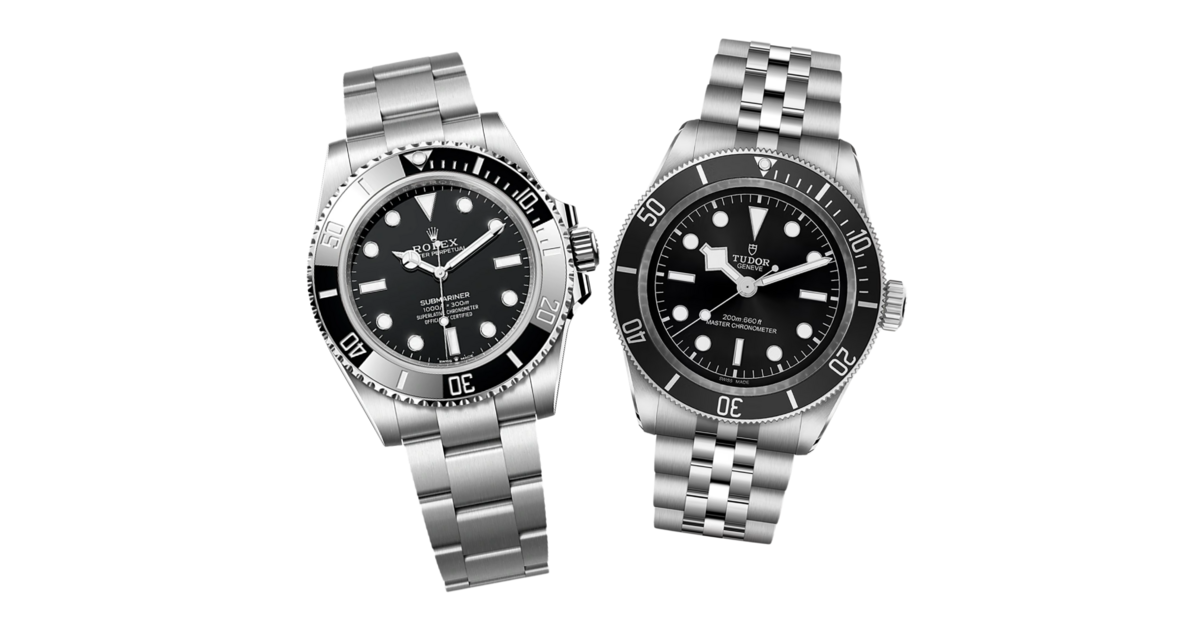
L’904L vs 316L steel changes the situation on perception. The Rolex 904L captures light differently. More vivid reflections. Denser feeling in the hand. Tudor’s 316L remains robust, proven, more than sufficient for a diver.
| Element | Submariner | Black Bay |
|---|---|---|
| Steel | 904L | 316L |
| Case thickness | ≈ 12.5mm | ≈ 14.5mm |
| Index | White gold | Steel wall lights |
Surgical adjustment and finishes
This is where the price difference can be understood.
The Submariner’s chamfers are sharp. The polished/brushed transitions are clear. The fit between case and bracelet is close to perfection. We are talking about surgical adjustment, yes.
The Black Bay is well finished. But the edges are a little softer. Tolerances a little wider. Visible side by side.
Case thickness 12.5 mm vs 14.5 mm
12.5mm versus 14.5mm. On paper, a millimeter or two. On the wrist, a world.
The Submariner slips under a sleeve. Low center of gravity. Compact feel.
Some Black Bays appear taller, more present. On a small wrist, it swings more easily. This point really changes daily comfort.
White gold of indexes and real perception
The white gold indexes of the Submariner retain their color. No visible oxidation. The light catches differently.
On the Black Bay, the steel appliques do the job. But the overall perception remains a notch lower when we observe closely, magnifying glass in hand.
Everyday bezel and bracelet
We manipulate. We settle. Every day.
Ceramic vs aluminum bezel, real impact
There ceramic vs aluminum bezel especially changes the scratch resistance. The ceramic of the Submariner remains shiny for a long time. The aluminum of some Black Bays marks faster.
Some people like this patina. Others don’t. Question of taste. Functionally, both remain precise and firm.
Glidelock clasp and quick adjustment
THE Glidelock clasp is a mechanical jewel. Fine adjustment, without tools. We adjust according to the heat, the swelling of the wrist, the diving suit.
Tudor offers an effective system, sometimes with internal micro-adjustments. It works. But the gesture does not have the same fluidity.
Oyster vs fake Tudor rivet
The Oyster is a reference in ergonomics. Solid links. Compact feel.
The Tudor faux rivet bracelet divides. Assumed retro look. Some people love it. Others find it decorative. It’s up to everyone to see.
- Superior finishes on the Submariner
- Identical and modern power reserve on both sides
- Precise adjustment with Glidelock
- Significant price gap
- Black Bay thicker depending on versions
- Aluminum bezel more sensitive to scratches
Watchmaking value for money, we decide
We stop going around.
THE watch quality-price ratio of Black Bay is formidable. Modern movement. 70 hours reserve. Solid construction. For less.
What the price gap really finances
It finances the finesse of the case. L’white gold indexes. L’904L steel. THE Glidelock clasp. Tighter fits.
We pay for a more accomplished overall feeling. Less thickness. More precision in assembly. It’s not visible from afar. But on the wrist, you can feel it.
If these details resonate with you, the gap is understandable.
Should you pay more for thinner?
It depends on your requirement. And your wrist.
If 2 mm more thickness does not bother you, the Black Bay offers a very similar mechanical performance. Same mission. Same endurance.
If you’re looking for compactness, dense feel, millimeter adjustment of the bracelet, then yes, paying more makes sense.
Technically to tell the time? Equality. On the finish and comfort? Submariner Advantage. Clear.
FAQs
Is the Tudor Black Bay as precise as the Submariner?
Yes, in real use, the two movements offer very close precision thanks to their modern architecture and their 70-hour power reserve.
Why is the Submariner thinner?
Its thickness of around 12.5 mm, compared to around 14.5 mm for some Black Bays, comes from a more compact case construction and extensive work on the proportions.
Does the Glidelock really change comfort?
Yes, it allows for quick and precise adjustment without tools, which significantly improves everyday fit.
904L vs 316L steel: is there a real difference?
The 904L offers sharper reflections and a denser feel. The 316L remains very robust and suitable for a diving watch.
How often should these watches be serviced?
Both Rolex and Tudor recommend servicing approximately every 10 years, with regular water resistance checks if the watch is used diving.