Table of Contents
The living room Time to Watch does not have the gigantism, the perfectly oiled mechanics nor the monumental decorum of certain other major watchmaking events (notably the small confidential show which is held at the same time at Palexpo whose name begins with “ Watches » and ends with “ Wonders » …).
Time to Watchs offers something more direct, simpler, more lively too. We approach brands more easily there. We take the time to look at the pieces, to discuss, to ask questions, to talk about technique, design, movements, materials, without everything being filtered by too much distance or protocol. For those who really love watchesthis proximity has real value.
It was as part of the 2026 edition of the show, which was held from April 14 to 18, that I was able to speak with Kerbedanz.
I knew the name, of course, but without really understanding what the house offered. And that’s precisely what made the discovery interesting. Behind this name, which is still relatively discreet in the watchmaking landscape, we actually find a truly independent manufacture, a strong vision, an already well-constructed identity, and above all a 2026 collection which marks an important turning point.
Kerbedanz, a brand that we knew by name, but not enough substance
There are houses that we have passed for a long time without really knowing them. We know that they exist, we have seen a few images, a few pieces, a name come up here or there, but we have never really opened the file. This was done with Kerbedanz during my visit to Time to Watches 2026.
Founded in 2011 in Neuchâtel, Kerbedanz is an independent house led by Kalust Zorik, president and co-founder, Aram Petrosyan, co-founder and Chief Designer Officer, and Vahé Vartzbed, CEO. Beyond the functions, what immediately stands out is the passion. We sense people who defend a vision, who know their watches, who don’t recite a too well-rehearsed speech. That’s always a good sign. And to introduce us to this universe, Martin Aurouze, the brand’s VP Sales Marketing, who turns out to be a fine connoisseur of watchmaking. No more name dropping, let’s get to the heart of the matter.
Kerbedanz first became known for its tailor-made creations, unique or extremely rare pieces, designed in a very in-depth dialogue with their customers. The house has long evolved in this almost confidential register of personalized fine watchmaking, where we are not simply talking about options or cosmetic variations, but about a real watchmaking project designed for a given person.
Then, gradually, the brand began to evolve this logic.
It is no longer just a question of responding to a singular order, but now also of expressing a vision of the house through more defined, more structured, more assertive collections. This is a delicate transition for any independent brand. Many lose their uniqueness by wanting to open up more. Kerbedanz, on the contrary, today seems to be finding a much more interesting balance.
A house where mechanics is part of the aesthetic language
At Kerbedanz, movement is not simply noble content slipped into a beautiful box. It fully participates in the design, the presence, the dramaturgy of the watch.
This is an important point, because it explains the overall coherence of the house. Here, the complication is not hidden. She exposes herself. It becomes part of the style, almost part of the architecture of the room. We find this idea both in the most spectacular models and in the most recent ones.
This way of thinking about watchmaking produces watches with real presence. Not necessarily discreet, not always consensual, but inhabited. And in a market where many pieces are impeccably executed while remaining perfectly inoffensive, that’s worth noting.
Unique pieces, Kerbedanz’s primary territory of expression
Before discussing the new features for 2026, we must remember where Kerbedanz comes from.
The house was first built around unique pieces and custom creations. It is a fundamental base. This explains the brand’s taste for artistic crafts, the very elaborate dial compositions, the assumed volumes, the demonstrative movements, the symbolic references, the pieces designed as almost narrative objects.
We don’t start from nowhere at Kerbedanz. Over time, the house has developed a real culture of decoration, engraving, enamel, relief, miniature scenes, but also grand complications. It is this blend of technical power and a sense of artisanal detail that gives depth to the collection today.
In other words, even when it moves to a more structured logic of a limited series, Kerbedanz retains something of its origin: a way of treating the watch as a creation in its own right, and not just as a product.
Maximus, the world’s largest tourbillon on the wrist
A manifest piece
It’s impossible to talk about Kerbedanz without stopping at Maximus, which remains one of the house’s great emblematic pieces.
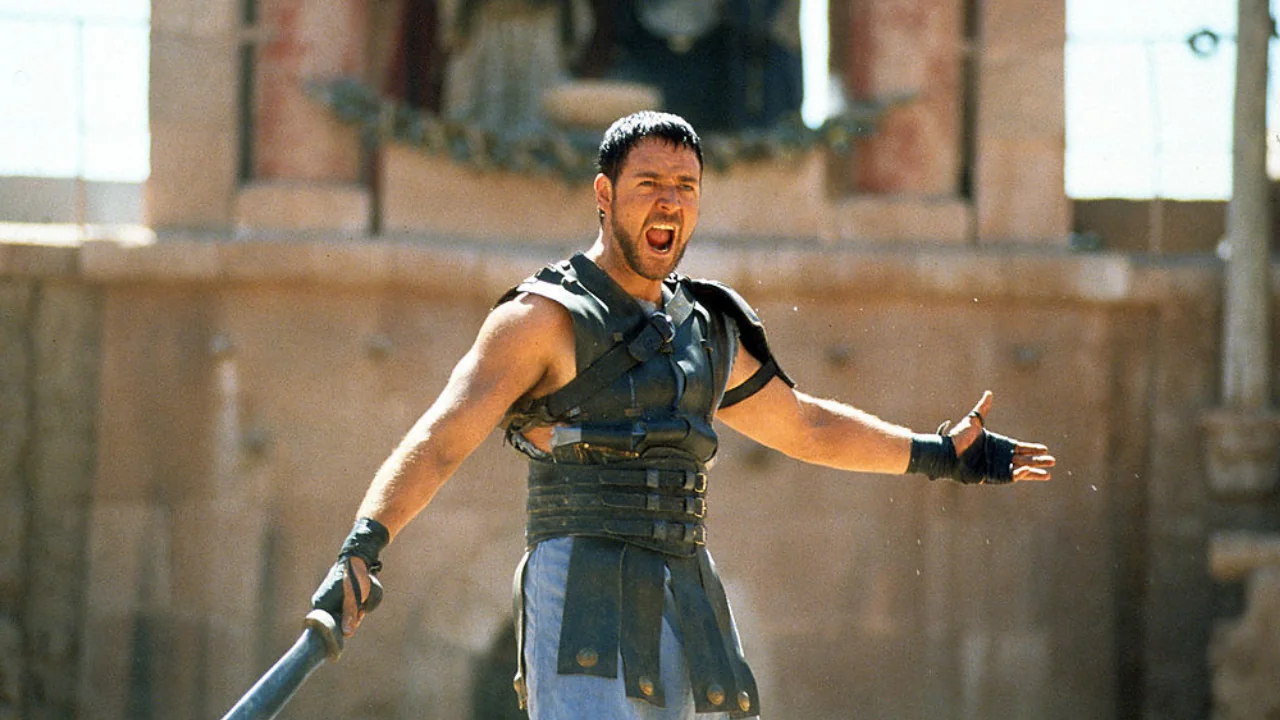
Maximus… This evocative name… We immediately think of these icons:


But at Kerbedanz, Maximus is first and foremost a very clear technical statement: the largest tourbillon ever mounted in a wristwatch (although many other brands appropriate this term). In a world where superlatives are sometimes used with a certain flexibility, this must be emphasized. Here, the claim is based on a true watchmaking reality.
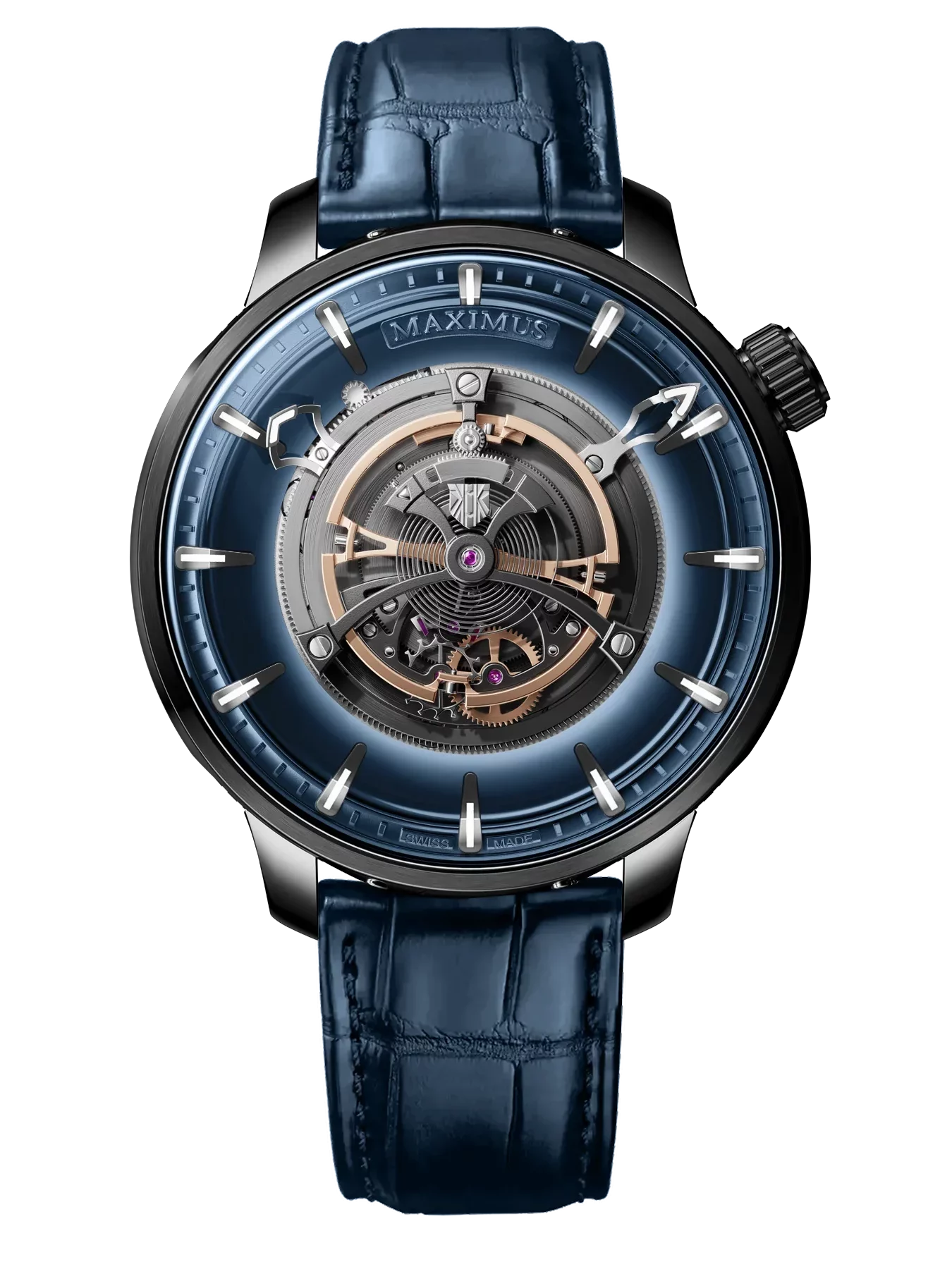
The watch features a 27mm flying central tourbillon, spectacular to the naked eye, with a cage made up of 73 titanium elements. In its original KRB08 version, the rotation takes place in six minutes. The piece is imposing, demonstrative, almost monumental. She does not seek discretion. It assumes its nature as a manifest object.
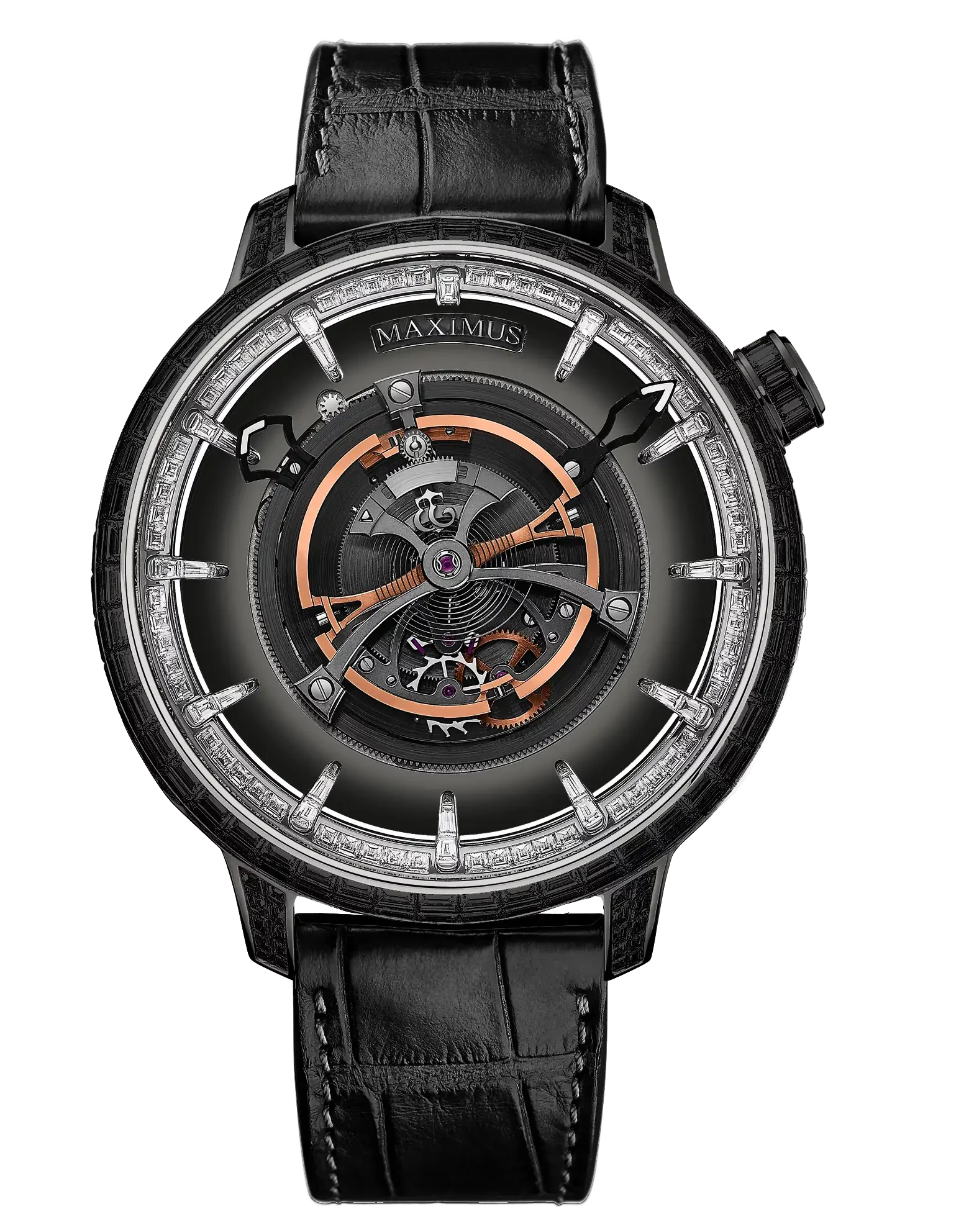
The price starts from 200,000 CHF excluding tax (approximately 215,000 euros), which immediately places the watch in the territory of very high-end independent watchmaking.
The four barrels, the back of the watch and the sense of spectacle
One of the most interesting elements of Maximus also lies in its construction, with four barrels mounted in parallel. At the back of the case, this architecture contributes as much to the technical interest of the watch as to its visual strength.
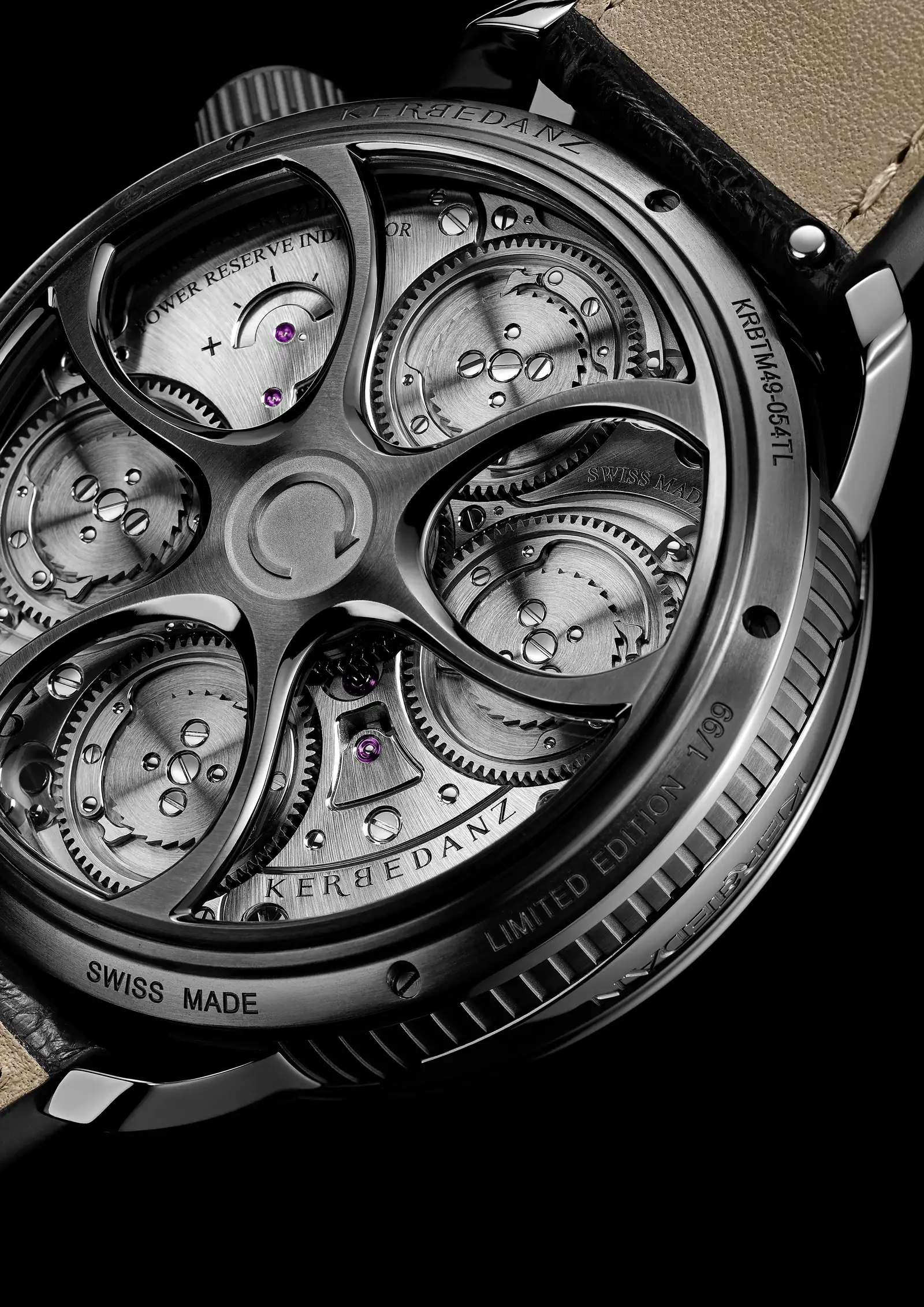
It is typically the kind of piece which reminds us that in Kerbedanz, the mechanics are never dissociated from the staging. We are not just looking for performance for the sake of the technical sheet. We also want to create a visual emotion, a feeling of density, power, presence. As the arrow indicates, simply twist the piece to reassemble it.
Maximus GR8, or the other face of excess according to Kerbedanz
After Maximus, Kerbedanz developed Maximus GR8, which transposes this taste for spectacle into a much more sculptural case.
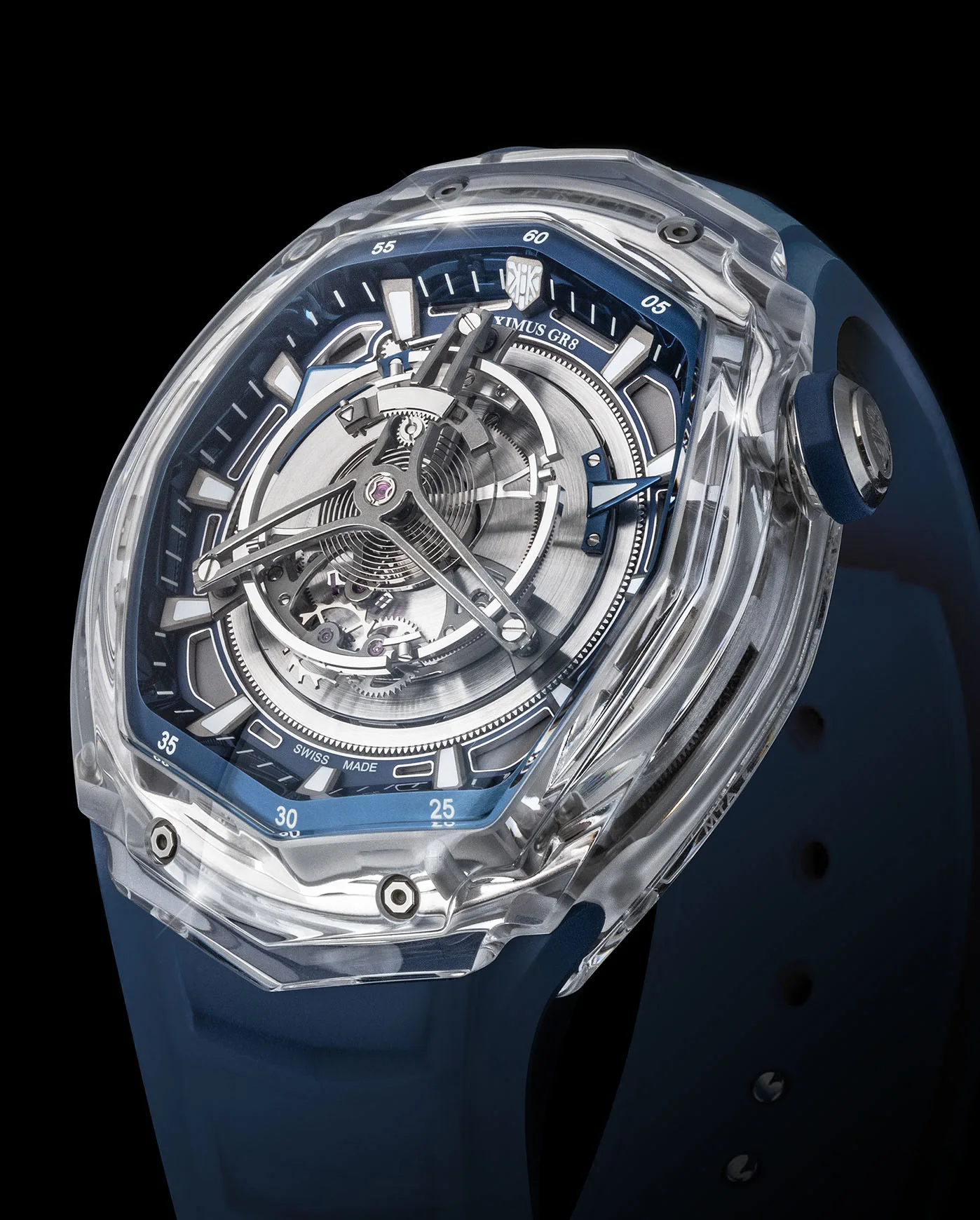
The GR8 case is one of the house’s strongest visual signatures. It mixes barrel, octagonal and spherical influences in a very elaborate construction which immediately gives a strong identity to the piece.
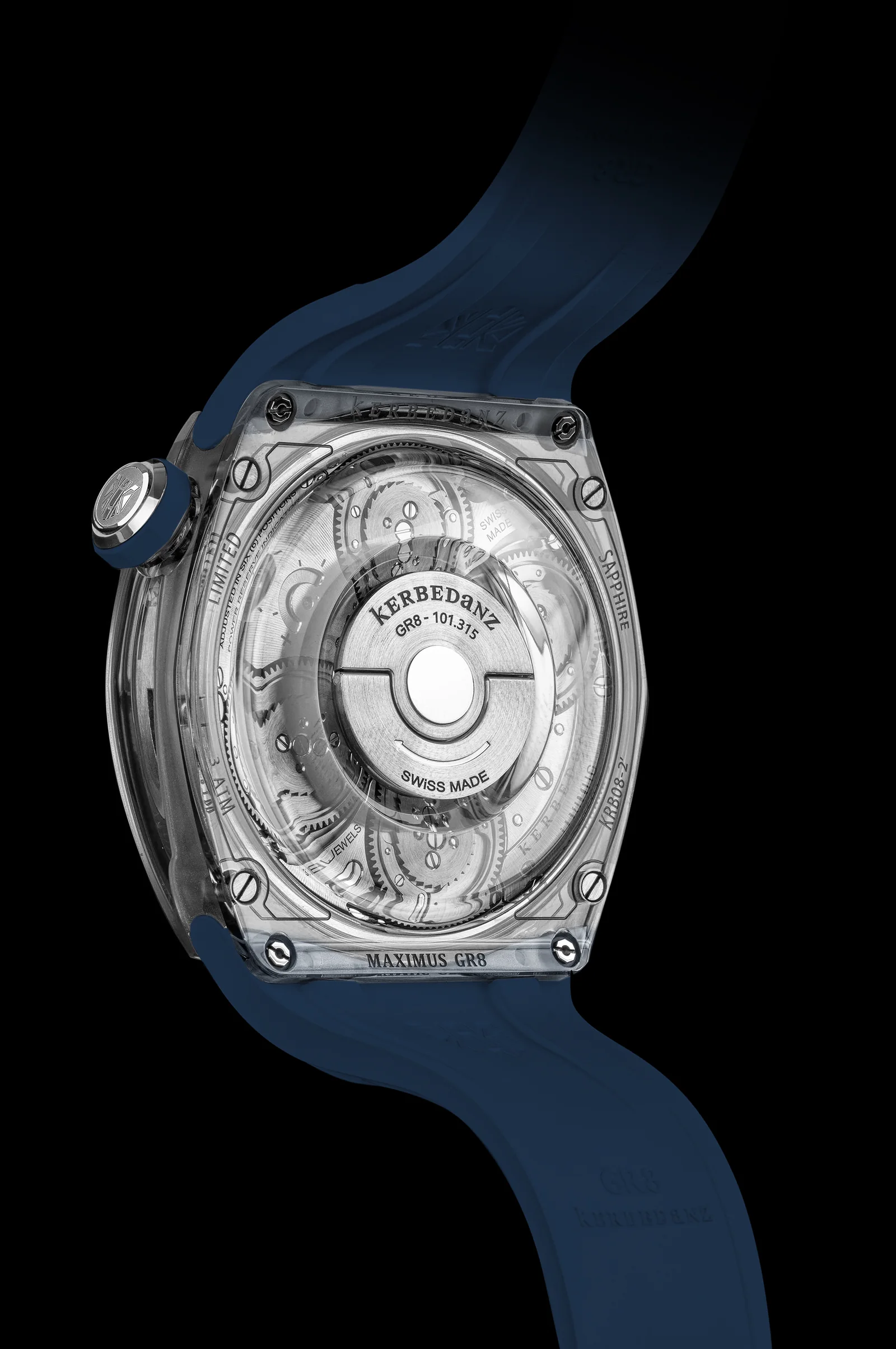
Maximus GR8 takes up the large 27mm flying central tourbillon, this time in a two-minute configuration. The KRB08-2 caliber also retains the four barrels in parallel architecture, with 54 hours of power reserve. The polished titanium version starts at 220,000 CHF (around 238,000 euros). The versions in (real) sapphire go up to 480,000 CHF (around 520,000 euros), 530,000 CHF (around 573,000 euros) for certain editions in blue sapphire, which clearly shows to what extent the material here changes the very nature of the piece. To reassemble, simply raise the piece in the center of the bottom and turn.
We are still in spectacular, deliberate, uncompromising watchmaking. Alright. But this is not, in my opinion, where the most interesting change will take place in 2026.
The real turning point of 2026: more wearable watches, without loss of identity
For a long time, several Kerbedanz creations have spoken to fans of powerful, generous watches, sometimes almost sculptural in their relationship to the wrist. This was part of their charm, but it also naturally limited their audience. We don’t all have the wrists of practitioners of this beautiful discipline that is “stone lifting” (I know you’re going to Google this term… But please have the courtesy to come back to the site to finish reading this article).
With the new 2026 products, the house seems to have found a much more mature path: retaining its singularity while working on more portable, more balanced, more open formats.
And that changes a lot of things.
Because it is not a question here of reducing diameters to tick a box or follow a market movement. We sense a real reflection on balance, presence, comfort, and more broadly on the capacity of a watch to be desired for its own sake, and not just admired from a distance.
Maxspor GR8 41 mm: a much more desirable chronograph
The right development at the right time
The Maxspor GR8 already existed in a more imposing version, in 46 x 57 mm, with its very marked GR8 architecture, its monopusher chronograph, which can even be activated underwater, and its very elaborate open dial. The watch was interesting, strong, singular, but it could also be a little too impressive for certain wrists.
New for 2026 is the arrival of a Maxspor GR8 in 41 x 50 mm.
And that, frankly, is excellent news.
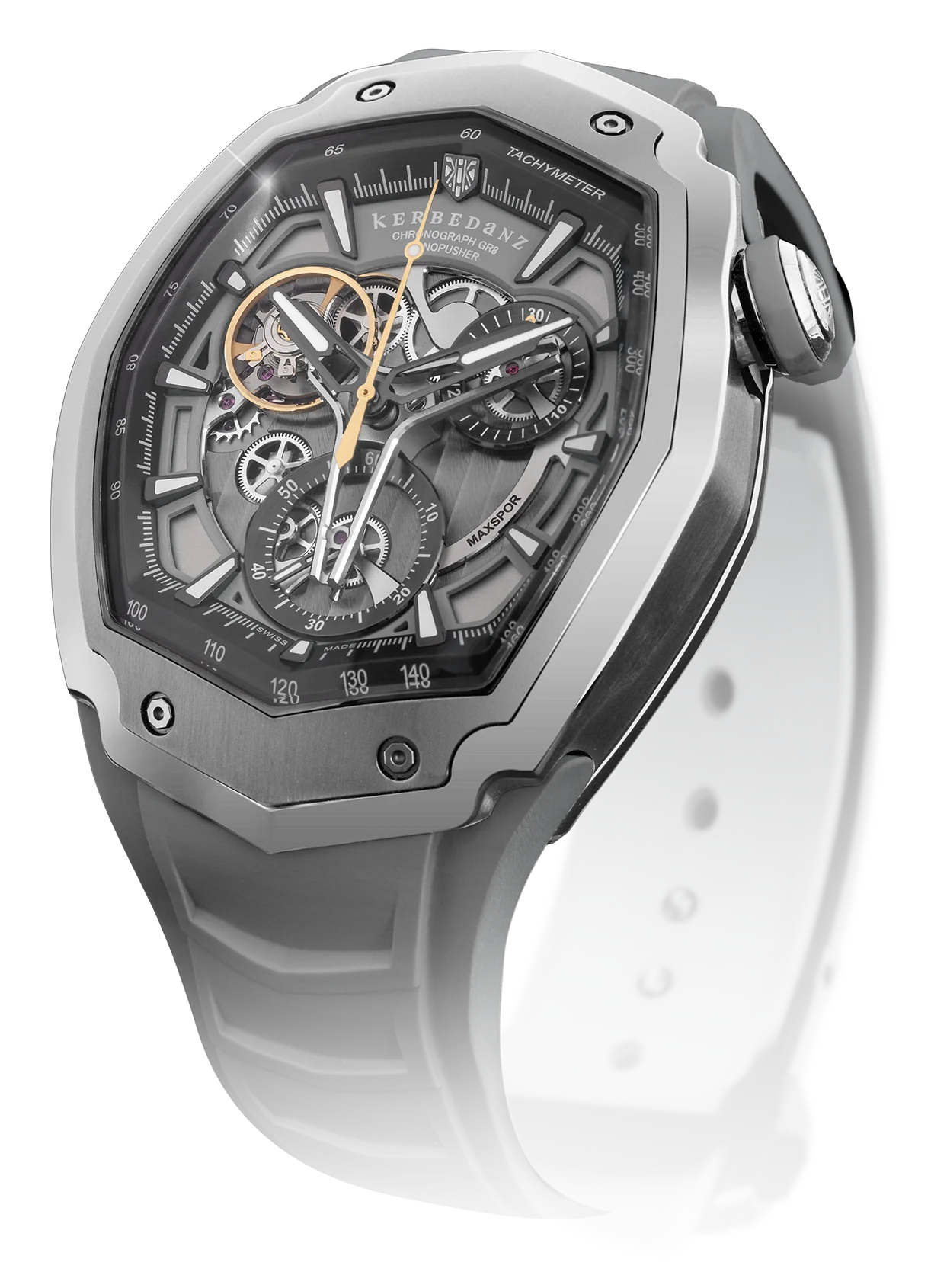
Because this reduction does not look like an opportunistic concession. It seems seriously thought out, accompanied by a new KRB14-2 caliber, which preserves the spirit of the watch while giving it another balance. The result is much more portable, much more realistic for frequent use, without losing the visual tension that makes the GR8 case interesting.
The polished titanium version is priced at 36,000 CHF (39,000 euros). The black DLC version is the same price. The rose gold and black DLC titanium version costs 68,000 CHF (74,000 euros). We remain at high levels, of course, but with a proposition which becomes significantly more commercially coherent.
A true independent chronograph with a strong personality
In the independent chronograph landscape, it’s not that easy to come up with something truly distinctive. Many fall into an excess of design, others into a somewhat cold technicality, still others into codes seen and reviewed again.
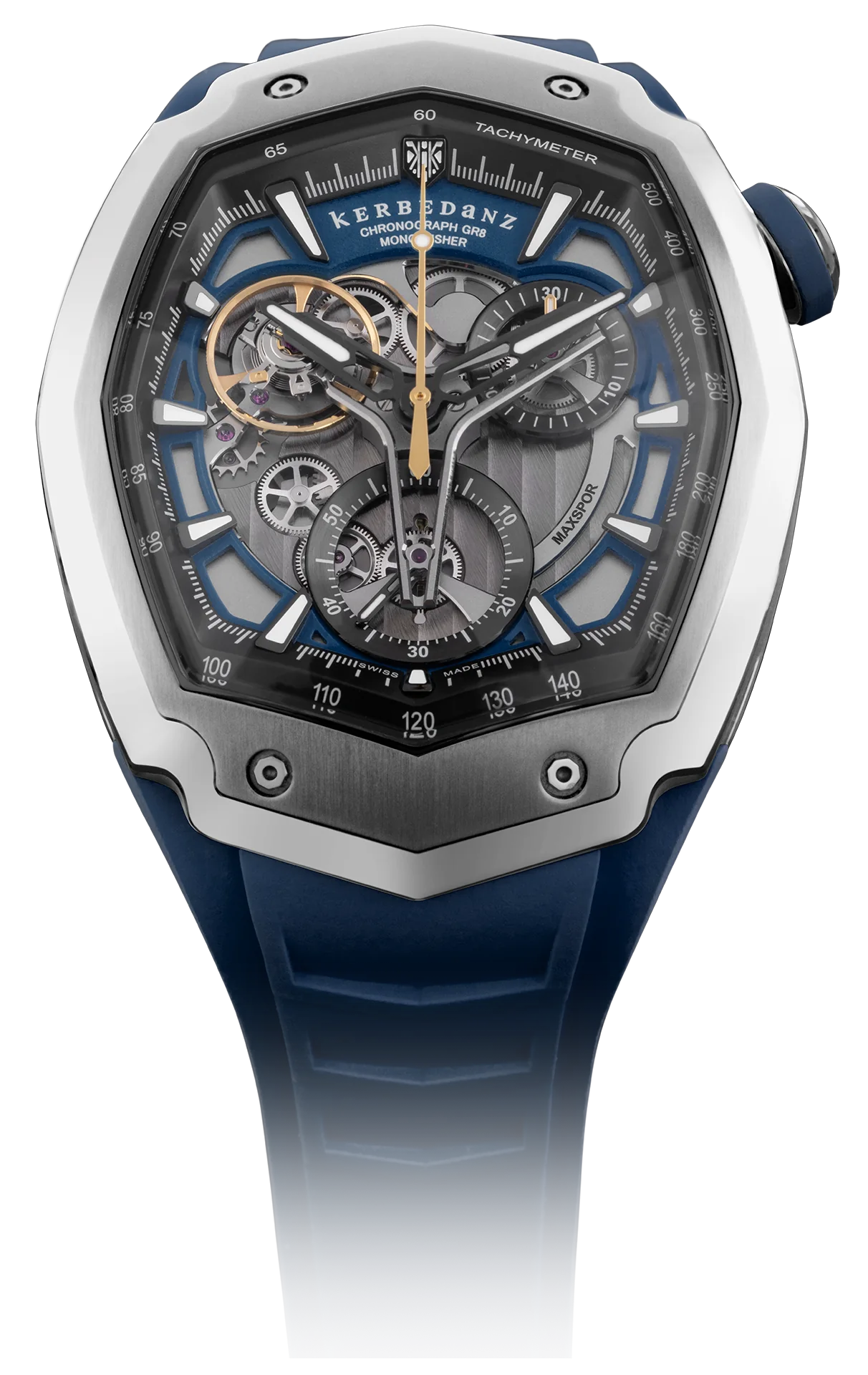
The Maxspor GR8 at least has the merit of having a real character. The monopusher chronograph gives it a particular mechanical elegance. Its architecture clearly distinguishes it from the rest of the market. And above all, at 41 mm, it becomes a watch that we can seriously consider.
Maxima GR8: the most convincing synthesis of the Kerbedanz spirit
A finally more universal size
If we had to choose one piece that best sums up this new phase of the house, it would undoubtedly be Maxima GR8.
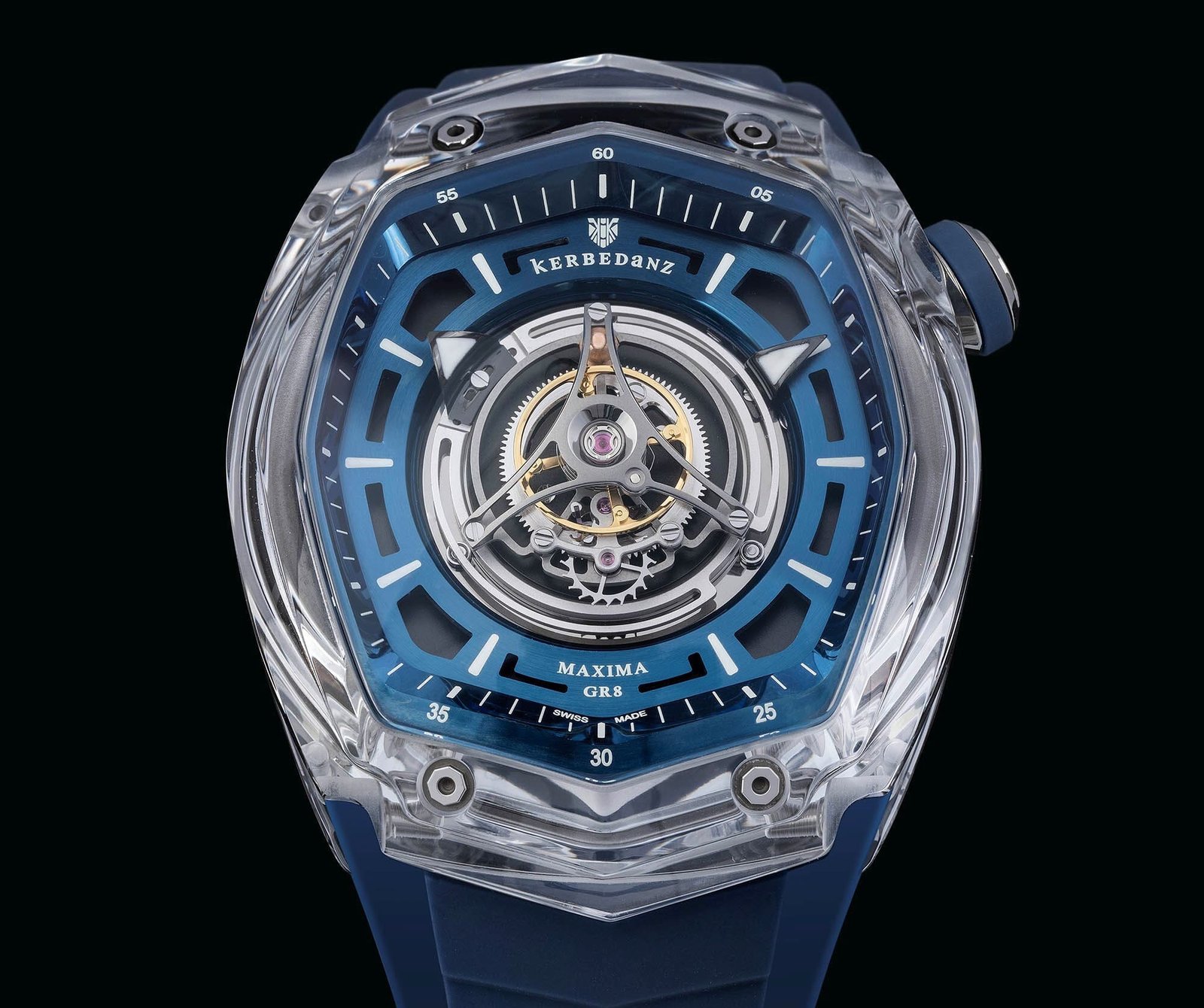
For what ? Because it condenses everything that makes up the DNA of Kerbedanz in a finally more universal format. The case increases to 39mm, and this simple figure already changes a lot of things. We are no longer in the purely demonstrative room or reserved for lovers of large volumes. We are entering into something more balanced, more mature, more broadly desirable.
The central flying tourbillon in a fairer format
Maxima GR8 features an automatic central flying tourbillon at one minute, powered by the KRB13 caliber. Two barrels, 65 hours of power reserve, frequency of 4 Hz, 233 components: mechanically, the watch is extremely serious.
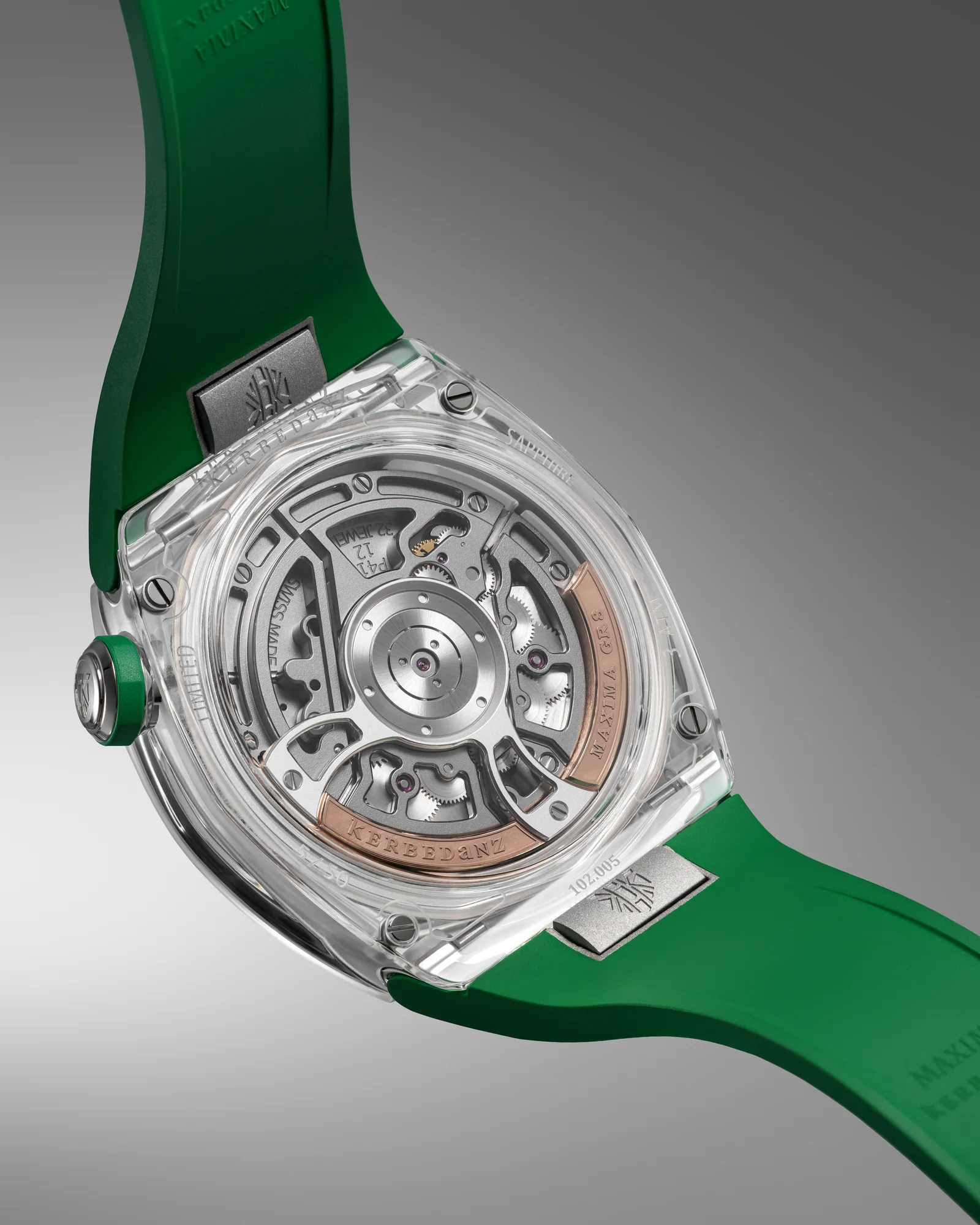
The watch retains a real micromechanical spectacle, a beautiful visual density, a strong identity, without falling into heaviness. This is undoubtedly the piece where Kerbedanz best controls his own intensity today.
The black or white ceramic versions are offered from 130,000 CHF (140,500 euros). The colorless sapphire versions cost 330,000 CHF (357,000 euros), and the blue or pink sapphire versions cost 370,000 CHF (400,000 euros).
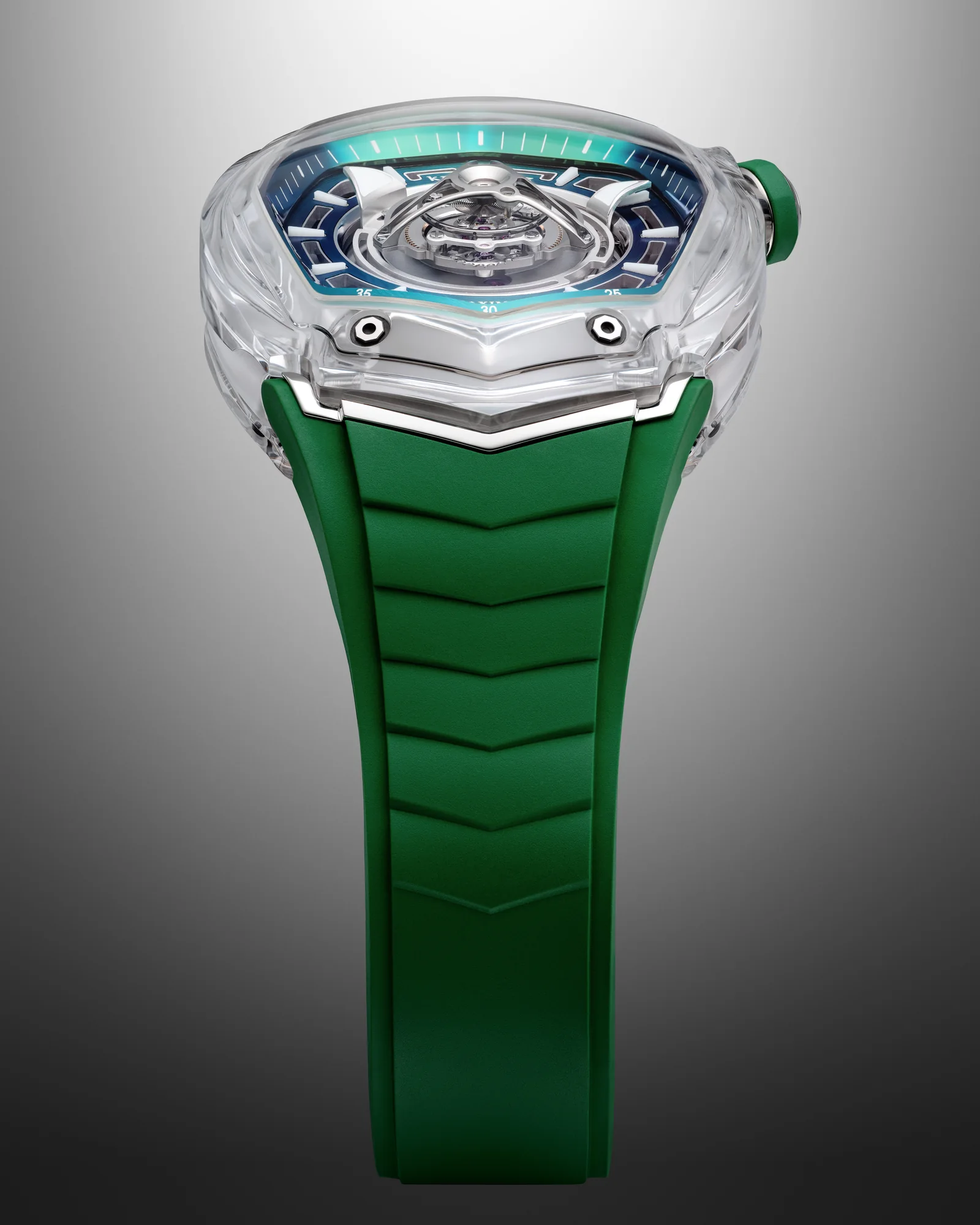
We obviously stick to very exclusive pieces. But in the world of Kerbedanz, Maxima GR8 appears to be a particularly convincing synthesis between strong identity, technical sophistication and real portability.
Sapphire cases: a subject that Kerbedanz treats seriously
One of the interesting exchanges of this meeting concerns sapphire.
Today we see many sapphire cases appearing in fine watchmaking, sometimes as a simple visual argument, sometimes as a more or less mastered exercise in style. However, not all sapphires are created equal and at Kerbedanz, we claim to offer “real” sapphire, the kind that blooms at the heights of the Mohs scale (graduation which measures the hardness of the stone). At Kerbedanz, we feel that sapphire is not there to look pretty in a press release.
The 65’27” collection: mechanical poetry according to Kerbedanz
A very nice watchmaking idea
If there is one proposition that particularly appealed to me in this presentation, it is the 65’27”.
And here, for once, Kerbedanz takes a particularly interesting turn. Because this collection shows another side of the house. A more restrained, more elegant, more poetic side too.
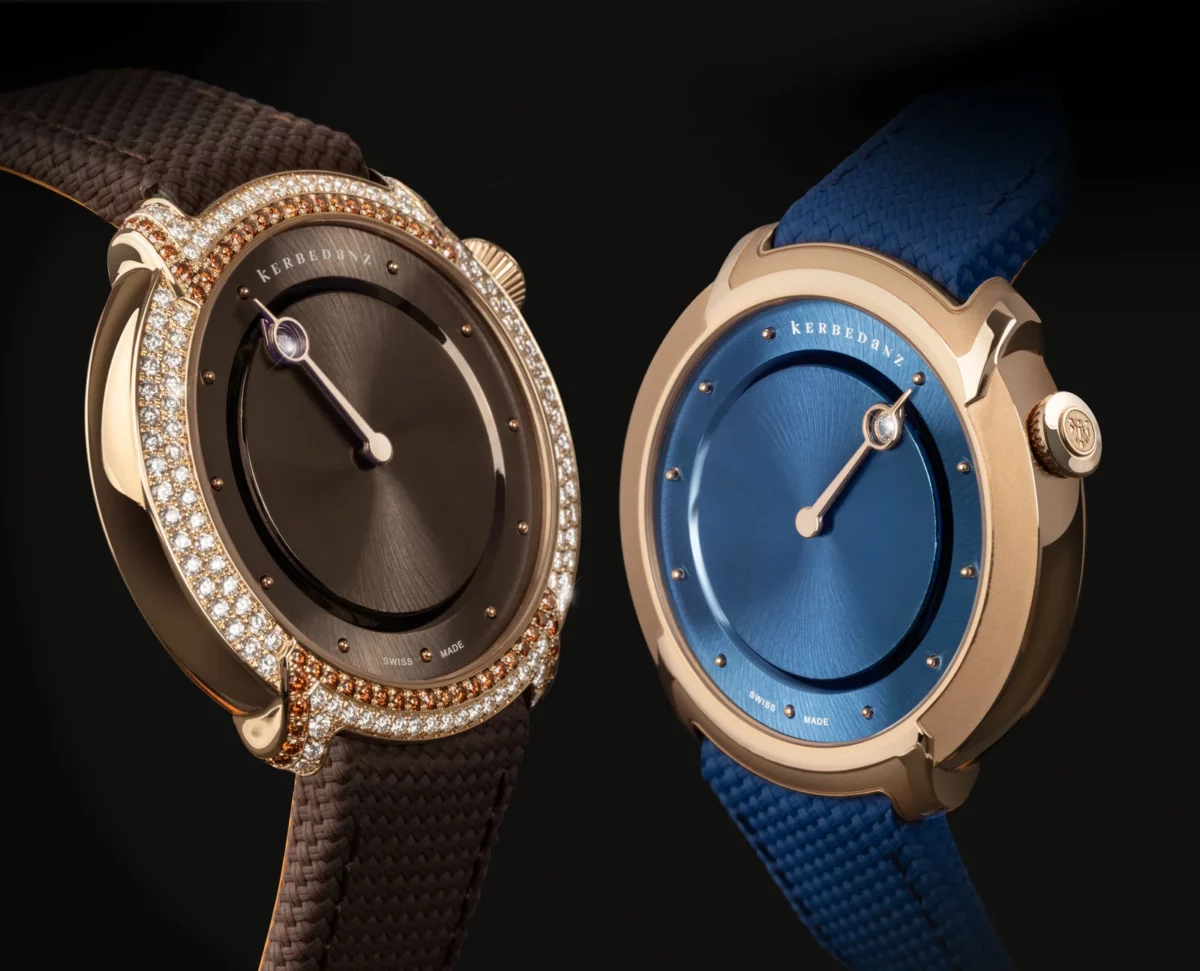
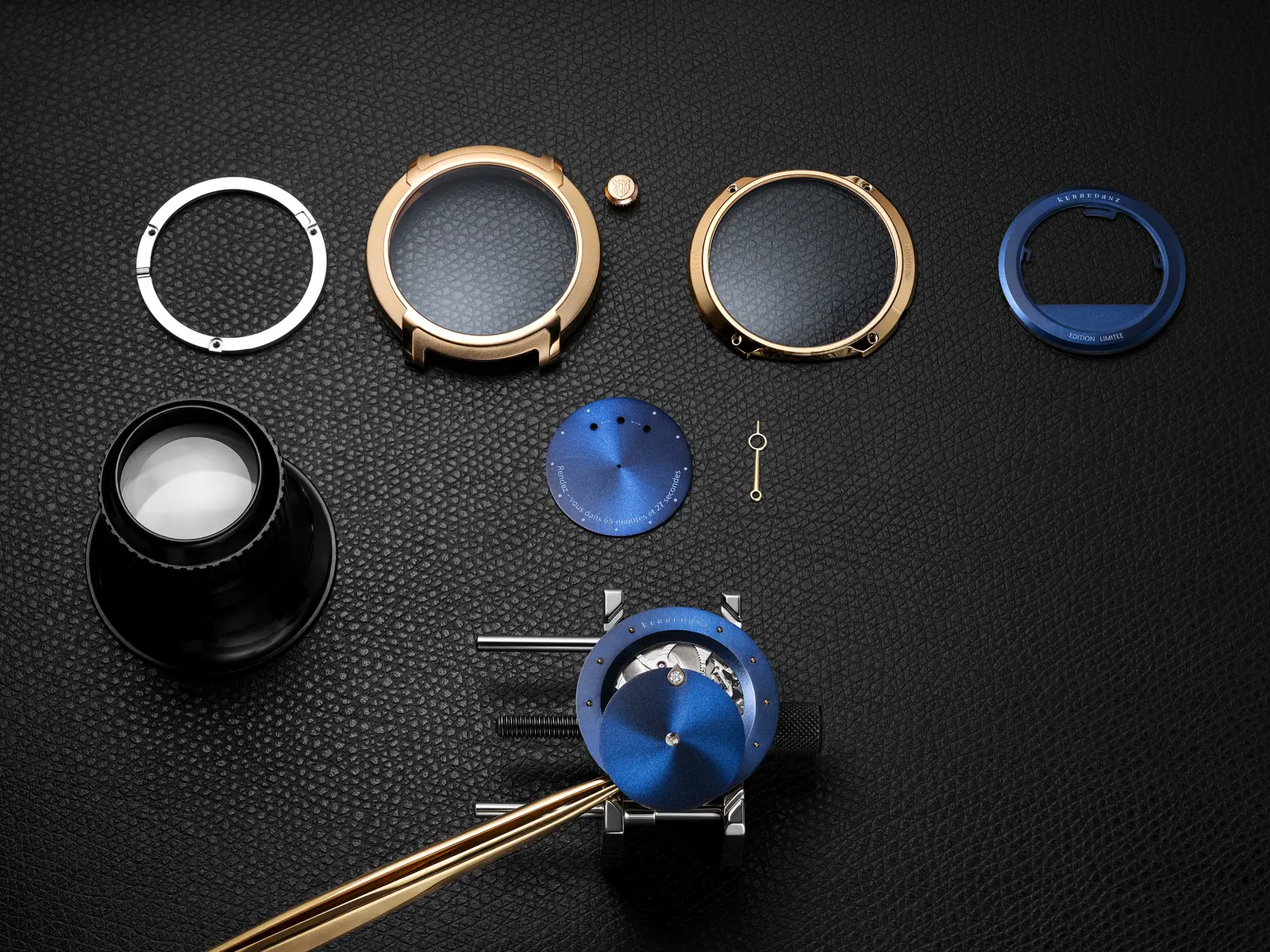
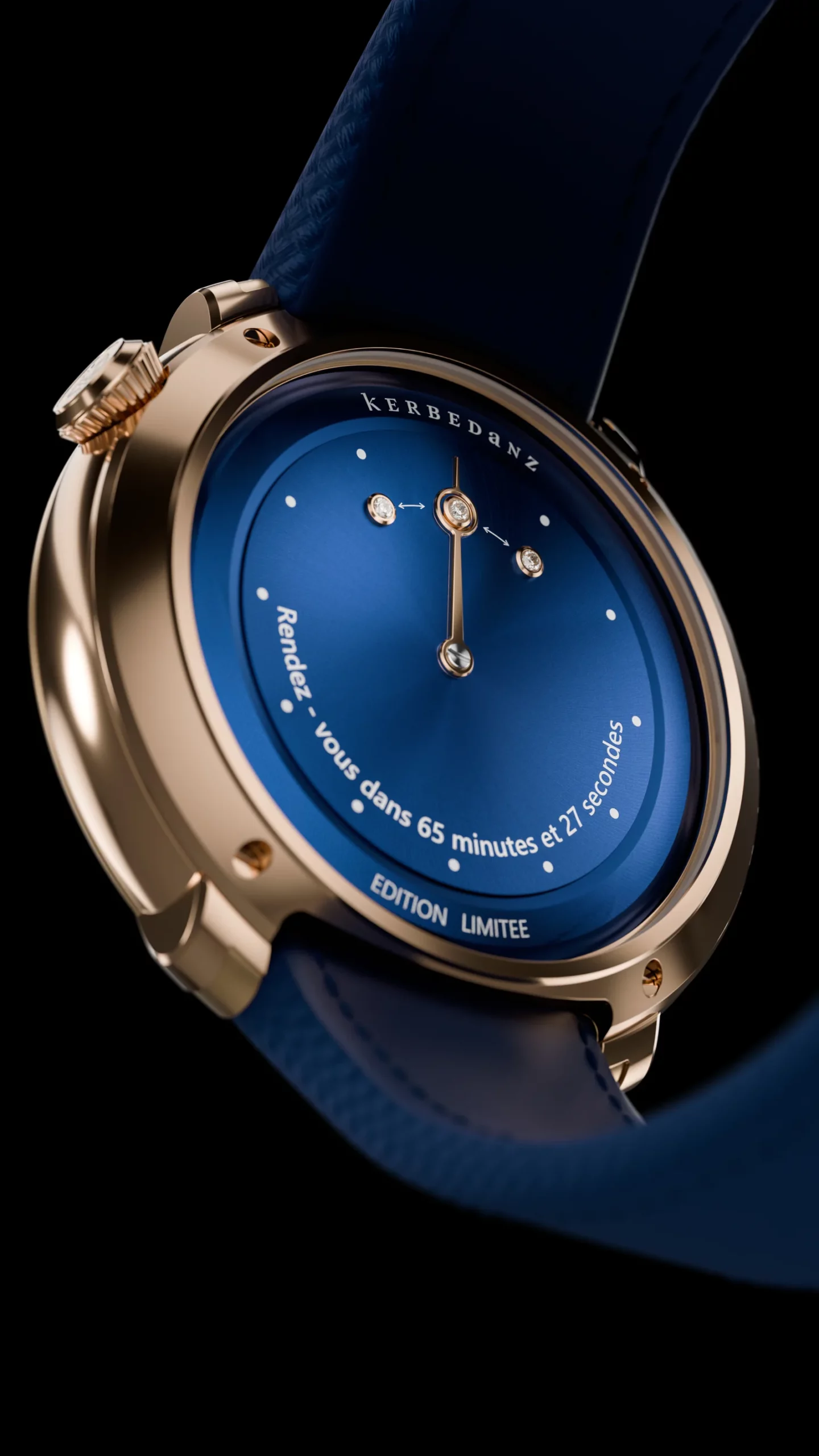
The concept is very beautiful. The name 65’27” refers to the precise moment when the minute hand aligns perfectly with the time indication, represented by a diamond, every 65 minutes and 27 seconds. At this moment, the stone reveals all its brilliance, as if the watch itself organized a meeting with the light.
There is something intelligent, refined, almost jewel-like in the spirit. It also made me think, in its way of introducing poetry into the display of time, of certain creations by Van Cleef & Arpels. The comparison is obviously not due to formal mimicry, but to this common desire to make time not only a measure, but also an apparition, a moment of grace, a little discreet theater.
An elegant, subtle and very successful watch
The 65’27” is technically powered by an ultra-thin KRB10 A automatic caliber, with concentric hour indication. But here, even more than the mechanics, it is the idea that wins support. Kerbedanz succeeds in making a watch that is both singular and very readable, poetic without being mawkish, precious without becoming heavy.
And it must be said: it is a very beautiful aesthetic success.
The diameter of 38 mm suits it perfectly. The versions in titanium, palladium or rose gold each give a different tone to the collection. The titanium version starts at 30,000 CHF (32,500 euros). The palladium version costs 46,000 CHF (50,000 euros). The pink gold version with a blue dial costs 40,000 CHF (43,000 euros), while the cognac-set pink gold version climbs to 55,000 CHF (59,500 euros).
I particularly like this idea that Kerbedanz, a house known for its strong micromechanical demonstrations, is also capable of such restraint. The 65’27” does not seek to impress head-on. It attracts differently. And it is perhaps, ultimately, one of the finest proofs of the brand’s maturity today.
A house entering a new phase
What this meeting with Kerbedanz reveals is that we are dealing with a house that is much more interesting and more complete than one might believe from afar.
Yes, there are the big, spectacular pieces. Yes, there is Maximus, its immense tourbillon, its four barrels. Yes, there is a taste for strong gestures, assumed volumes, presence. But now there is something else.
There is a desire to build a real collection. There is an ability to change proportions without losing identity. There is perhaps a finer understanding of what makes a watch not only impressive, but also desirable, wearable, credible over time. The wisdom of maturity?
Kerbedanz, much more than a name encountered at a trade fair
Before this meeting, Kerbedanz was for me a brand that I knew mainly by name. After Time to Watch 2026, this is no longer the case at all.
There I discovered an independent fine watchmaking house with real coherence, a real mechanical culture, a real taste for artistic crafts, and above all a new ability to better articulate power and elegance. Maximus reminds us that Kerbedanz knows how to hit hard. Maxima GR8 shows that it knows how to condense its identity into a much fairer format. Maxspor GR8 in 41 mm opens a very relevant path in the chronograph register. As for the 65’27”, it brings to the whole a particularly attractive poetic and precious dimension.
Clearly, Kerbedanz is not just an interesting confidential house. It is a brand that deserves to be looked at with much more attention today.