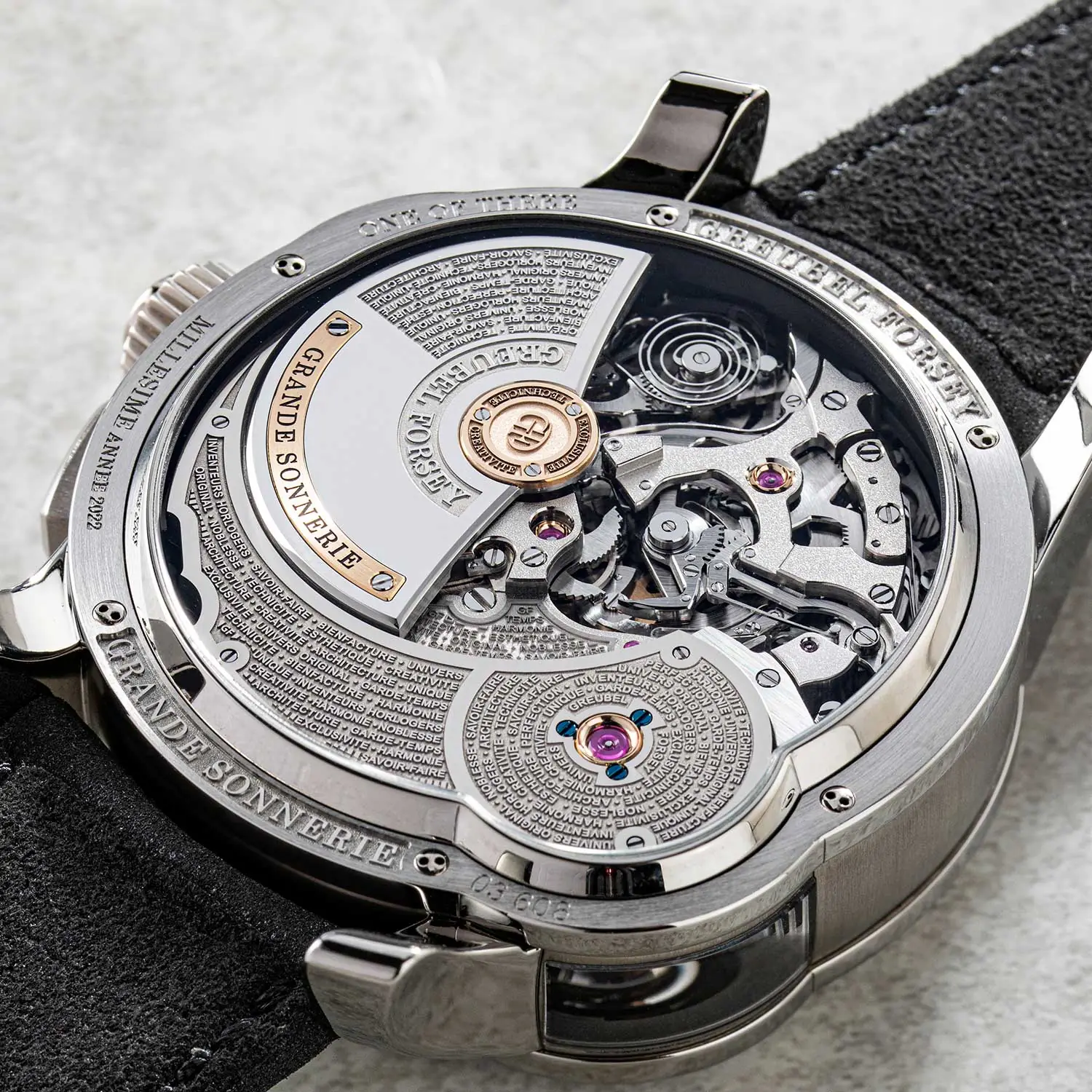
The striking watchand more precisely the minute repeateris one of the most poetic, and most merciless, complications in watchmaking. Poetic, because it transforms time into music. Ruthless, because inside the case, nothing is forgiving, neither the roughness, nor the speck of dust, nor the lazy beveling. It’s an instrument, not a gadget. And when we ask how does a striking watch workthe answer has as much to do with precision mechanics as with acoustics, metallurgy, and a certain human obsession with making gears sing. Have fun spotting the hammers in the movement photos while reading the article.
A ringtone, what is it for (and why it was born)
Before electricity, a dial could not be read in the dark. However, the aristocracy of the 17th and 18th centuries had this insolent habit of wanting to know the time at night without waking up the whole house, or without lighting a candle above a flammable wig. The first repeater watches were born from this, making the time “hear” on demand. We activate a device, the watch counts down the hours, then possibly the quarters, then the minutes. Today, no one has need of a repetition. This is precisely why it fascinates, it exists because watchmaking likes to stare at mountains.

Chiming watch vs minute repeater, let’s talk vocabulary
In everyday language, we mix everything up. A clarification is necessary.
The main families of ringtones
- Repetitionthe hour has come on demand (via push button or sliding lock).
- Ringing in passingthe hour strikes automatically (small ringtone, big ringtone, etc.). This is the case with the C1 Bel Canto from Christopher Ward that I tested.
- Alarmanother logic, we program a trigger at a given time.

Levels of “repetition”
- Hour repeateronly the number of hours.
- Quarter repeathours then quarters.
- Minute repeaterthe classic Grail, hours, quarters, minutes.
In this article, we focus on the minute repeaterthe complication that enthusiasts cite with a mixture of respect and a little cold sweat.
Act 1, we arm: the bolt or the pusher
On many traditional repetitions, we find a sliding lock on the middle. It’s not an aesthetic whim, it’s a weaponizing device. By sliding it, you tension a small dedicated spring, different from the mainspring that powers the watch. As a result, the strike has its own energy reserve, independent of the clock’s gear train. This is a key point, we want the watch to remain a watch, even when it looks like a bell.
Some models use a pusher, or even other architectures, but the principle is identical, we arm a striking spring.
Act 2, the mechanical “reading” of the time: the surprise of the snails
A minute repeater must convert continuous information, the position of the hands, into a sequence of strokes. To achieve this, it uses snail-shaped cams, which are very literally called cams. snails. There are generally three:
- hour snailwhich encodes from 1 to 12.
- cochlea quarterswhich encodes from 0 to 3.
- minute snailwhich encodes from 0 to 14 (the minutes after the last quarter).
Of the rakes (toothed levers) come to rest on these snails and “read” their height. The higher the snail is where the rake falls, the more shots will sound. We are very far from digital. And yet it is a form of mechanical computing: read, convert, execute.
Act 3, the brain: locking and sequencing
Once the information has been captured by the rakes, a system of lockdown prevents parts from moving randomly. Because if you let a rehearsal improvise, it will improvise, but not in the way you like. Safety devices are essential: for example, they prevent the repeater from being activated when the mechanism is changing the time, or from triggering two simultaneous sequences.
This mechanical “brain” is a choreography of jumpers, seesaws, pawls, and springs. In a large, well-designed rehearsal, everything is crisp, without hesitation. In an average rehearsal, you sometimes hear a micro-flutter, an unpleasant dead time, like a pianist searching for his key.
Act 4, the rhythmic engine: the regulator (or governor)
This is a detail that many ignore: a minute repeater must not only strike the gongs, it must strike them at the right tempo. Too quickly, we hear nothing. Too slowly, the sequence becomes a punishment. It all depends on a bell regulatorsometimes called governor.
Historically, there were anchor regulators, then centrifugal regulators, and today, often, very compact systems with vanes and inertia, visible by a small propeller which turns when the bell rings. Its role is to absorb excess energy from the striking spring to impose a constant flow rate. A repetition without a regulator is a cascade of blows, indistinct and brutal.
Act 5, the voice: hammers and gongs
The most “visible” part is also the most misunderstood. When we talk about ringing, we imagine bells. In reality, most minute repeaters use:
- two hammerstiny mallets in polished steel, mounted on a spring,
- two gongsthin blades of hardened steel, wrapped around the movement.
The hammers strike the gongs. The gongs vibrate. The box amplifies. And your wrist becomes the sounding board. In general :
- the hours are struck on a gong (low tone),
- the quarters alternate the two gongs (low then high),
- the minutes are struck on the other gong (high tone).
Example: 10:23 a.m. The watch sounds 10 low strokes, then 1 quarter sequence (low, high), then 8 high strokes (because 23 minutes is 15 + 8).
Why it sounds “good”… or not: acoustics, materials, architecture

There is a romantic idea that all you need to do is put gongs in a precious case to create a celestial chime. This is false, or rather, it is incomplete.
The box, first amplifier
The material and geometry of the case greatly influence the rendering. Rose gold, platinum, steel, titanium, each has its signature. THE platinumfor example, is dense, therefore often more discreet, more subdued, sometimes less powerful. Some manufacturers play with precisely this: a platinum repeater is not made to “sound loud”, it is made to sound just.
Fixing the gongs
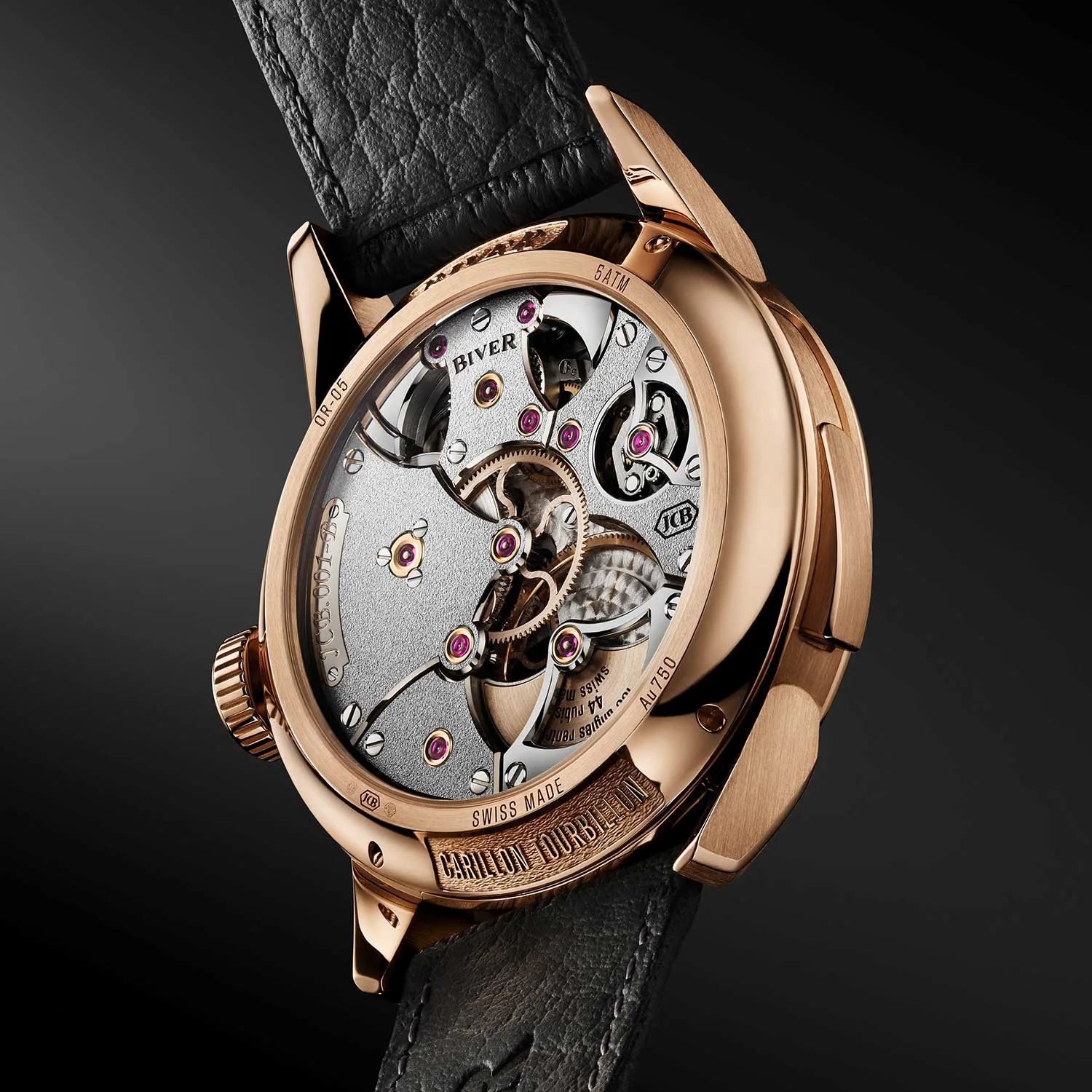
The gongs have an anchor point, generally near the movement, and their tension, their length, their curvature, all of this can be adjusted. It is the work of an artisan and technician. Too tight, the sound becomes dry. Not enough, it becomes soft. And in between there is a narrow area where the watch starts to “talk”.
Classic gongs vs. “cathedral” gongs

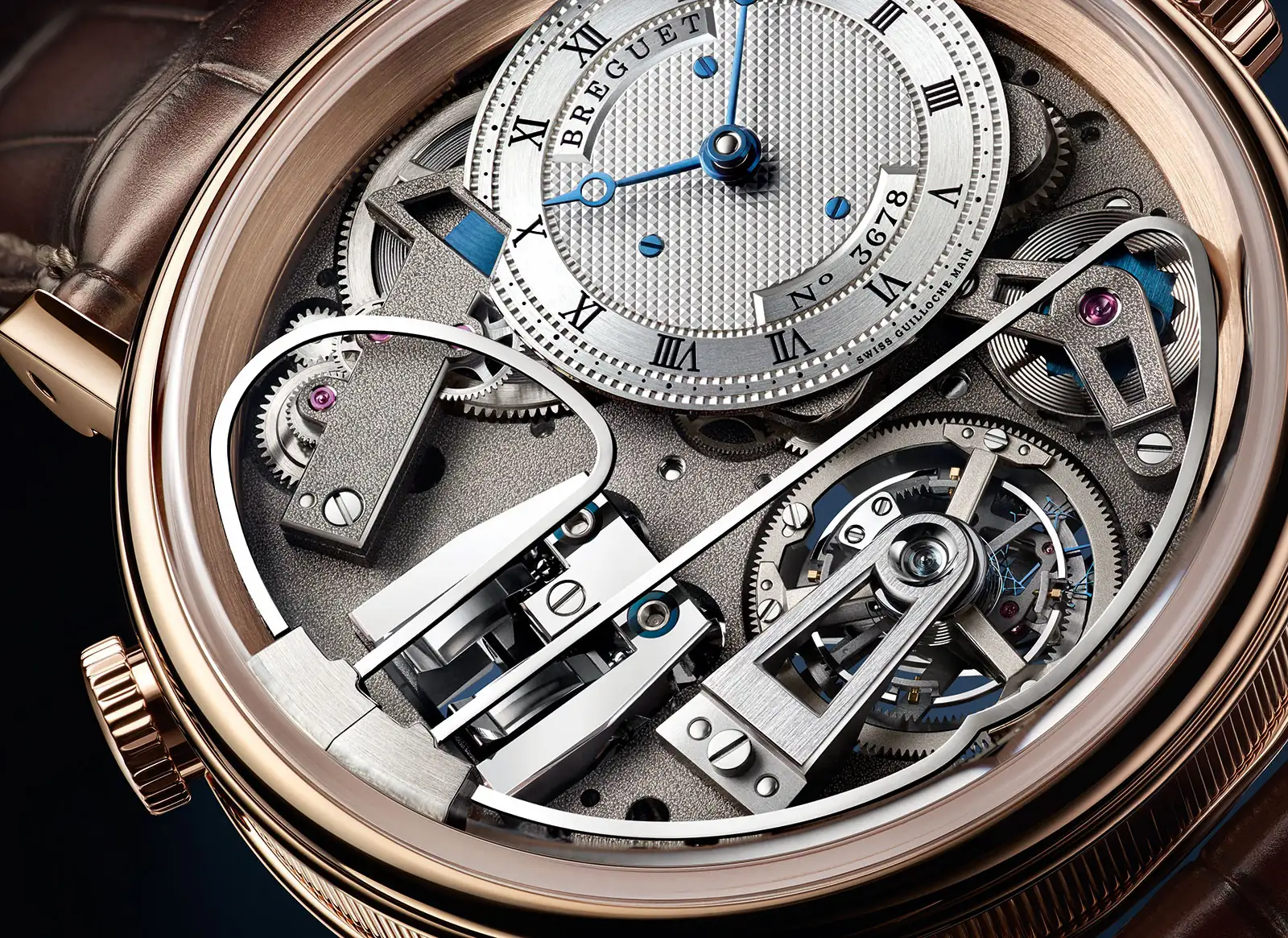
You will sometimes hear the term cathedral gongs : they make more than one complete turn around the movement. More length, therefore potentially more resonance, more sustain. Potentially. Because if the whole thing is not in tune, you mostly get more average sounding metal.
Mechanical traps: why they are so difficult to make

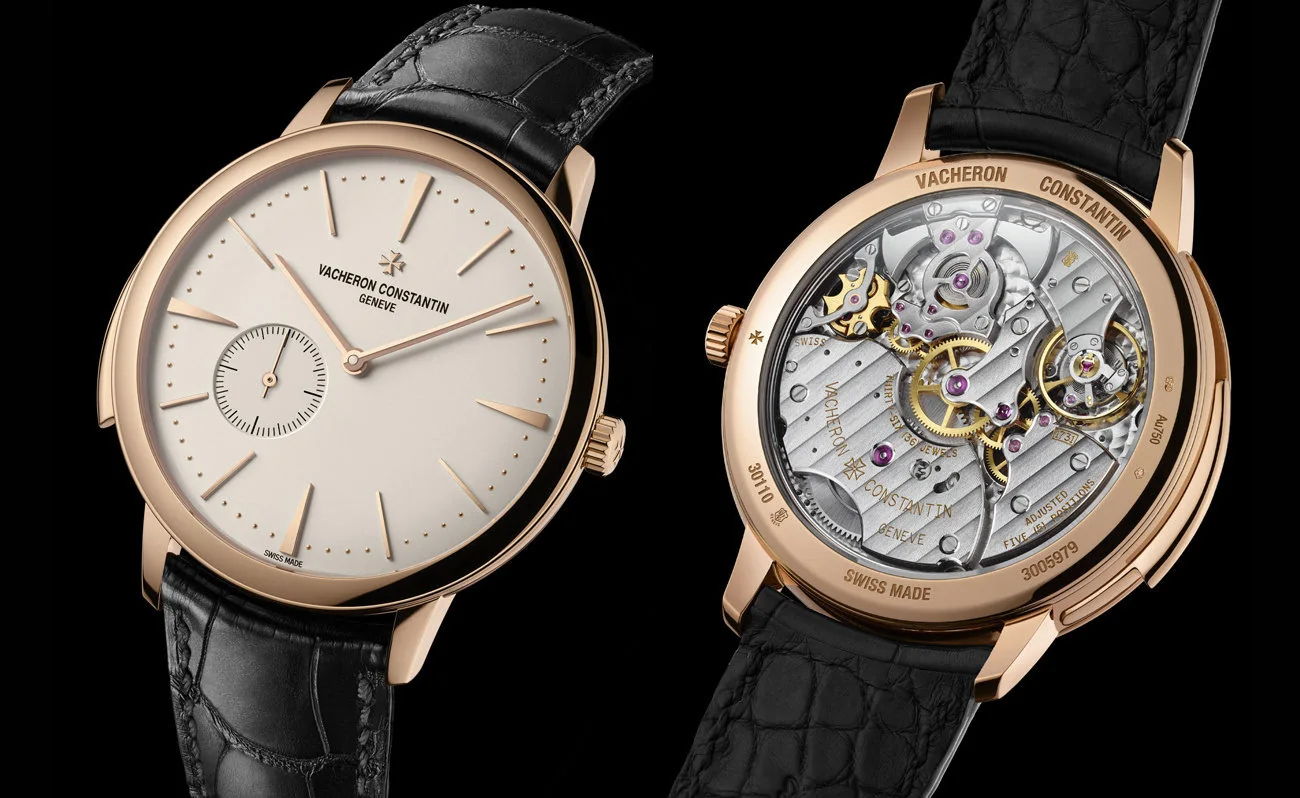
A minute repeater has three major problems:
- Miniaturizationbecause everything has to fit in a portable watch height.
- Energyyou need enough torque to strike, without disrupting the movement.
- Parasitic silenceeach friction is a potential noise, each play a hesitation.
Add to that the finishing requirements. Not to look pretty in photos, but because a black polish, a clean angle, a well-drawn surface, these are also controlled frictions, therefore a more regular repetition. An acoustic complication can also be judged by finger: the sensation of the lock, the clarity of the trigger, the fluidity of the mechanism.
Minute repeater and security: invisible safeguards

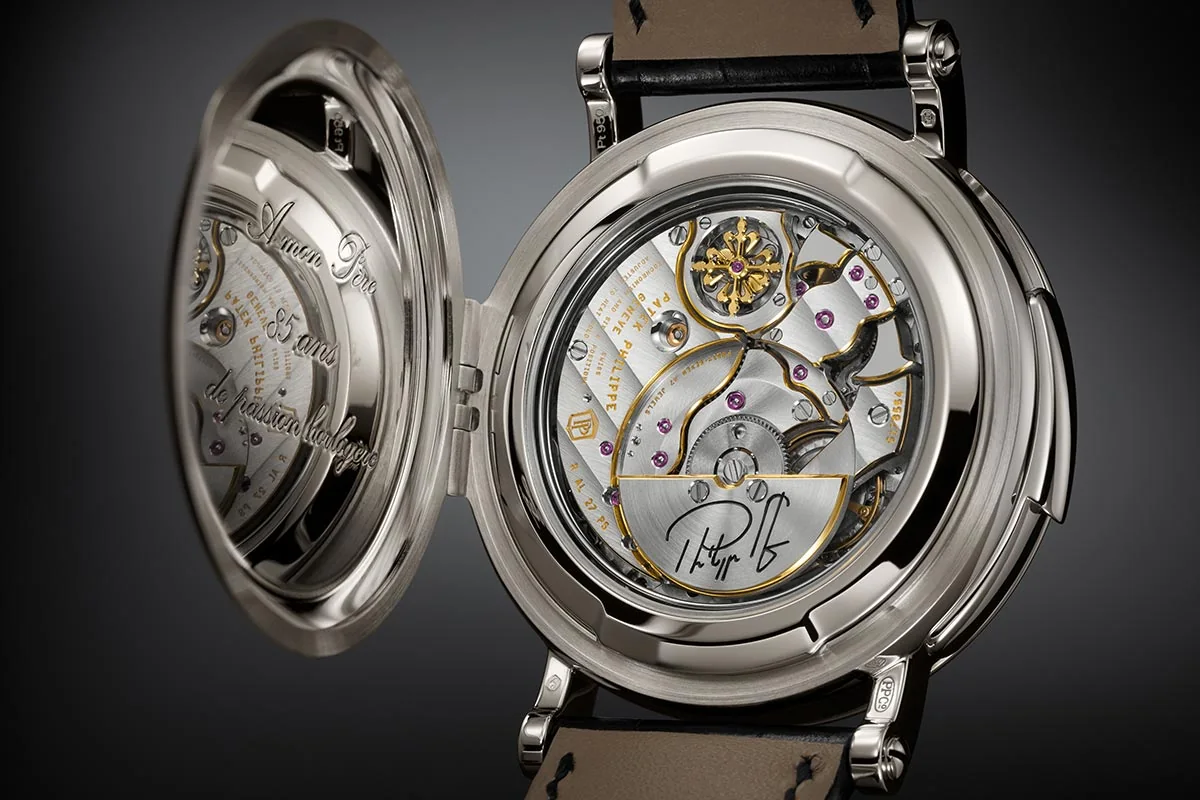
Modern rehearsals often incorporate safety devices that prevent mechanical disasters. Among the most important:
- anti-trigger during time settingto avoid ringing on a display “between two” positions,
- anti-return of the lockso that the arming remains stable until triggered,
- blocking in case of insufficiently reinforced springin order to avoid an aborted chime, the watchmaking equivalent of a sentence left hanging.
In any case, remember this: the price of a minute repeater doesn’t just buy hours of assembly. It buys time spent listening, adjusting, listening again. A watch that can be “perfect on plan” and mediocre to the ear is not uncommon. A rehearsal that sings is a meeting.
Some simple reflexes if you have the chance to try one:
- Listen to the separation between hours, quarters, minutes. Everything must be readable.
- Listen to the decay sound: good sustain should not be messy.
- Listen to the mechanical noise : the “hissing” of the regulator is normal, the parasitic clicking noises are less so.
- Test several times : regularity is a sign of mastery.
And yes, you will want to trigger it ten times in a row. Everyone does that. Even watchmakers. They just claim they are “testing”.

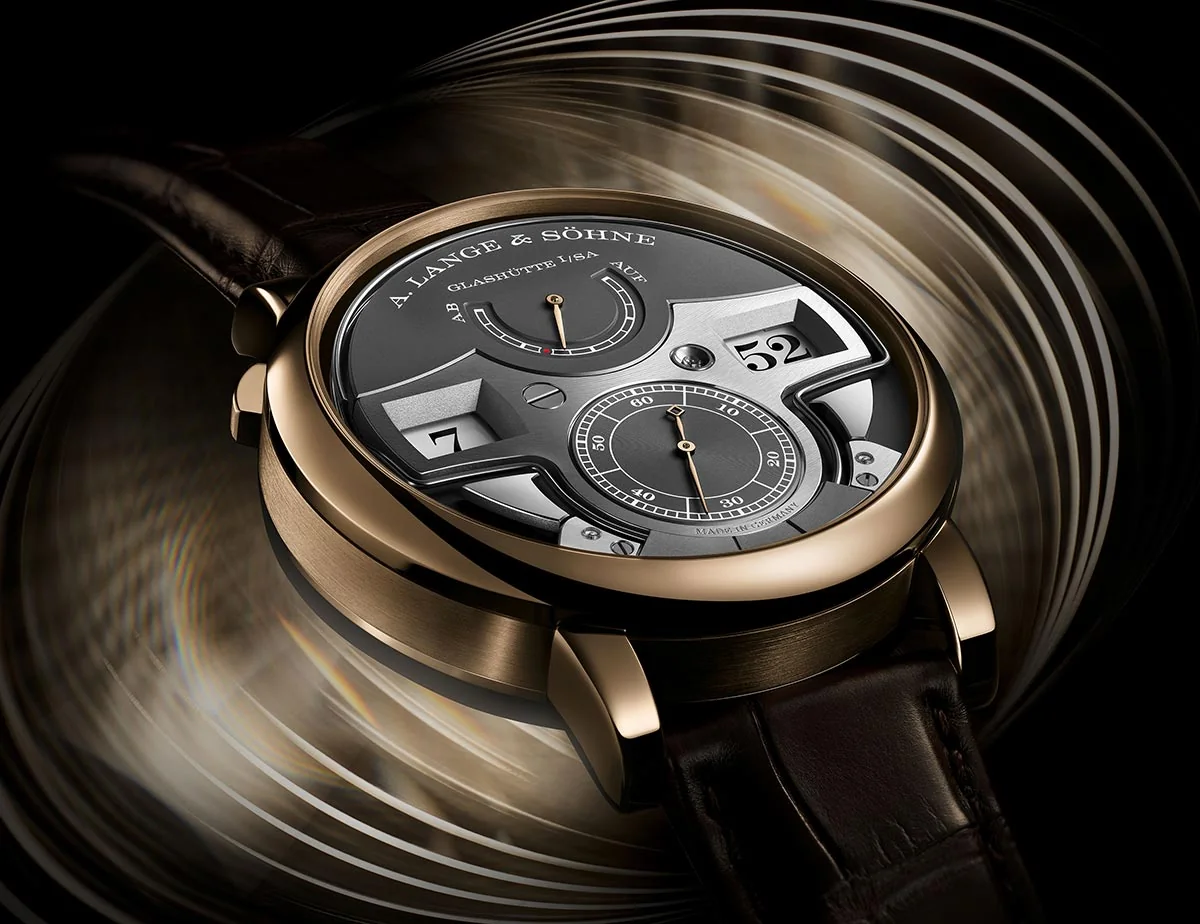
A striking watch kind minute repeater functions like a small translation machine: it mechanically reads the time via snails, converts it into a sequence of strokes, regulates the tempo using a governor, then vibrates gongs struck by hammers. Then, the case does the rest, like a musical instrument. It’s a complication where you can’t cheat: if it’s well designed, you can hear it. If it’s average, that’s okay too. And that’s perhaps the most honest reason to love him.