Table of Contents
Design and comfort: tech jewelry or confident sports watch?
There Pixel Watch 4this is clearly the “tech gem” camp. Compact case, soft lines, curved screen that catches the eye. It goes very well with a shirt, a jacket, even in the office. On the wrist, you feel a light, discreet watch, which doesn’t scream “I’m doing trail running on the weekend”.
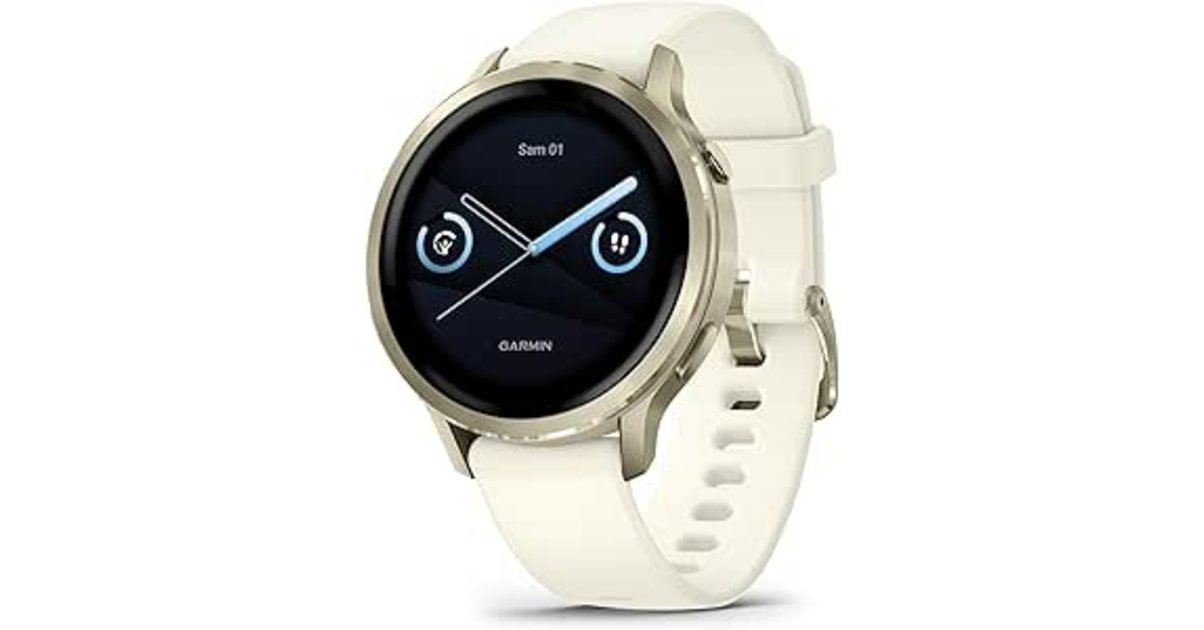
There Garmin Venu 4 does more classy sports watch. Round case, more pronounced bezel, very practical bracelets. On a thin wrist, the smaller version remains very wearable. The advantage is stability: when racing, in intervals, on a single downhill, it doesn’t move much.
When wearing 24/7, the difference comes not only from the shape, but from the charging rate. The Pixel is comfortable, yes. But if you have to charge it every 1–2 days, you will inevitably end up removing the watch in the evening or early in the morning. In other words: you lose nights of sleep monitoring. With the Venu 4, you can easily keep the watch on your wrist all week and charge it when you choose, not when it drops.
In short: if you want a very stylish and discreet object for everyday use → Pixel Watch 4 advantage. if you want a sports watch that remains comfortable day and night, even during hard training → Venu 4 has the practical advantage.
Screen, readability and ergonomics: spectacle or efficiency?
The screen of the Pixel Watch 4 sends heavy. Very bright AMOLED, vivid colors, smooth animations. You read your news in direct sunlight without straining, you really have the feeling of having a mini smartphone on your wrist.
Side Garmin Venu 4Amoled is also very clean. Less “spectacular”, more sober. The data fields are large, well separated, designed to be readable when you are at 170 bpm, not to tell you a graphic story.
In sport, it changes everything:
- on the Pixel, you benefit from a very nice display, but the customization of the training screens and the navigation logic remain less optimized for complex sessions;
- on the Venu 4, everything is built for readability during full effort: clear fields, dedicated screens, ultra-simple page change.
Verdict: more impressive screen on the Pixel Watch 4, but more effective sports ergonomics on the Venu 4. If your number 1 criterion is readability in full split, Garmin takes the advantage.
Sports monitoring and training tools: coach watch or simple recorder?
This is the part that really tips the scales if you are preparing for a half, a marathon, a tri or trails.
There Pixel Watch 4 offers the classic profiles: running, cycling, weight training, HIIT, etc. You record your sessions well, you see your time, your distance, your heart rate. For “I run to keep in shape” use, it works very well.
The problem is when you want to structure: specific sessions, training load, recovery, intensity/volume balance. There, you feel that the Pixel remains closer to a sports smartwatch than to a training tool. Metrics exist, but they don’t go that far.
There Garmin Venu 4it recovers everything that makes Garmin strong in the sports area:
- training load over the week,
- freshness/recovery indicators,
- recommended sessions depending on your fitness level,
- analysis of trends over several days/weeks.
Concretely, the Venu 4 behaves like a mini digital coach : you know when to slow down, when you can send, and how the sessions fit together in your week.
Field conclusion: To properly record your sessions, both are enough. For progress without hurting yourself and follow a real training logic, the Venu 4 is well ahead.
Navigation, mapping and GPS: peace of mind on long outings
Both watches hold up well on the GPS side. There Pixel Watch 4 does very well in town, on the road, on cycle paths. You also benefit from the Google universe (Maps on the wrist, very comfortable guidance in an urban environment).
There Garmin Venu 4 is more aimed at sporting outings: clean track, good behavior in the forest and in slightly congested areas. You don’t have the advanced mapping of a Fenix, it’s true, but for “reasonable” trail running, classic hiking, leisure or sports cycling, it’s still more than sufficient.
On very long outings, the mix GPS + autonomy changes everything: the Pixel maintains good precision as long as there is battery left, but you know that you will not leave peacefully over 5–6 hours of activity with your wrist already at 30% in the morning. The Venu 4 was already doing well the week before you launched your ultra… I’m hardly exaggerating.
In summary: city and urban guidance at the top → Pixel Watch 4. long outings, trail, hiking, sports weekend → Venu 4 more reassuring.
Heart rate accuracy: pretty good or really reliable?
Important: if you really work the cardio zones, the reference remains there chest belt. No wrist watch is perfect, especially when it comes to violent changes in pace.
There Pixel Watch 4 is more than sufficient to follow your trend: rest, endurance, tempo. As soon as you start doing short intervals, working at the threshold, it can smooth out the peaks a little too much or react with a slight delay.
There Garmin Venu 4with its more sports-oriented sensor, generally sticks better to reality, especially during moderate jogging and in slightly serious sessions. It does not replace a belt, but for 90% of athletes, it is precise enough to control the intensities without worrying.
Verdict: correct match of the two watches for “health + leisure sport” use, but if you want to get as close as possible to a belt, Venu 4 keeps the advantage.
Autonomy: the real breakthrough in everyday life
This is where things get very simple.
There Pixel Watch 4you can see it like a mini smartphone: you count in days, not weeks. With notifications, health monitoring, 1 sports session per day and a little screen on, you generally live between 1 and 2 days before recharging. The good news is the fast charge: you can wind it up very quickly during the shower and breakfast.
There Garmin Venu 4She lets you breathe. In real use (notifications, a few sessions, sleep monitoring), you can aim several days without rechargingoften a week if you don’t overuse the most demanding functions. In “I do sports every day” mode, you still remain well above the Pixel.
And that, in real life, changes your behavior: with the Pixel, you regularly think about the battery. with the Venu 4, you ask yourself: “when did I charge it again?”.
Net benefit: Garmin Venu 4. If you want to go on a weekend or on a trail without a charger, the question doesn’t even arise.
Connected functions and ecosystem: mini phone or sports control center?
There Pixel Watch 4 is clearly the queen of the connected part. Wear OS, apps, Google Maps, assistant, payments, rich notifications, direct responses on the wrist… The entire Google ecosystem is there. If you are already full Android, you feel at home.
There Garmin Venu 4 plays in another category: fewer apps, no advanced AI, but everything you need for reasonable daily life:
- notifications,
- quick response possible depending on the smartphone,
- contactless payment,
- on-board music,
- weather widgets, calendar, etc.
The real difference is the part data analysis. With Garmin, you have a very readable history of your training, your load, your sleep, your stress. You can go back, compare, identify periods where you were pulling too hard.
In practice:
- if you want a watch that manages your emails, calls, apps, payments and trips in addition to sports → Pixel Watch 4;
- if you want above all a sports/health control center with a little connectivity around → Garmin Venu 4.
A typical week with each watch
Imagine a typical week: 4 training sessions (2 runs, 1 long outing, 1 somewhat rhythmic session), work, notifications all day, a few evenings where you stay up late.
Week with Pixel Watch 4:
- Monday: you put it on at 7 a.m., jogging in the evening, you arrive at bedtime with a battery already well underway;
- Tuesday: normal day, you recharge a bit in the morning or after work to ensure the night of sleep monitoring;
- Thursday: fast-paced session, you pay attention to the battery level before starting the activity;
- weekend: long outing OK, but you must clearly anticipate the load beforehand.
Week with Venu 4:
- Monday: you go 100%, you train, you sleep with it,
- Tuesday to Thursday: you follow the days and the sessions, you consult your load and your recovery,
- Friday: you realize that you can last a few more days,
- Sunday evening: you finally decide to put it on the charger.
This is where we see the difference in philosophy: one asks you to adapt to its battery, the other adapts much more to your pace of life.
Conclusion: Pixel Watch 4 or Garmin Venu 4, which camp do you choose?
You don’t compare two identical watches. You compare two different visions of “sport on the wrist”.
Choose the Google Pixel Watch 4 if:
- you are on Android and you first want one very complete smartwatch,
- you exercise regularly, but you don’t live for your training load curves,
- you love the idea of having Google Maps, the assistant, your apps and your payments directly on your wrist,
- You don’t mind recharging your watch every 1–2 days.
Choose the Garmin Venu 4 if:
- you are a regular sportsman (running, trail, cycling, tri, etc.) and you want to progress without burning out,
- you want clear training tools : load, recovery, trends, suggested sessions,
- do you prefer a watch that you refills once a weeknot every evening,
- you want a watch that remains simple, readable and reliable under full strain.
In reality, you are not making a “mistake” by choosing one or the other. You just choose the camp that suits your practice:
more connected than sporty → Pixel Watch 4.
more sporty than connected → Garmin Venu 4.
And there, frankly, you will be consistent with what you really do on the ground. That’s what counts.