Table of Contents
A bracelet born from a need: reliability, movement, real life
In watchmaking, certain innovations are necessary because they answer a simple question: how to wear a watch without thinking about it? Before being an external sign of status, the metal bracelet is first and foremost a pragmatic solution. It must resist sweat, water, everyday shocks, and above all accompany a tool watch in environments where the leather wears out, relaxes and becomes soaked with humidity.
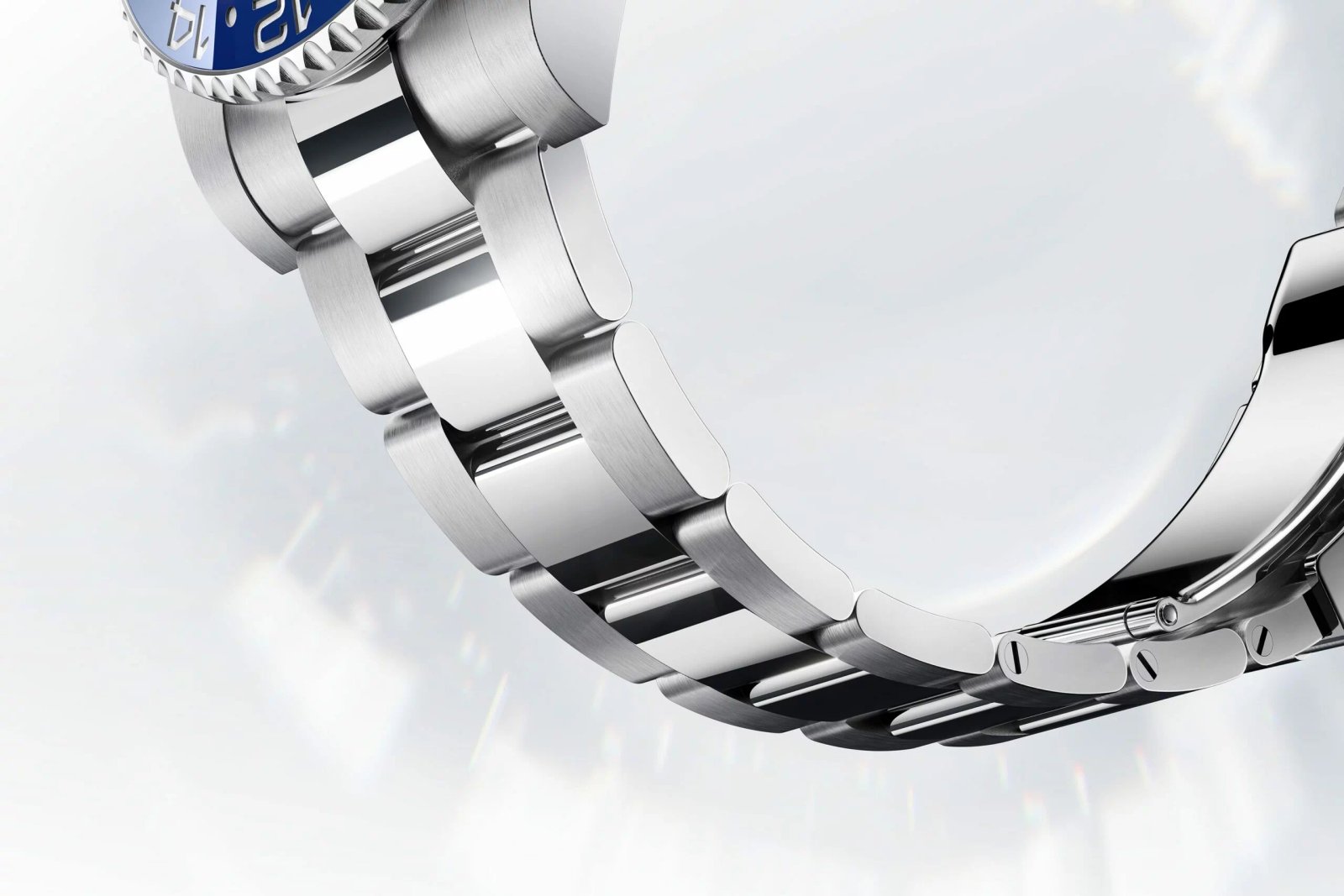
This is exactly the terrain on which the Oyster bracelet has built its reputation. Its principle is not a gadget: an architecture of links which favors solidity, natural integration into the case, and a sensation on the wrist that is both dense and reassuring. Where other bracelets seek to be forgotten, the Oyster assumes the opposite idea: to be present, structuring, like a design element in its own right.
The magic formula: three links, zero chatter
If the Oyster bracelet has become an icon, it is first and foremost because it is immediately recognizable. Three rows of wide links, a taut, almost architectural silhouette. In a world of details, it offers graphic evidence. The kind of drawing that you can sketch from memory on the corner of a notebook, and that stays true.
This simplicity is not a poverty of style; it’s a discipline. The Oyster bracelet does not seek ornament. It draws a clear, continuous line, which extends the case and gives the watch the appearance of a coherent, almost monolithic block. Result: it crosses the decades without ever seeming dated. It has the effectiveness of the great classics of industrial design, those which appear “eternal” because they avoid the fashion effect.
Field ergonomics, become discreet luxury
Originally, the idea is to distribute the stress: traction, twists, micro-shocks. The solid links, the width, the precise assembly… all this aims for durability. But this robustness also produces a very particular sensation: on the wrist, the Oyster behaves like a “living” piece of metal, flexible without being soft, firm without being stiff.
And this is where the tool shifts into luxury. Luxury here doesn’t scream. It is felt. It is in the way the bracelet is placed, in the dull sound of the links, in this impression that everything is in its place.
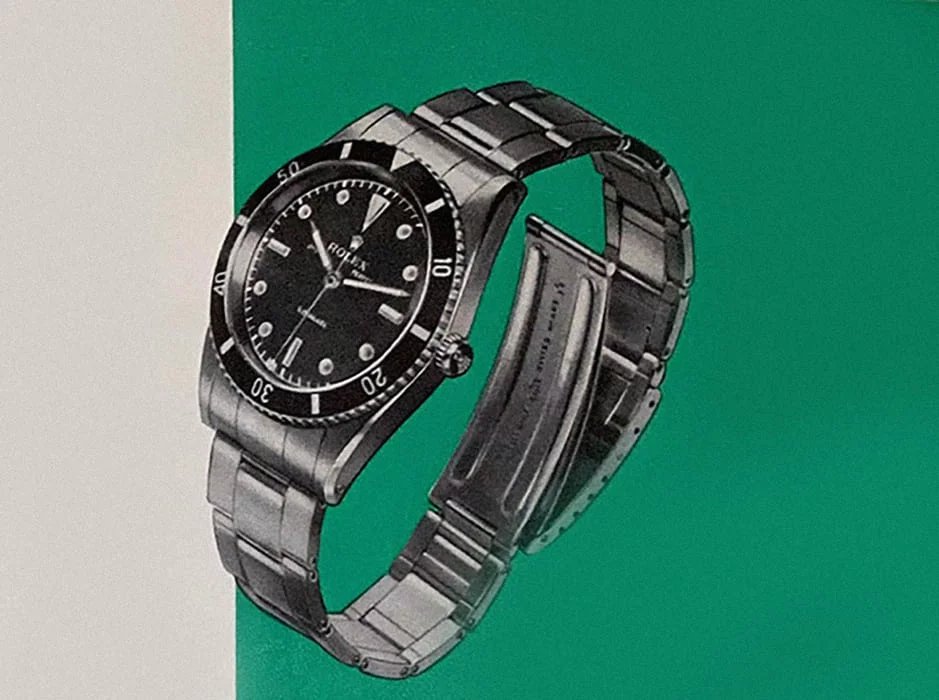
It is believed to have been invented by Hans Wilsdorf for Rolex but it was in fact designed by the company Gay Frères, a bracelet manufacturer which then worked for the biggest Swiss watch brands, including Rolex. This supplier was bought by Rolex at the end of the 90s.
A cultural icon: the aesthetics of action
We often tell the story of watches through their dials or their complications. But the bracelet tells another mythology: that of movement. The Oyster bracelet evokes wrists in action. It suggests sport, exploration, work, the road. Even when worn today under a shirt sleeve, it retains this implicit memory: a watch that can keep up.
This is also one of the reasons why he has won over so many different profiles. He does not “disguise” the watch: he clarifies his intention. On a diving watch, it reinforces the instrumental dimension. On a more formal watch, it brings a modern, almost minimalist rigor, which advantageously replaces decorative effects.
The contrast that changes everything: sport and elegance on the same line
The Oyster bracelet has this rare ability to navigate between two worlds without betraying itself. It can be the partner of a pique polo shirt or a double-breasted blazer. He embodies an active elegance: that of someone who does not need to “dress up” to be credible.
This versatility has made it universal in watchmaking culture. Lots of bracelets are great, but contextual: perfect for summer, perfect for a suit, perfect for the weekend. The Oyster plays all year round.
The details that matter: clasps, adjustments and an obsession with precision
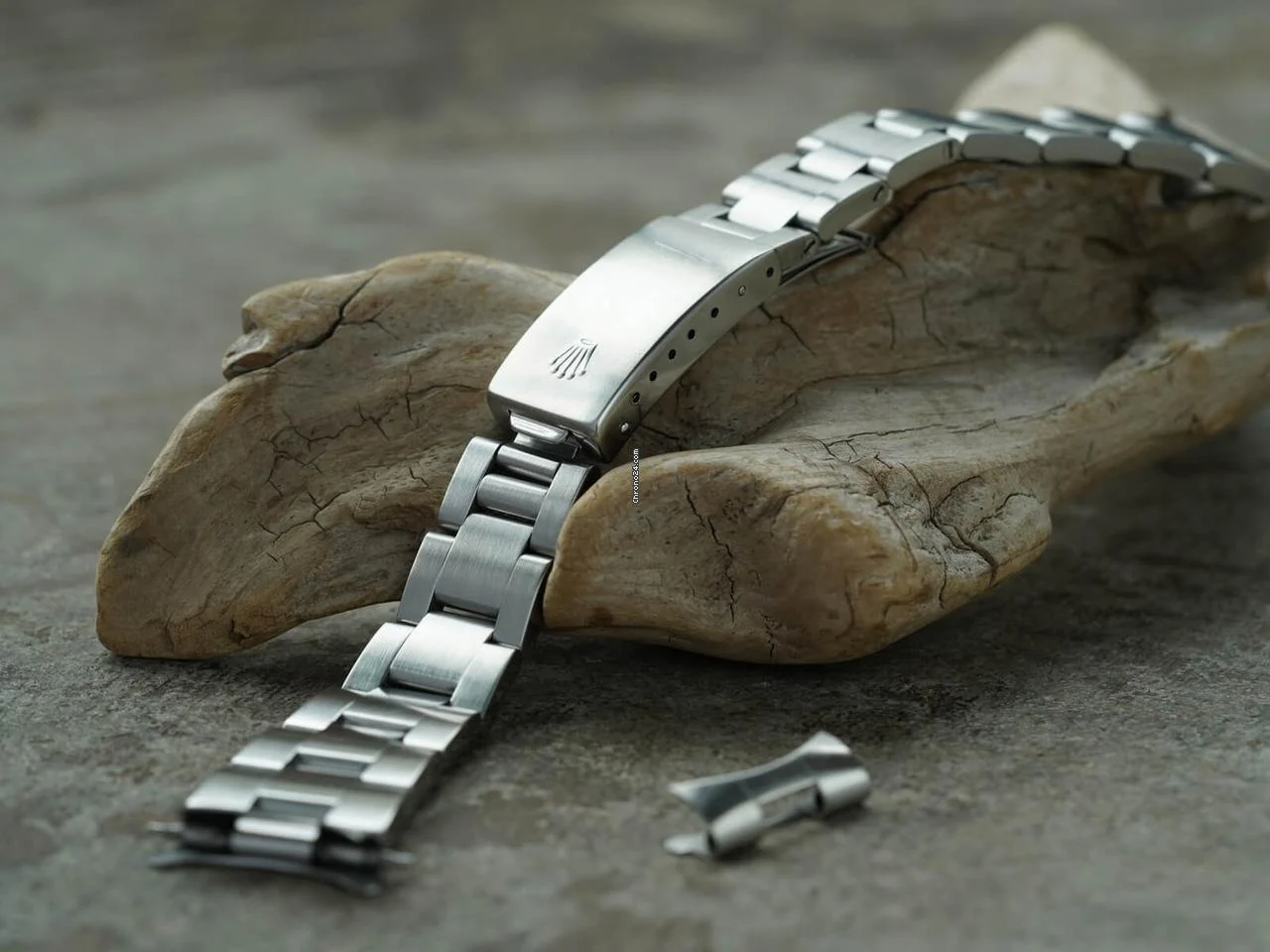
The icon is not just a silhouette: it is a set of sensations. And these sensations often arise from details invisible to the neophyte. The clasp, for example, is a chapter in itself. It must be simple to handle, safe, and well enough adjusted to avoid any parasitic “play”. A good bracelet can be recognized by the fact that you forget it is there; An excellent bracelet can be recognized by the confidence it inspires when you think about it.
Over time, the idea of fine tuning became central. Because a metal bracelet, unlike leather, is unforgiving: one link too many and the watch dances; one less link and it tightens. The extension and micro-adjustment systems have thus contributed to the modern legend of the Oyster: a mechanism serving comfort, without compromising the line.
- Design readability: three links, an immediate identity.
- Robustness: designed to last and withstand real life.
- Comfort : controlled articulation, “just right” weight, stability on the wrist.
- Versatility: sporty without being brutal, elegant without being fragile.
- Technical details: clasp and adjustments at the heart of the experience.
Why it outperforms trends: the bracelet as a signature
In contemporary watchmaking, bracelets are back at the center of the game. Integrated, interchangeable, in brushed titanium, in polished steel, hybrids… The offer has never been so rich. However, the Oyster bracelet remains a landmark. He doesn’t try to be spectacular. He tries to be good. And that’s precisely what makes it desirable.
There is also a notion of signature. Many watches can be identified by their bezel, indexes or seconds hand. Some, rarer, are visible from the first second by their bracelet. The Oyster is part of this minority: we see it from afar, we understand it immediately, and we know what promise it carries – that of a watch made to be worn, not spared.
The “complete watch” effect: a consistency that reassures
A phenomenon well known to collectors: certain watches lose their soul when they are taken out of their original bracelet. Not because another bracelet would be uncomfortable, but because the aesthetic balance is broken. The Oyster contributes to this feeling of total coherence: the case, the bracelet, the volume and the light work together.
This coherence is also emotional. She reassures. She says: “that’s how the watch was designed”. And in a world where we can personalize everything, this obviousness has something relaxing.
An icon because it doesn’t force anything
The Oyster bracelet has become an icon for an almost paradoxical reason: it doesn’t demand attention. It doesn’t need a speech to exist. He does not play the card of eccentricity, nor that of nostalgia. There are well-designed objects in the permanent present.
It tells of a watchmaking culture that values use as much as image, solidity as much as seduction. And it continues, year after year, to represent a form of functional elegance: that which accompanies life, instead of interrupting it.