Table of Contents
Why manual winding still appeals
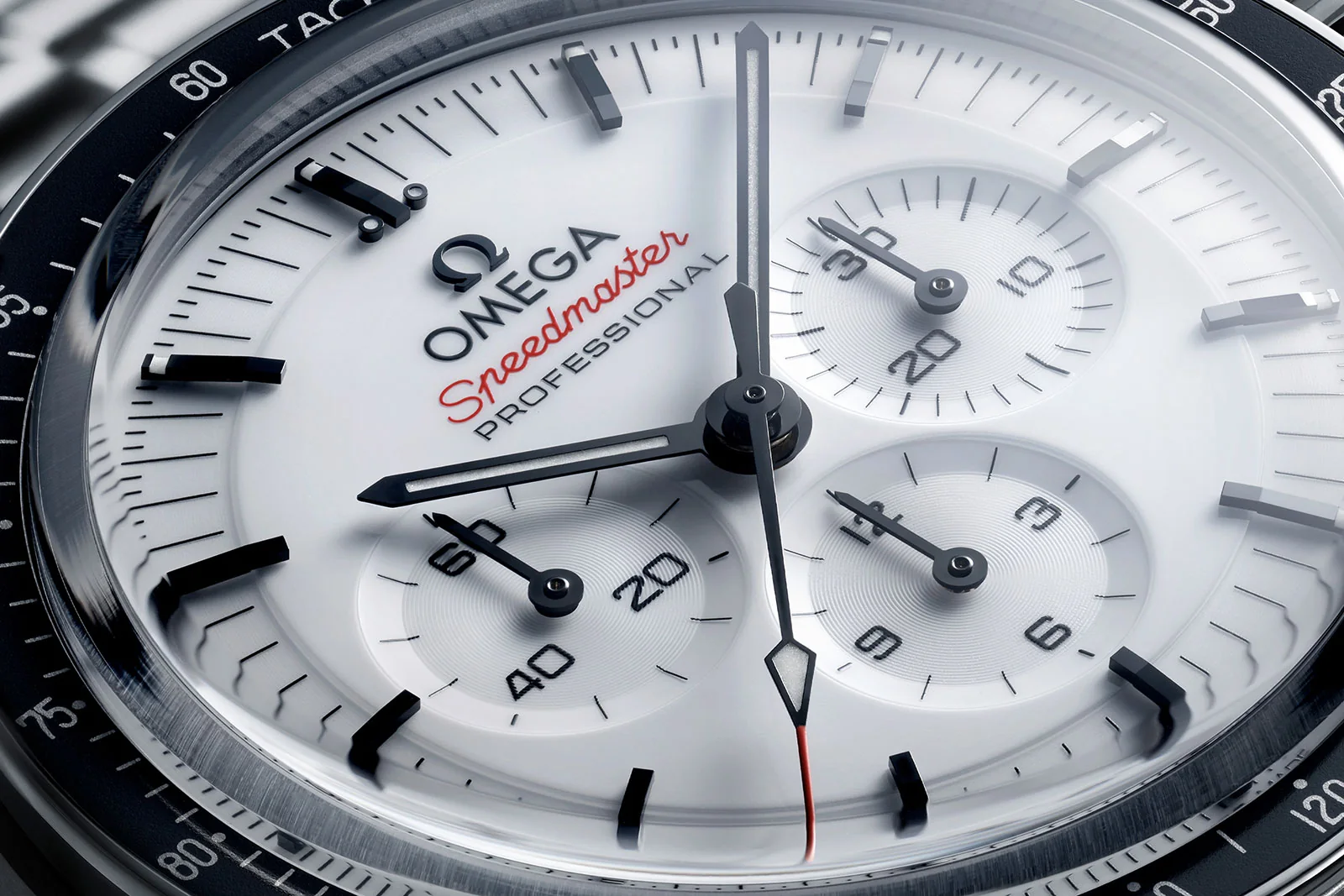
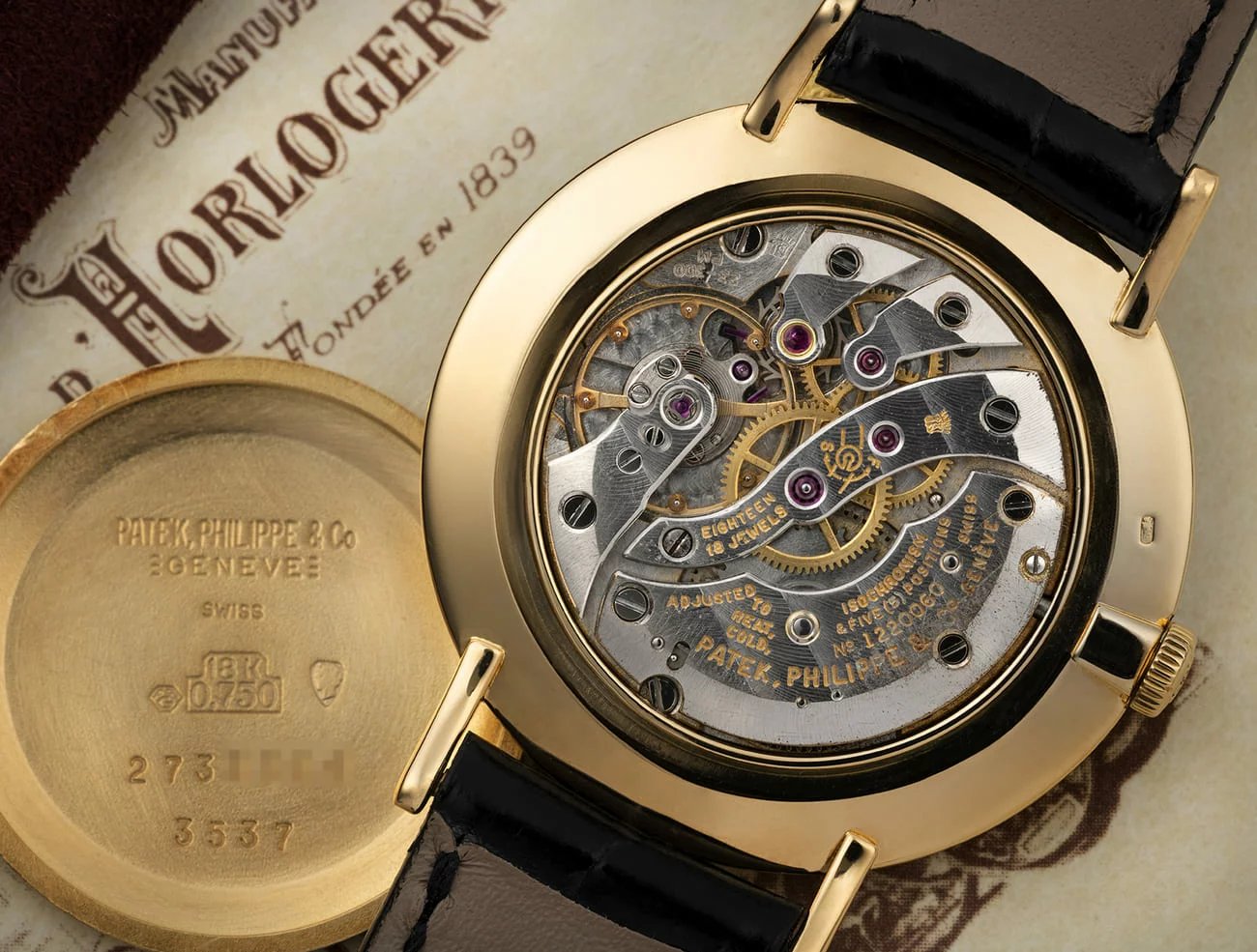
In a world where everything is automated, manual winding remains a profoundly human gesture. This is the moment when the mechanics awakens at your fingertips, where you take a minute to listen to the watch speak. The discreet clicking, the slight resistance that builds under the crown, then the assurance of a second hand starting again: winding is not just a need, it is a ritual. Collectors see it as a signature, this daily moment which anchors the watch in the life of its owner, from the Vallée de Joux to urban wrists. It is no coincidence that icons like the Speedmaster “Professional” or a manually wound Patek Calatrava continue to fascinate: they celebrate the discipline of a gesture and the beauty of mastered mechanics.
What happens under the crown: the mechanics deciphered
Winding a watch means accumulating energy in a spring to offer it, in a measured manner, to the rest of the movement. Simple on the surface, exquisite in detail. Here, without unnecessary jargon, is the dance of the pieces.
From crown to barrel
When you turn the crown, the stem drives a pinion which engages the winding wheel. This small kinematic chain transmits the movement to the ratchet, fixed on the axis of the barrel. With each click, the ratchet turns the barrel which winds the mainspring. The pawl, this tiny spring-loaded lever, prevents the ratchet from going back: hence this muffled sound, so addictive for fans of mechanical watchmaking.
The mainspring and the art of dosage
At the heart, the barrel spring stores energy. In a manual caliber, it is attached to the axis: a clear stop is reached when the spring is fully armed. In an automatic, a sliding flange prevents over-tensioning and allows controlled sliding. What follows is a ballet: the energy passes from the barrel to the train of cogs, then to the escapement which chops it into regular impulses to make the balance oscillate. Your “winding” is thus converted into measurable time, second by second.
We often talk about “number of turns”. In reality, your watch responds to you: it tenses, it speaks to touch. A few simple rules allow you to adopt the right action.
- Remove the watch from the wrist. You will avoid forcing the stem and the crown.
- Go back each day, preferably in the morning. Walking is more stable with a spring in its ideal torque range.
- Turn the crown in the winding direction (usually clockwise) with smooth movements. Depending on the caliber, 20 to 40 turns are enough.
- Stop as soon as resistance becomes clear. This is the limit: forcing does nothing and can damage the mechanics.
- If your watch has a screw-down crown, unscrew it carefully, wind it up, then screw it back in without excessively.
A power reserve indicator, when it exists, simplifies everything: go up to full reserve, then let it live. Without an indicator, rely on sensation. After a few days, your muscle memory will do the rest.
Myths, errors and truths
- “I can overwind and break the watch.” On a caliber in good condition, you feel the stop. Stopping at this point is safe. Breaking occurs by forcing beyond it, rarely, and especially on dry or poorly maintained watches.
- “You have to go back up in one go.” It is better to complete a daily reassembly, but splitting it into two parts does not alter the mechanics.
- “Automatics don’t need winding.” If you don’t wear them enough, an initial manual winding wakes up the oils and gets things going, especially after a long rest.
- “Moving up immediately improves accuracy.” The torque of the spring influences, yes, but precision is primarily a matter of adjustment, state of lubrication and position.
- “You have to go back to the final ‘click’.” There is no mystical final click: there is a clear resistance to respect. Your hand is the best indicator.
Preserving your movement: maintenance, waterproofing and vintage
A nice gesture deserves nice precautions. Watchmaking is not capricious, it is logical.
- Service and lubrication: approximately every 5 to 7 years, depending on usage. A dry spring or a worn pawl makes winding rough: this is a sign of a trip to the watchmaker.
- Waterproof: avoid going up in a humid environment. If the crown is not screwed down, it is an entry point for condensation. After swimming, wait until the watch is completely dry before handling it.
- Vintage: on an old piece, go back slowly. Aged oils and fragile teeth demand gentleness. Have the seals and condition of the spring checked: some vintage barrels are cracking.
- Crown and stem: if you feel abnormal play or irregular notching, stop and consult. Prevention is better than pulling out a stem.
- Storage: if you leave a manual idle, partially reassemble it once a month to distribute the oils. Store away from magnetic fields and shock.
A word about the power reserve: it often varies from 36 to 72 hours, sometimes much more. A morning routine is then enough to stay in the stable couple zone, which benefits regularity. This is the wisdom of master watchmakers: less jerks, more consistency.
A cultural ritual: from the workshop to the wrist
It is said that an old man from the Vallée de Joux wound up the watches he repaired every morning, murmuring “See you tomorrow”, as one greets a fellow traveler. This formula says it all. Manual winding is a pact between you and the mechanics, a dialogue that connects the object to your rhythm. We find there the spirit of Breguet, the rigor of A. Lange & Söhne, the sobriety of a Nomos Tangente: an aesthetic of the right gesture.
On the Moon, the Speedmaster was operated by gloved hands; on a Parisian office, a manual Tank tenses in the silence of the morning. Same mechanics, same emotion. In a world of screens, this daily quarter of a minute re-learns patience and precision. Winding is to watchmaking what tuning is to music: an introduction, a respect, a promise.
Ultimately, understanding winding is about learning to listen to your watch better. To recognize the texture of a well-oiled ratchet, the firmness of a spring at maximum, the smoothness of a well-adjusted ratchet. Simple words, precise gestures, and a reward: a mechanism that accompanies you, adjusted to the tempo of your life. This is the best kept secret in watchmaking: beauty is not only in the dial, but in the ritual that sets it in motion.